Integrate Allure Report with Playwright with Java and JUnit5

Last Updated On

HOME

In this tutorial, I will explain how to Integrate Allure Report 3 with Playwright, Java and JUnit5.

Refer to this tutorial to install allure – What is Allure Report?.

Table of Contents

System requirements

  1. Java 17 installed
  2. Maven installed
  3. Eclipse or IntelliJ installed
  4. Allure installed
  5. Browsers on which tests need to be run, like Chrome, Firefox, etc.

Dependency List

  1. Playwright – 1.57.0
  2. Java 17
  3. Maven – 3.9.6
  4. Allure Report – 2.32.0
  5. Aspectj – 1.9.25
  6. Maven Compiler Plugin – 3.13.0
  7. Maven Surefire Plugin – 3.5.4

Implementation Steps

Step 1 – Update the Properties section in Maven pom.xml
<properties>
    <project.build.sourceEncoding>UTF-8</project.build.sourceEncoding>
    <playwright.version>1.57.0</playwright.version>
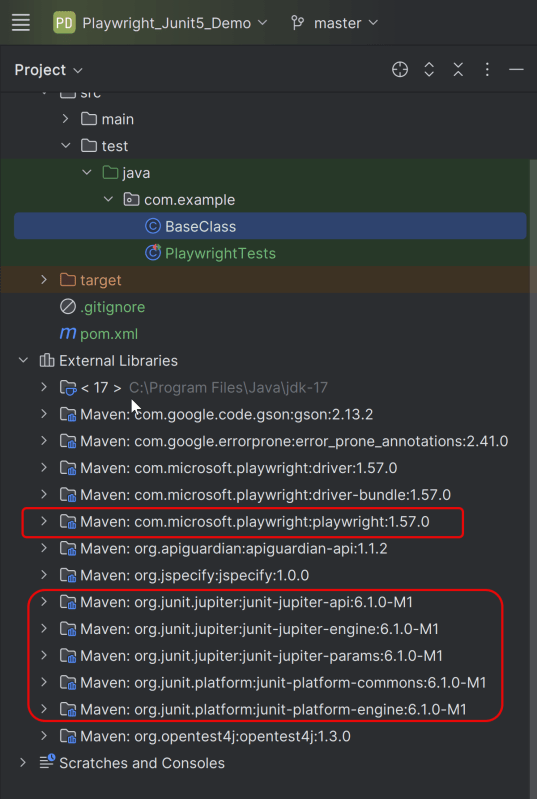
    <junit.jupiter.engine.version>6.1.0-M1</junit.jupiter.engine.version>
    <junit.jupiter.api.version>6.1.0-M1</junit.jupiter.api.version>
    <junit.jupiter.params.version>6.1.0-M1</junit.jupiter.params.version>
    <junit.platform.launcher.version>6.1.0-M1</junit.platform.launcher.version>
    <maven.compiler.plugin.version>3.14.1</maven.compiler.plugin.version>
    <maven.compiler.source.version>17</maven.compiler.source.version>
    <maven.compiler.target.version>17</maven.compiler.target.version>
    <maven.surefire.plugin.version>3.5.4</maven.surefire.plugin.version>
    <maven.compiler.source>17</maven.compiler.source>
    <maven.compiler.target>17</maven.compiler.target>
    <maven.site.plugin.version>4.0.0-M16</maven.site.plugin.version>
    <allure.version>2.32.0</allure.version>
    <aspectj.version>1.9.25.1</aspectj.version>
  </properties>

Step 2 – Add dependencies to pom.xml

Add Playwright, JUnit Jupiter Engine, JUnit Jupiter API, JUnit Param, JUnit Platform and Allure-JUnit5 dependencies to pom.xml (Maven Project).

 <dependencyManagement>
      <dependencies>
        <dependency>
          <groupId>io.qameta.allure</groupId>
          <artifactId>allure-bom</artifactId>
          <version>${allure.version}</version>
          <type>pom</type>
          <scope>import</scope>
        </dependency>
      </dependencies>
    </dependencyManagement>

  <dependencies>

    <dependency>
      <groupId>com.microsoft.playwright</groupId>
      <artifactId>playwright</artifactId>
      <version>${playwright.version}</version>
    </dependency>

    <dependency>
      <groupId>org.junit.jupiter</groupId>
      <artifactId>junit-jupiter-engine</artifactId>
      <version>${junit.jupiter.engine.version}</version>
      <scope>test</scope>
    </dependency>

    <dependency>
      <groupId>org.junit.jupiter</groupId>
      <artifactId>junit-jupiter-api</artifactId>
      <version>${junit.jupiter.api.version}</version>
      <scope>test</scope>
    </dependency>

    <dependency>
      <groupId>org.junit.jupiter</groupId>
      <artifactId>junit-jupiter-params</artifactId>
      <version>${junit.jupiter.params.version}</version>
      <scope>test</scope>
    </dependency>

    <dependency>
      <groupId>org.junit.platform</groupId>
      <artifactId>junit-platform-launcher</artifactId>
      <version>${junit.platform.launcher.version}</version>
      <scope>test</scope>
    </dependency>

    <dependency>
      <groupId>io.qameta.allure</groupId>
      <artifactId>allure-junit5</artifactId>
      <scope>test</scope>
    </dependency>

  </dependencies>

Step 3 – Update the Build Section of pom.xml in the Allure Report Project
 <build>
    <plugins>
      <plugin>
        <groupId>org.apache.maven.plugins</groupId>
        <artifactId>maven-compiler-plugin</artifactId>
        <version>${maven.compiler.plugin.version}</version>
        <configuration>
          <source>${maven.compiler.source.version}</source>
          <target>${maven.compiler.target.version}</target>
        </configuration>
      </plugin>

      <plugin>
        <groupId>org.apache.maven.plugins</groupId>
        <artifactId>maven-surefire-plugin</artifactId>
        <version>${maven.surefire.plugin.version}</version>
        <configuration>
          <argLine>
            -javaagent:"${settings.localRepository}/org/aspectj/aspectjweaver/${aspectj.version}/aspectjweaver-${aspectj.version}.jar"
          </argLine>
        </configuration>
        <dependencies>
          <dependency>
            <groupId>org.aspectj</groupId>
            <artifactId>aspectjweaver</artifactId>
            <version>${aspectj.version}</version>
          </dependency>
        </dependencies>
      </plugin>

    </plugins>
  </build>

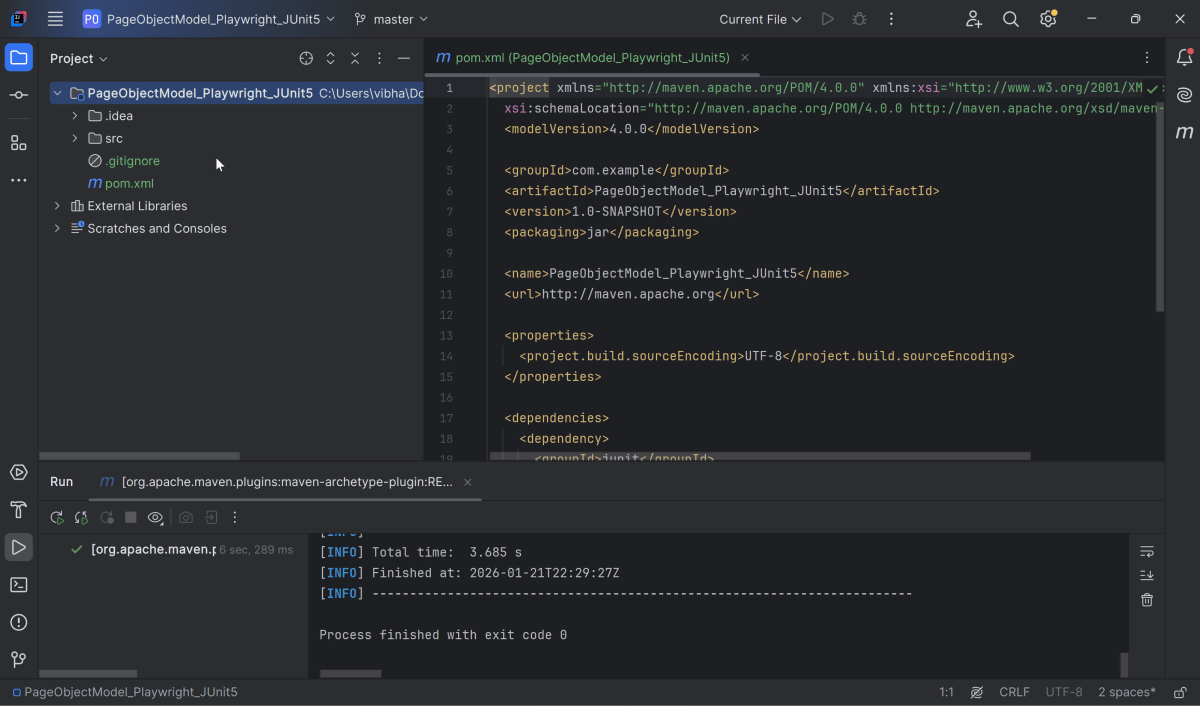
<project xmlns="http://maven.apache.org/POM/4.0.0" xmlns:xsi="http://www.w3.org/2001/XMLSchema-instance"
         xsi:schemaLocation="http://maven.apache.org/POM/4.0.0 http://maven.apache.org/xsd/maven-4.0.0.xsd">
  <modelVersion>4.0.0</modelVersion>

  <groupId>com.example</groupId>
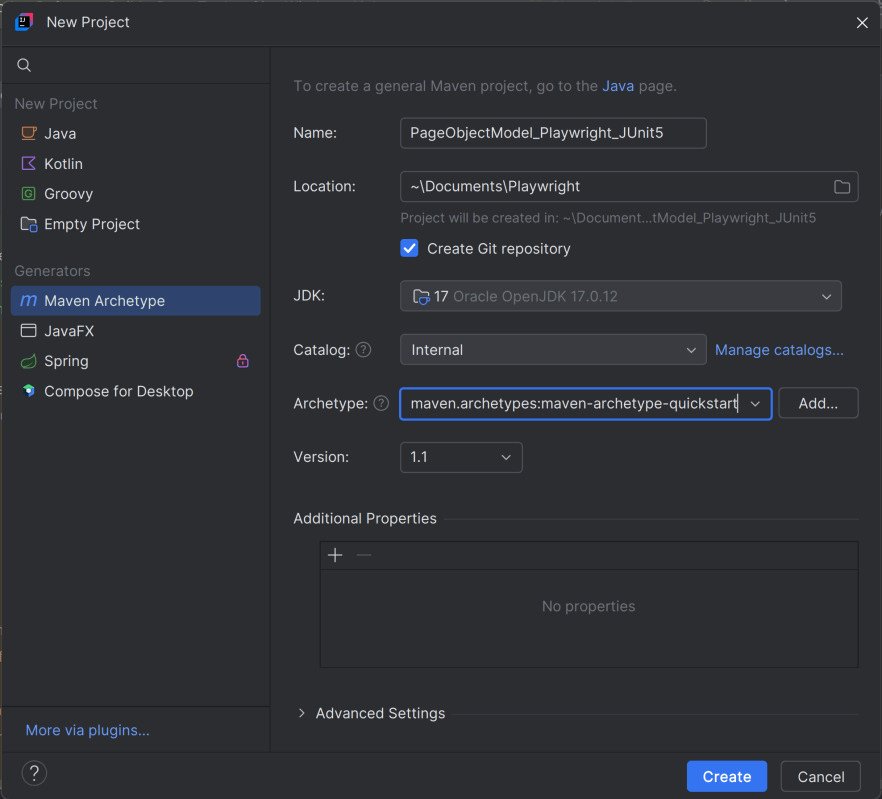
  <artifactId>PageObjectModel_Playwright_JUnit5</artifactId>
  <version>1.0-SNAPSHOT</version>
  <packaging>jar</packaging>

  <name>PageObjectModel_Playwright_JUnit5</name>
  <url>http://maven.apache.org</url>

  <properties>
    <project.build.sourceEncoding>UTF-8</project.build.sourceEncoding>
    <playwright.version>1.57.0</playwright.version>
    <junit.jupiter.engine.version>6.1.0-M1</junit.jupiter.engine.version>
    <junit.jupiter.api.version>6.1.0-M1</junit.jupiter.api.version>
    <junit.jupiter.params.version>6.1.0-M1</junit.jupiter.params.version>
    <junit.platform.launcher.version>6.1.0-M1</junit.platform.launcher.version>
    <maven.compiler.plugin.version>3.14.1</maven.compiler.plugin.version>
    <maven.compiler.source.version>17</maven.compiler.source.version>
    <maven.compiler.target.version>17</maven.compiler.target.version>
    <maven.surefire.plugin.version>3.5.4</maven.surefire.plugin.version>
    <maven.compiler.source>17</maven.compiler.source>
    <maven.compiler.target>17</maven.compiler.target>
    <maven.site.plugin.version>4.0.0-M16</maven.site.plugin.version>
    <allure.version>2.32.0</allure.version>
    <aspectj.version>1.9.25.1</aspectj.version>
  </properties>


    <!-- Add allure-bom to dependency management to ensure correct versions of all the dependencies are used -->
    <dependencyManagement>
      <dependencies>
        <dependency>
          <groupId>io.qameta.allure</groupId>
          <artifactId>allure-bom</artifactId>
          <version>${allure.version}</version>
          <type>pom</type>
          <scope>import</scope>
        </dependency>
      </dependencies>
    </dependencyManagement>

  <dependencies>

    <dependency>
      <groupId>com.microsoft.playwright</groupId>
      <artifactId>playwright</artifactId>
      <version>${playwright.version}</version>
    </dependency>

    <dependency>
      <groupId>org.junit.jupiter</groupId>
      <artifactId>junit-jupiter-engine</artifactId>
      <version>${junit.jupiter.engine.version}</version>
      <scope>test</scope>
    </dependency>

    <dependency>
      <groupId>org.junit.jupiter</groupId>
      <artifactId>junit-jupiter-api</artifactId>
      <version>${junit.jupiter.api.version}</version>
      <scope>test</scope>
    </dependency>

    <dependency>
      <groupId>org.junit.jupiter</groupId>
      <artifactId>junit-jupiter-params</artifactId>
      <version>${junit.jupiter.params.version}</version>
      <scope>test</scope>
    </dependency>

    <dependency>
      <groupId>org.junit.platform</groupId>
      <artifactId>junit-platform-launcher</artifactId>
      <version>${junit.platform.launcher.version}</version>
      <scope>test</scope>
    </dependency>

    <dependency>
      <groupId>io.qameta.allure</groupId>
      <artifactId>allure-junit5</artifactId>
      <scope>test</scope>
    </dependency>

  </dependencies>

  <build>
    <plugins>
      <plugin>
        <groupId>org.apache.maven.plugins</groupId>
        <artifactId>maven-compiler-plugin</artifactId>
        <version>${maven.compiler.plugin.version}</version>
        <configuration>
          <source>${maven.compiler.source.version}</source>
          <target>${maven.compiler.target.version}</target>
        </configuration>
      </plugin>

      <plugin>
        <groupId>org.apache.maven.plugins</groupId>
        <artifactId>maven-surefire-plugin</artifactId>
        <version>${maven.surefire.plugin.version}</version>
        <configuration>
          <argLine>
            -javaagent:"${settings.localRepository}/org/aspectj/aspectjweaver/${aspectj.version}/aspectjweaver-${aspectj.version}.jar"
          </argLine>
        </configuration>
        <dependencies>
          <dependency>
            <groupId>org.aspectj</groupId>
            <artifactId>aspectjweaver</artifactId>
            <version>${aspectj.version}</version>
          </dependency>
        </dependencies>
      </plugin>
    </plugins>
  </build>

</project>


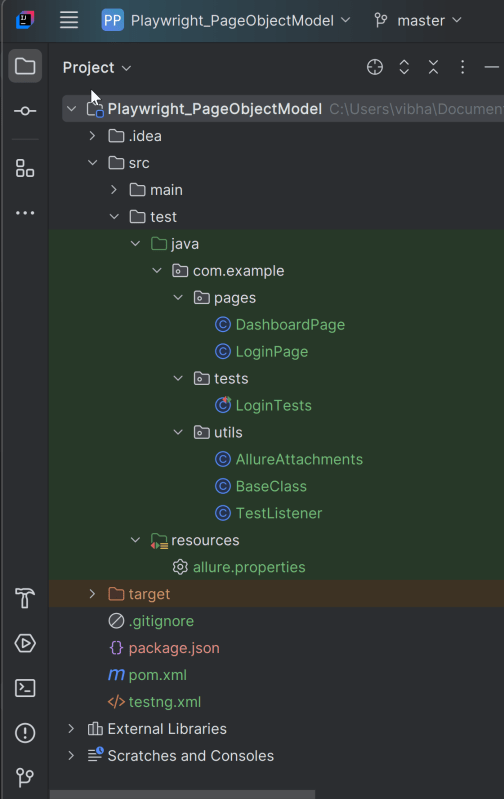
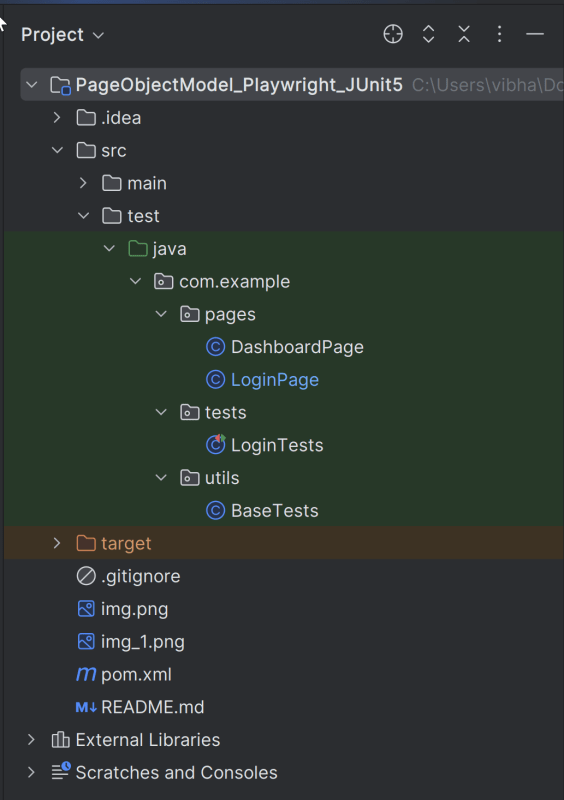
2. Project Structure for Maintainability

Creating a well-organized project structure is crucial for maintaining a scalable and efficient automation framework.
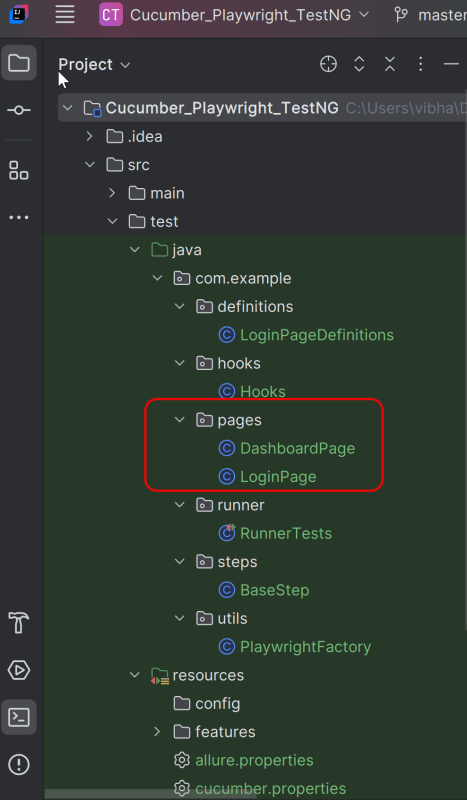
3. Creating Page Object Classes in src/test/java

package com.example.pages;

import com.microsoft.playwright.Locator;
import com.microsoft.playwright.Page;
import io.qameta.allure.Step;

public class LoginPage {

    private final Page page;

    // Locators
    private final Locator usernameLocator;
    private final Locator passwordLocator;
    private final Locator submitLocator;
    private final Locator invalidCredentialsLocator;
    private final Locator missingUsernameErrorMessageLocator;

    public LoginPage(Page page) {
        this.page = page;
        this.usernameLocator = page.locator("input[name='username']");
        this.passwordLocator = page.locator("input[name='password']");
        this.submitLocator = page.locator("button[type='submit']");
        this.invalidCredentialsLocator = page.locator("//p[contains(@class, \"oxd-text oxd-text--p oxd-alert-content-text\")]");
        this.missingUsernameErrorMessageLocator = page.locator("//span[contains(@class, 'oxd-text oxd-text--span oxd-input-field-error-message oxd-input-group__message')]");
    }

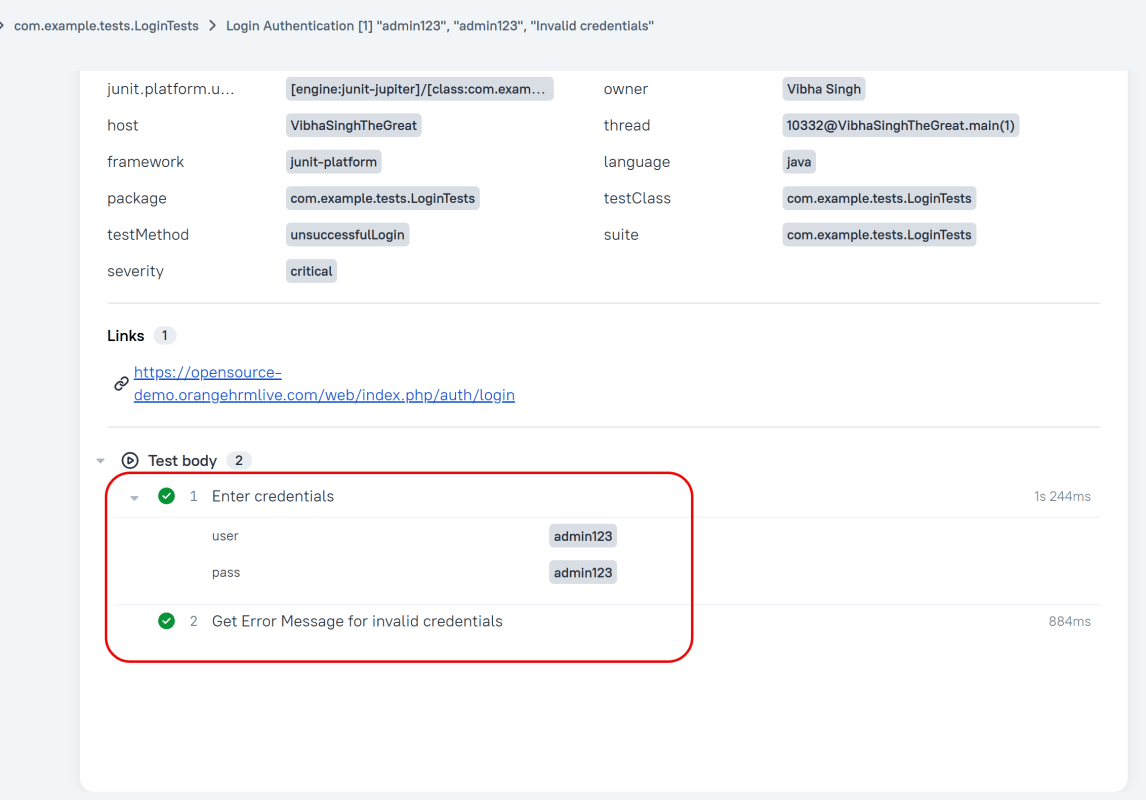
    @Step("Enter credentials")
    public void login(String user, String pass){
        usernameLocator.fill(user);
        passwordLocator.fill(pass);
        submitLocator.click();
    }

    @Step("Get Error Message for invalid credentials")
    public String getErrorMessage () {
        return invalidCredentialsLocator.textContent();
    }

    @Step("Get Error Message for missing username")
    public String getMissingUsernameErrorMessage () {
        return missingUsernameErrorMessageLocator.textContent();
    }
}

package com.example.pages;

import com.microsoft.playwright.Locator;
import com.microsoft.playwright.Page;
import io.qameta.allure.Step;

public class DashboardPage {

    private Page page;

    private final Locator headingLocator;

    public DashboardPage(Page page){
        this.page = page;
        this.headingLocator = page.locator("//h6[contains(@class, \"oxd-topbar-header-breadcrumb-module\")]");
        this.assignLeaveLocator = page.locator("//[contains(@text, \"Assign Leave\")]");
        this.leaveListLocator = page.getByTitle("Leave List");

    }

    @Step("Get Heading of Dashboard page")
    public String getDashboardPageHeading() {
        return headingLocator.textContent();
    }

}

package com.example.utils;

import com.microsoft.playwright.*;
import org.junit.jupiter.api.*;

// Subclasses will inherit PER_CLASS behavior.
@TestInstance(TestInstance.Lifecycle.PER_CLASS)
public class BaseTests {

    // Shared between all tests in the class.
    static Playwright playwright;
    static Browser browser;

    // New instance for each test method.
    BrowserContext context;
    protected Page page;

    @BeforeAll
    public static void launchBrowser() {
        playwright = Playwright.create();
        browser = playwright.chromium().launch(new BrowserType.LaunchOptions().setHeadless(false));

    }

    @AfterAll
    public static void closeBrowser() {
        playwright.close();
    }


    @BeforeEach
    public void createContextAndPage() {
        context = browser.newContext();
        page = context.newPage();
        page.navigate("https://opensource-demo.orangehrmlive.com/web/index.php/auth/login");
    }

    @AfterEach
    public void closeContext() {
        context.close();
    }
}

package com.example.tests;

import com.example.pages.DashboardPage;
import com.example.pages.LoginPage;
import com.example.utils.BaseTests;
import org.junit.jupiter.api.Assertions;
import org.junit.jupiter.api.Test;
import org.junit.jupiter.params.ParameterizedTest;
import org.junit.jupiter.params.provider.CsvFileSource;
import io.qameta.allure.Description;
import io.qameta.allure.Issue;
import io.qameta.allure.Link;
import io.qameta.allure.Owner;
import io.qameta.allure.Severity;
import io.qameta.allure.TmsLink;
import org.junit.jupiter.api.DisplayName;

import static io.qameta.allure.SeverityLevel.CRITICAL;

public class LoginTests extends BaseTests {

    @ParameterizedTest
    @CsvFileSource(files = "src/test/resources/testData/credentials.csv", numLinesToSkip = 1)
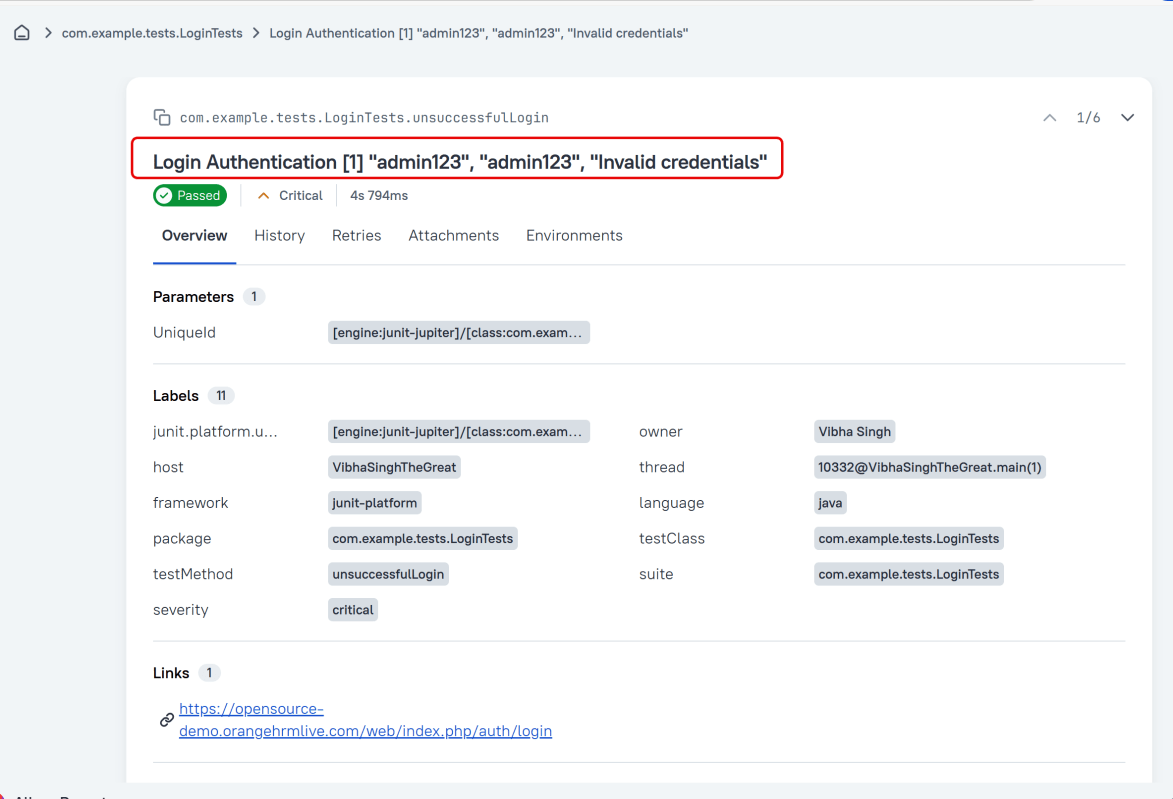
    @DisplayName("Login Authentication")
    @Description("This test attempts to log into the website using a incorrect username and a password. Fails if any error happens.")
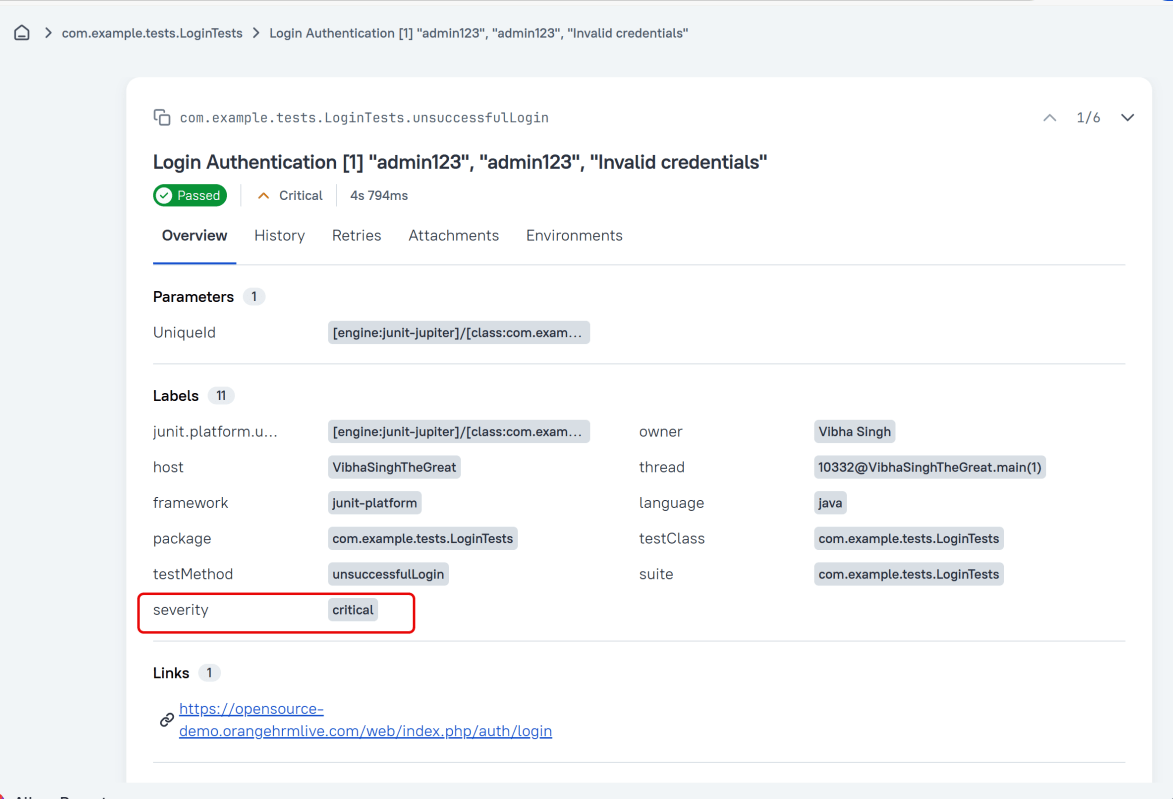
    @Severity(CRITICAL)
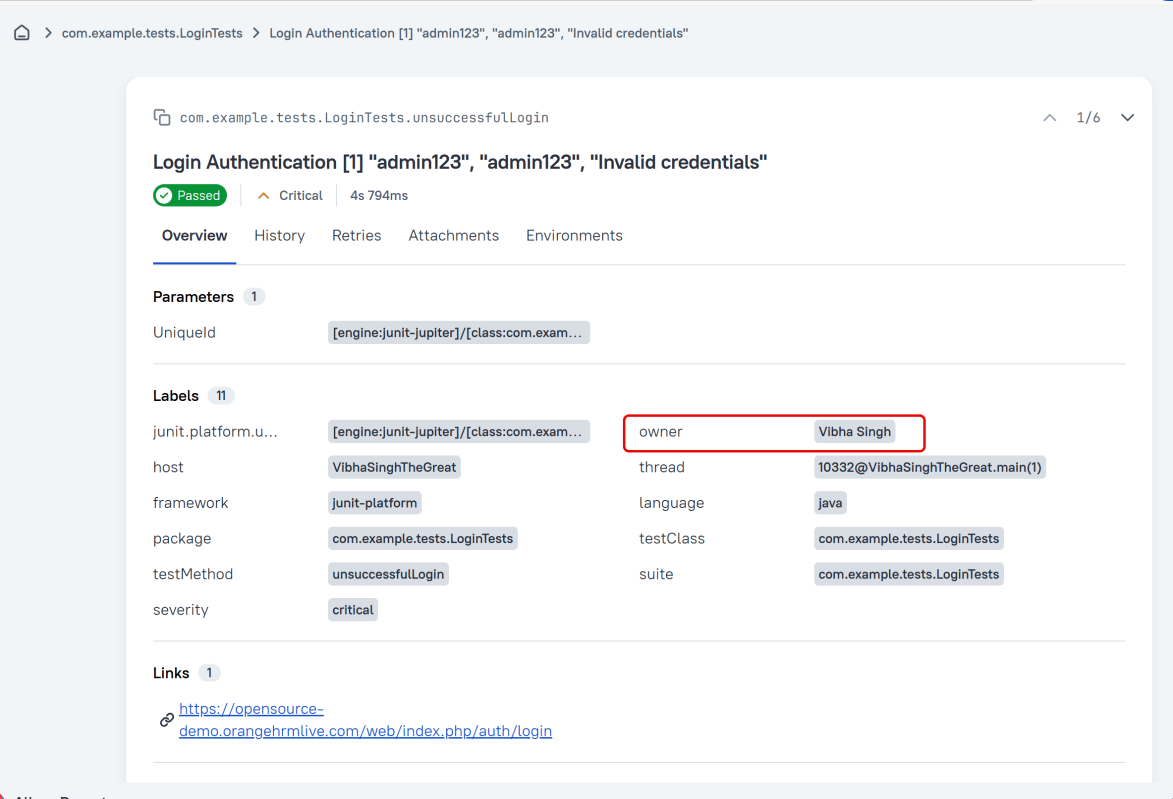
    @Owner("Vibha Singh")
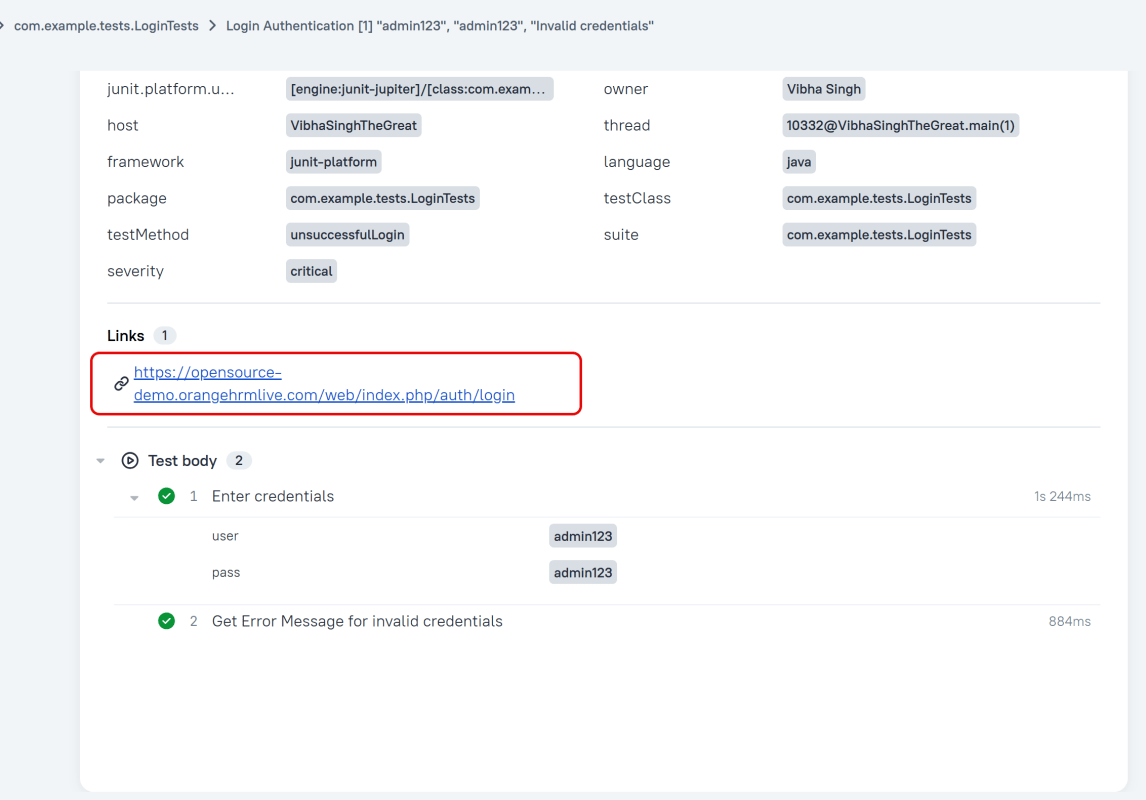
    @Link(name = "Website", url = "https://opensource-demo.orangehrmlive.com/web/index.php/auth/login")
    @Issue("AUTH-123")
    @TmsLink("TMS-456")
    public void unsuccessfulLogin(String username, String password, String expectedErrorMessage) {

        LoginPage loginPage = new LoginPage(page);
        loginPage.login(username,password);
        String actualErrorMessage = loginPage.getErrorMessage();
        Assertions.assertEquals(expectedErrorMessage, actualErrorMessage, "Incorrect error message is displayed");

   }

    @Test
    @DisplayName("Successful Login Authentication")
    @Description("This test attempts to log into the website using a correct username and a password. Fails if any error happens.")
    @Severity(CRITICAL)
    @Owner("Vibha Singh")
    @Link(name = "Website", url = "https://opensource-demo.orangehrmlive.com/web/index.php/auth/login")
    @Issue("AUTH-124")
    @TmsLink("TMS-460")
    public void successfulLogin() {

        LoginPage loginPage = new LoginPage(page);
        loginPage.login("Admin","admin123");
        DashboardPage dashboardPage = new DashboardPage(page);
        String actualHeading = dashboardPage.getDashboardPageHeading();
        Assertions.assertEquals("Dashboard",actualHeading, "Unable to login to the application");

    }

}
@Description("This test attempts to log into the website using a invalid login and a password that result in error")

#allure.properties
allure.results.directory=target/allure-results

7. Run the Tests and Generate Allure Report

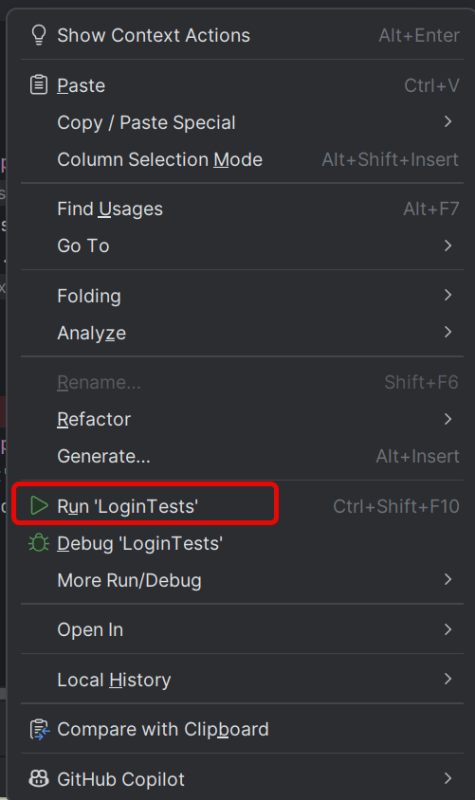
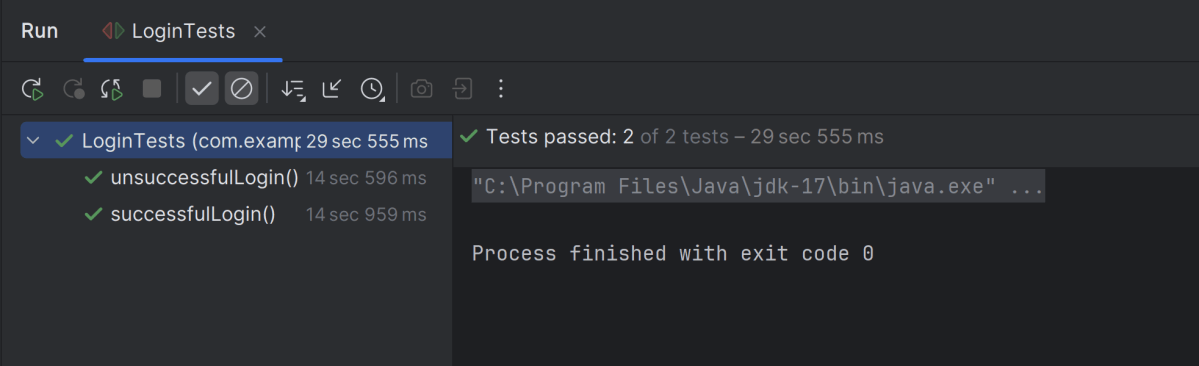
To run the tests, use the below command

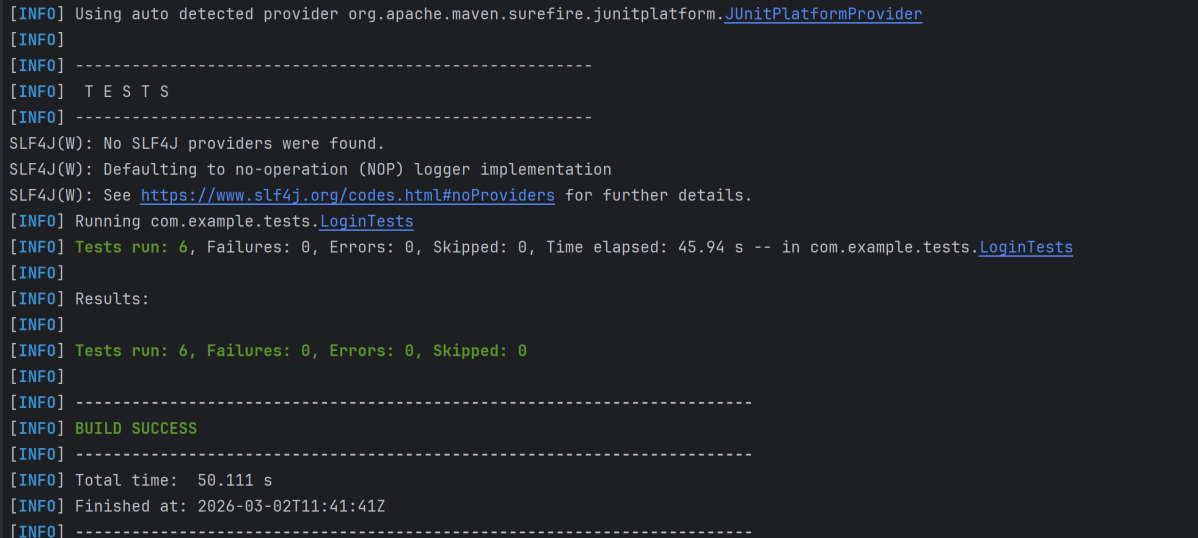
mvn clean test

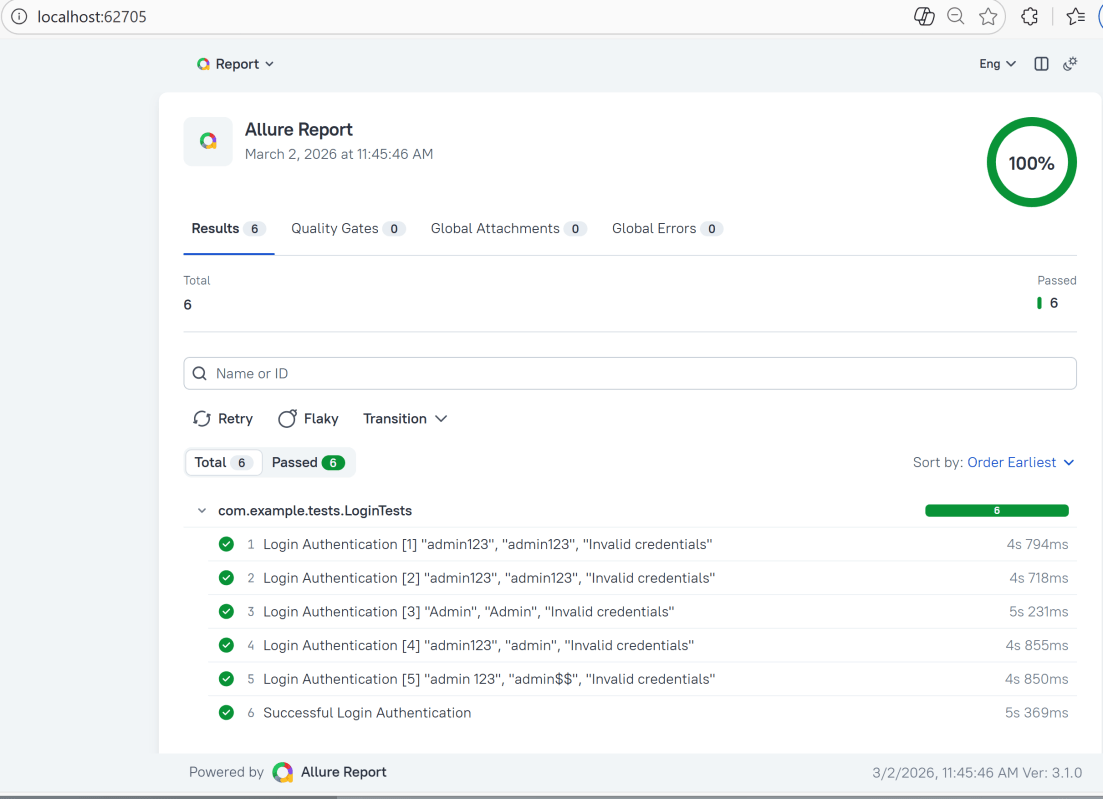
The output of the above program is

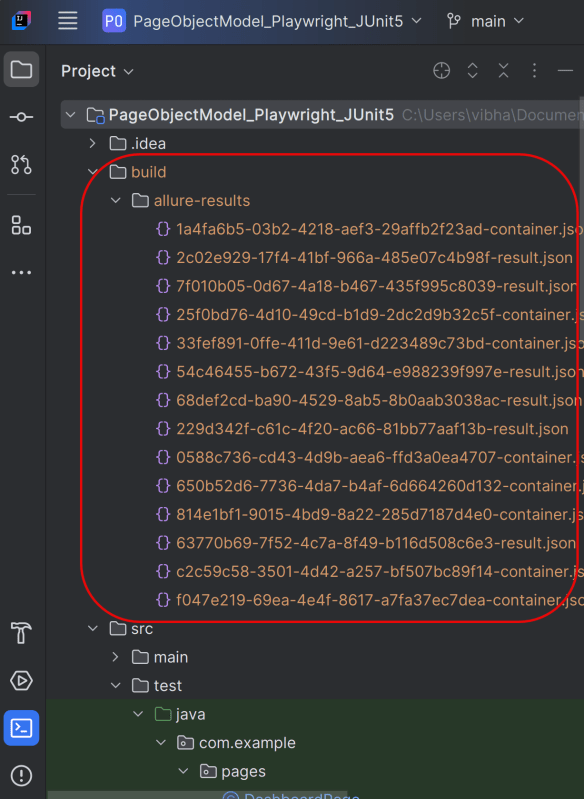
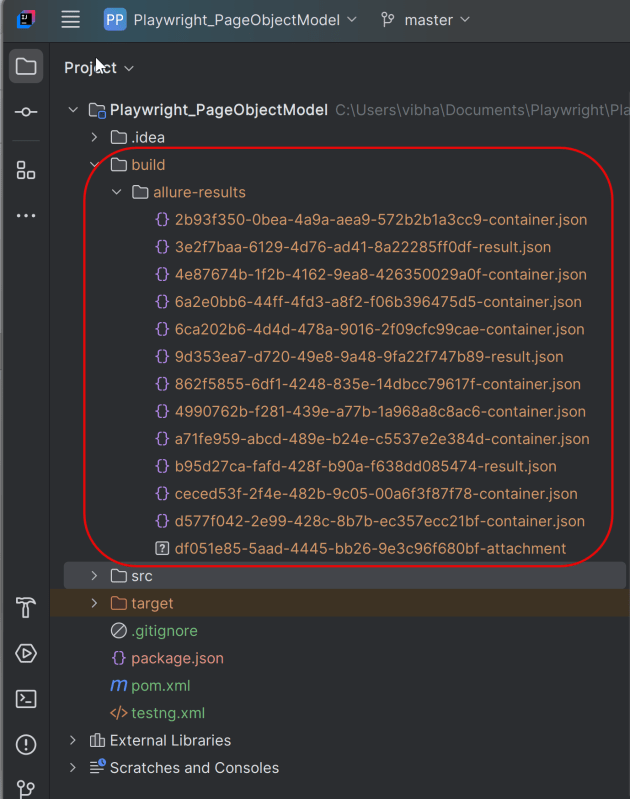
This will create the allure-results folder with all the test reports within build folder. These files will be used to generate Allure Report.

8. How to Generate an Allure Report

Use the command below to generate the Allure Report

 allure serve build/allure-results

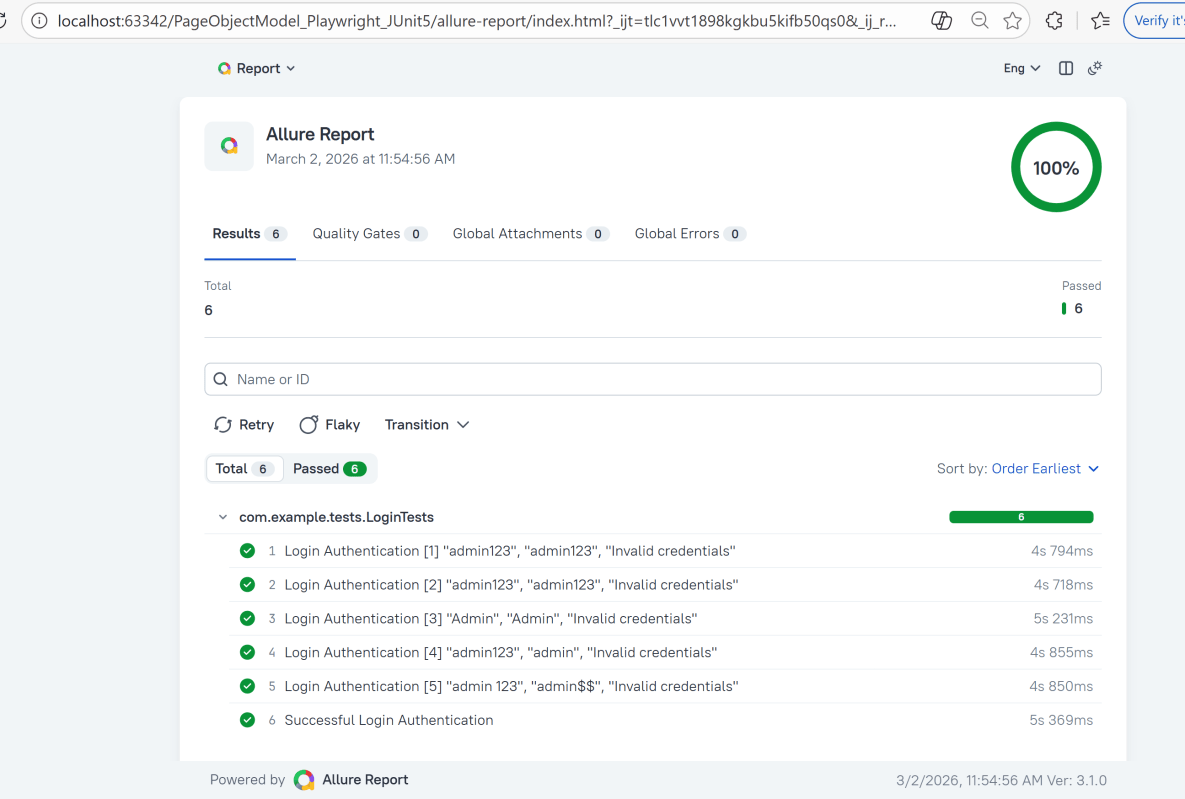
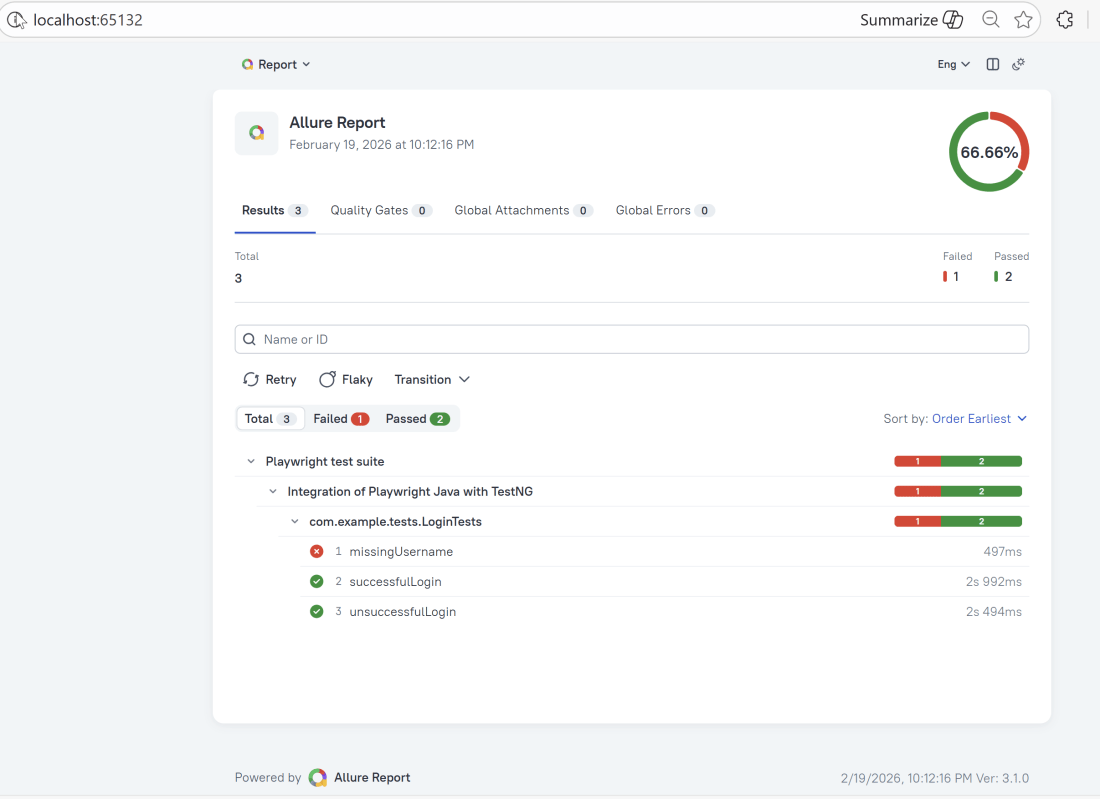
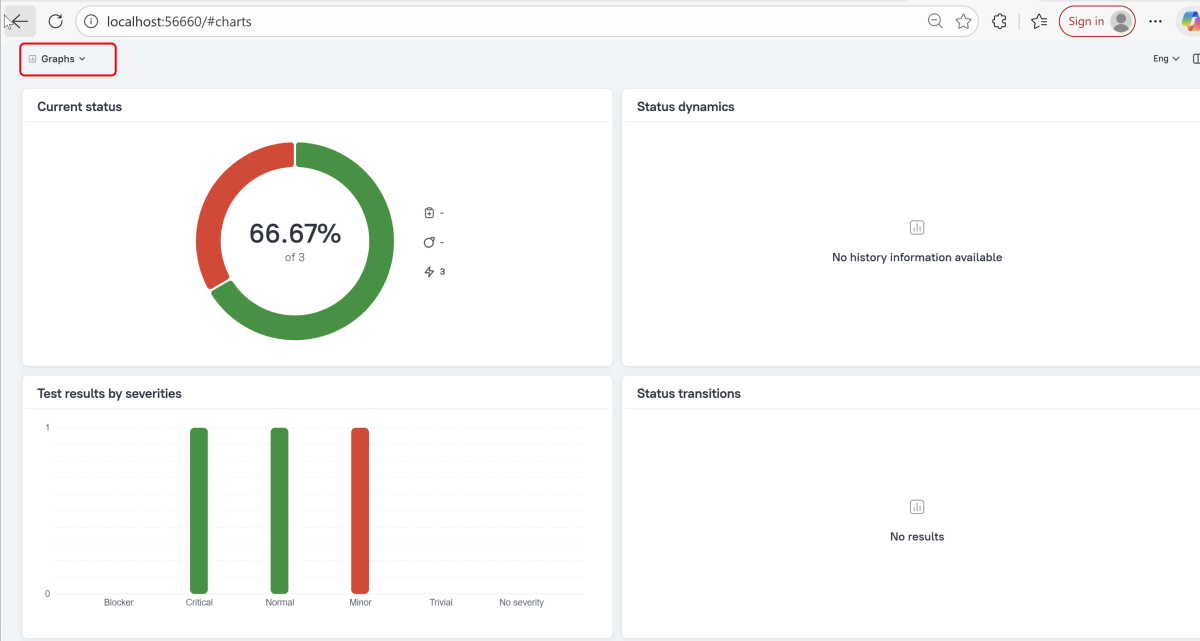
This will generate the beautiful Allure Test Report as shown below.

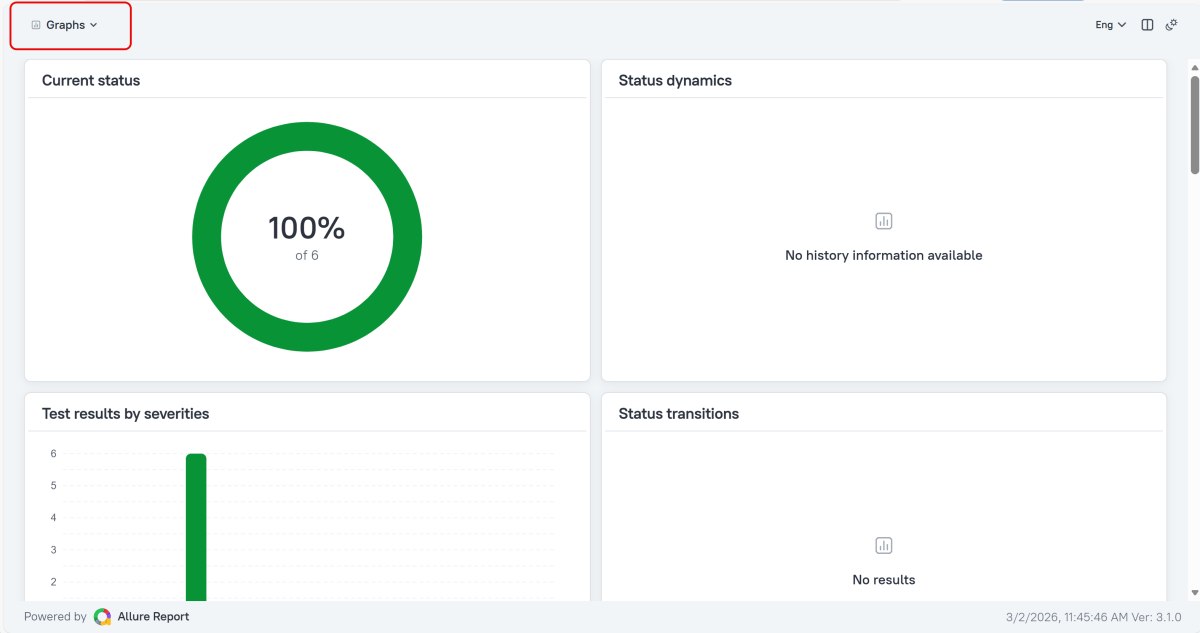
Graphs in Allure Report

Graphs allow you to see different statistics collected from the test data: status breakdown or severity and duration diagrams.

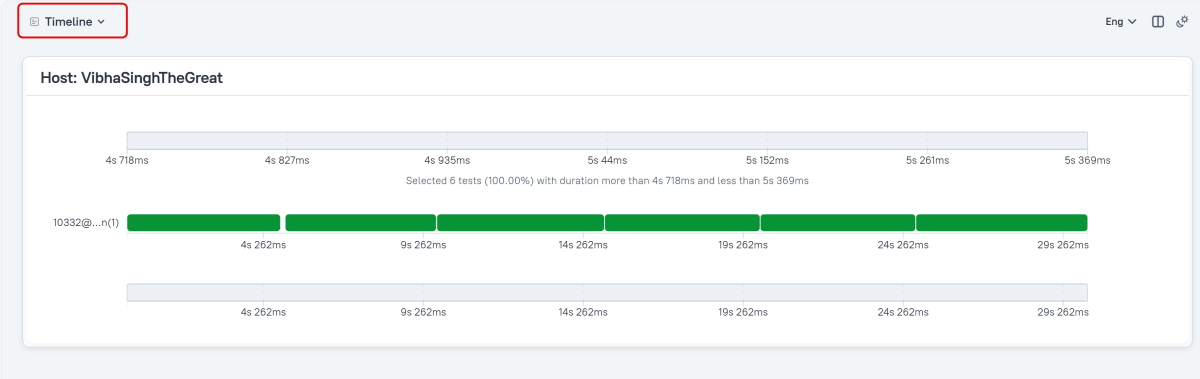
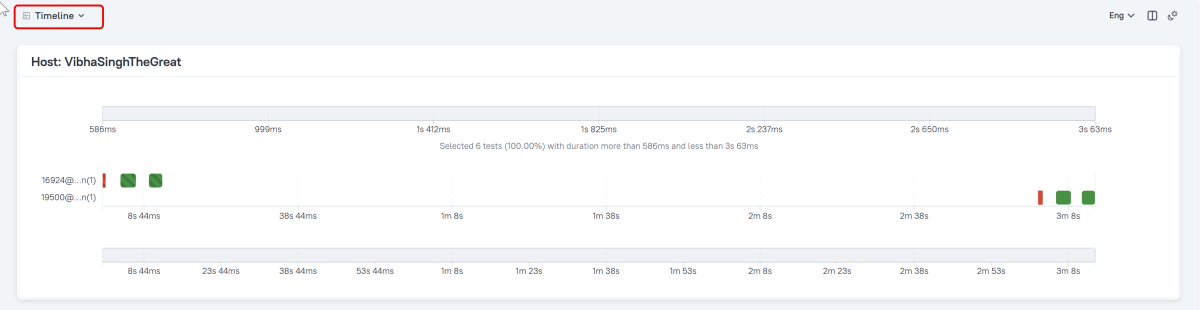
Timeline in Allure Report

The timeline tab visualizes retrospective test execution. Allure adaptors collect precise timings of tests. Here on this tab, they are arranged according to their sequential or parallel timing structure.
 allure awesome build/allure-results

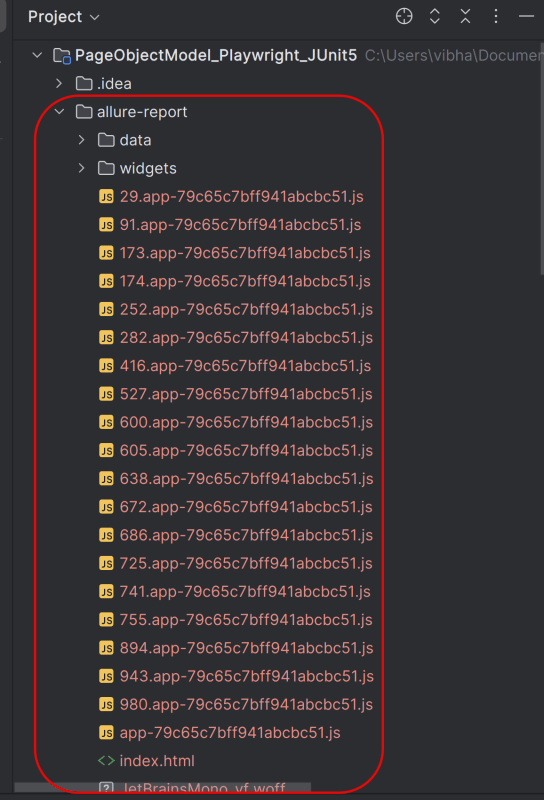
This will create the allure-report folder with all the test files and index.html report.

Congratulations!! We have integrated an allure report with Playwright, Java, and JUnit5. I hope this tutorial is useful to you.

Additional Tutorials on Allure Reports

Integration of Allure Report with Selenium and JUnit4
Integration of Allure Report with Selenium and TestNG
Gradle – Allure Report for Selenium and JUnit4
Gradle – Allure Report for Cucumber, Selenium and TestNG
Integration of Allure Report with Rest Assured and JUnit4

Integrate Allure Report with Playwright with Java and TestNG

Last Updated On

HOME

In this tutorial, I will explain how to Integrate Allure Report 3 with Playwright, Java and TestNG.

Refer to this tutorial to install allure – What is Allure Report?.

Table of Contents

System requirements

  1. Java 17 installed
  2. Maven installed
  3. Eclipse or IntelliJ installed
  4. Allure installed
  5. Browsers on which tests need to be run, like Chrome, Firefox, etc.

Dependency List

  1. Playwright – 1.57.0
  2. Java 17
  3. Maven – 3.9.6
  4. Allure Report – 2.32.0
  5. Aspectj – 1.9.25
  6. Maven Compiler Plugin – 3.13.0
  7. Maven Surefire Plugin – 3.5.4

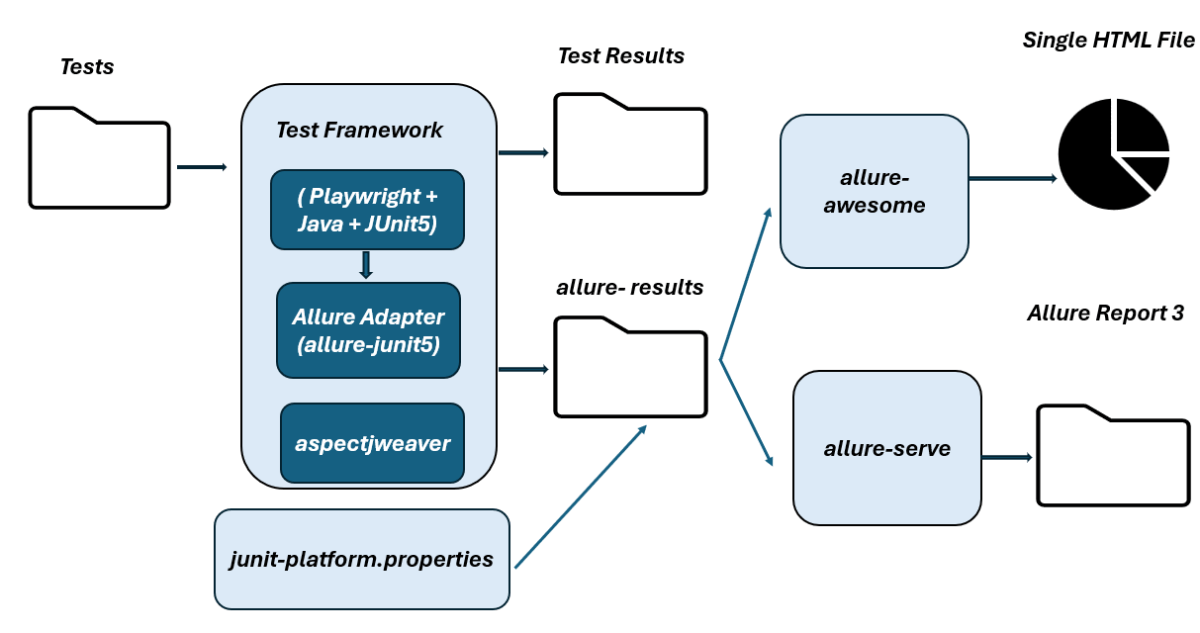
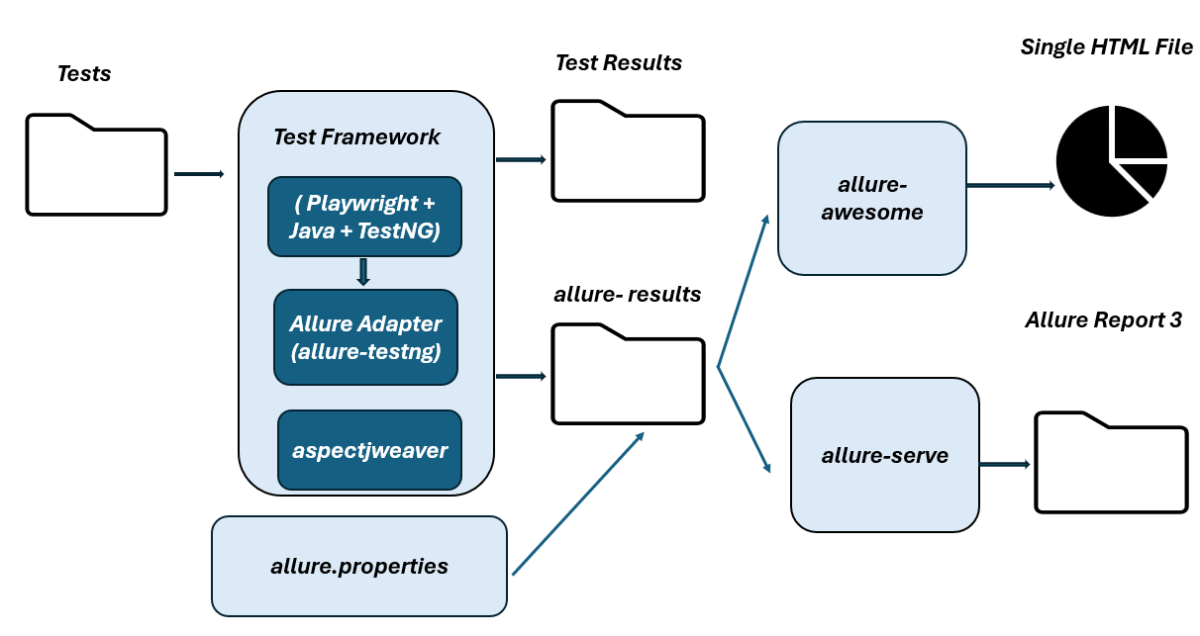
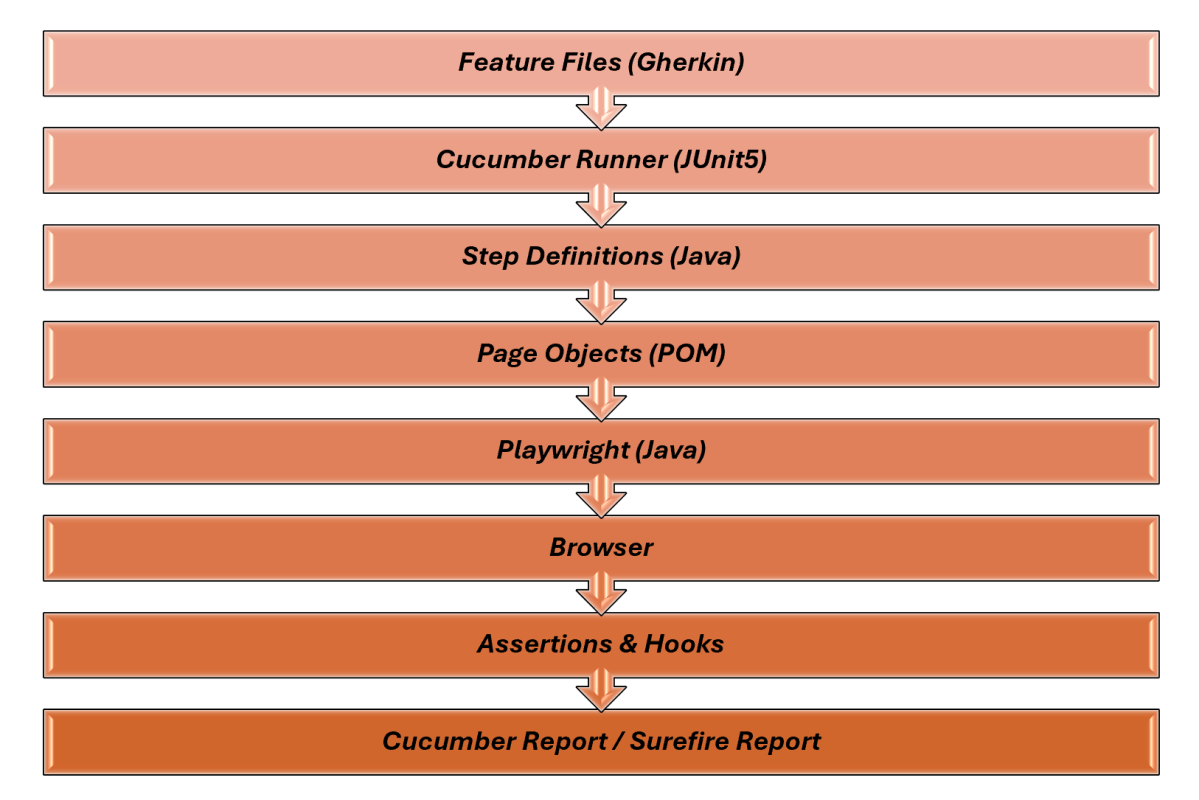
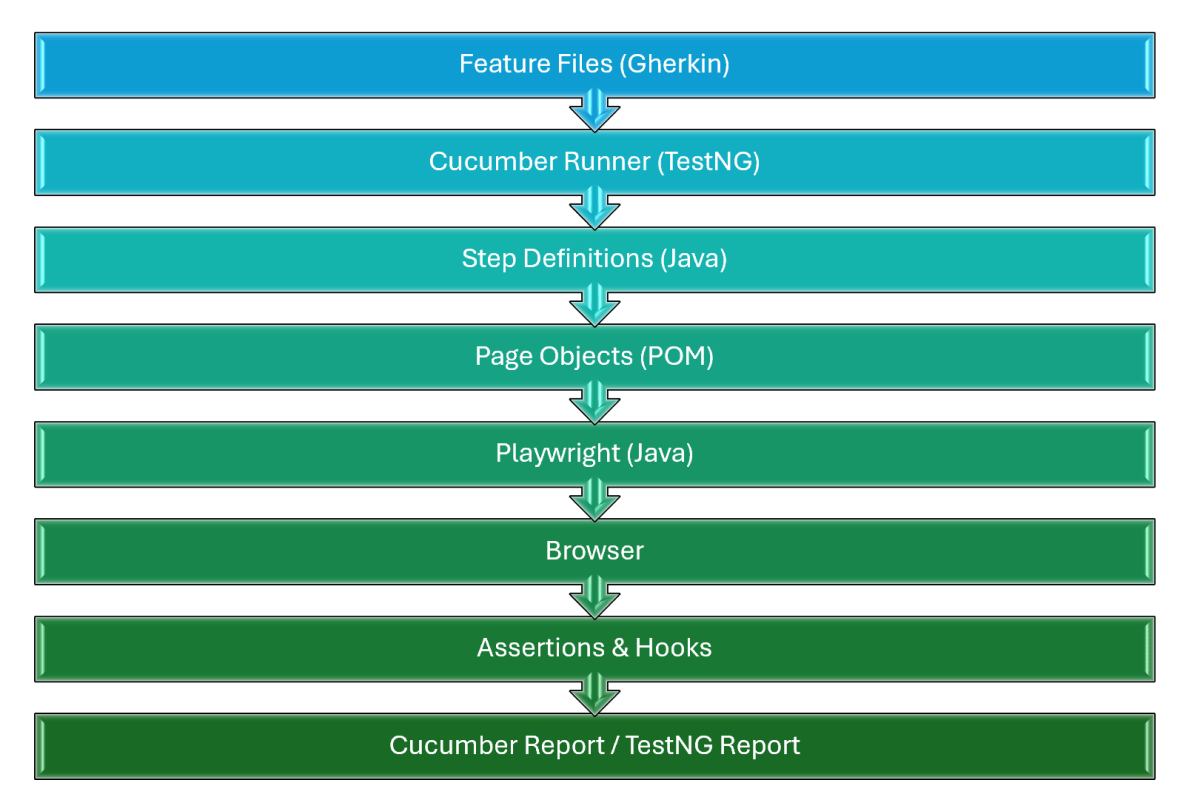
High-Level Execution Flow

Implementation Steps

Step 1 – Update the Properties section in Maven pom.xml
<properties>
    <project.build.sourceEncoding>UTF-8</project.build.sourceEncoding>
    <playwright.version>1.57.0</playwright.version>
    <testng.version>7.11.0</testng.version>
    <allure.version>2.32.0</allure.version>
    <aspectj.version>1.9.25</aspectj.version>
    <maven.compiler.plugin.version>3.13.0</maven.compiler.plugin.version>
    <maven.compiler.source.version>17</maven.compiler.source.version>
    <maven.compiler.target.version>17</maven.compiler.target.version>
    <maven.surefire.plugin.version>3.5.4</maven.surefire.plugin.version>
  </properties>

Step 2 – Add dependencies to pom.xml

Add Playwright, TestNG, and Allure-TestNG dependencies to pom.xml (Maven Project).

 <dependencyManagement>
        <dependencies>
            <dependency>
                <groupId>io.qameta.allure</groupId>
                <artifactId>allure-bom</artifactId>
                <version>${allure.version}</version>
                <type>pom</type>
                <scope>import</scope>
            </dependency>
        </dependencies>
    </dependencyManagement>

    <dependencies>

        <!-- Playwright -->
        <dependency>
            <groupId>com.microsoft.playwright</groupId>
            <artifactId>playwright</artifactId>
            <version>${playwright.version}</version>
        </dependency>

        <!-- TestNG -->
        <dependency>
            <groupId>org.testng</groupId>
            <artifactId>testng</artifactId>
            <version>${testng.version}</version>
            <scope>test</scope>
        </dependency>

        <!-- Allure-TestNG -->
        <dependency>
            <groupId>io.qameta.allure</groupId>
            <artifactId>allure-testng</artifactId>
            <scope>test</scope>
        </dependency>

    </dependencies>

Step 3 – Update the Build Section of pom.xml in the Allure Report Project
 <build>
        <plugins>
            <plugin>
                <groupId>org.apache.maven.plugins</groupId>
                <artifactId>maven-compiler-plugin</artifactId>
                <version>${maven.compiler.plugin.version}</version>
                <configuration>
                    <source>${maven.compiler.source.version}</source>
                    <target>${maven.compiler.target.version}</target>
                </configuration>
            </plugin>
            <plugin>
                <groupId>org.apache.maven.plugins</groupId>
                <artifactId>maven-surefire-plugin</artifactId>
                <version>${maven.surefire.plugin.version}</version>
                <configuration>
                    <suiteXmlFiles>
                        <suiteXmlFile>testng.xml</suiteXmlFile>
                    </suiteXmlFiles>
                    <argLine>
                        -javaagent:"${settings.localRepository}/org/aspectj/aspectjweaver/${aspectj.version}/aspectjweaver-${aspectj.version}.jar"
                    </argLine>
                </configuration>
                <dependencies>
                    <dependency>
                        <groupId>org.aspectj</groupId>
                        <artifactId>aspectjweaver</artifactId>
                        <version>${aspectj.version}</version>
                    </dependency>
                </dependencies>
            </plugin>
        </plugins>
    </build>

<project xmlns="http://maven.apache.org/POM/4.0.0" xmlns:xsi="http://www.w3.org/2001/XMLSchema-instance"
         xsi:schemaLocation="http://maven.apache.org/POM/4.0.0 http://maven.apache.org/xsd/maven-4.0.0.xsd">
    <modelVersion>4.0.0</modelVersion>

    <groupId>com.example</groupId>
    <artifactId>Playwright_PageObjectModel</artifactId>
    <version>1.0-SNAPSHOT</version>
    <packaging>jar</packaging>

    <name>Playwright_PageObjectModel</name>
    <url>http://maven.apache.org</url>

    <properties>
        <project.build.sourceEncoding>UTF-8</project.build.sourceEncoding>
        <playwright.version>1.57.0</playwright.version>
        <testng.version>7.11.0</testng.version>
        <allure.version>2.32.0</allure.version>
        <aspectj.version>1.9.25</aspectj.version>
        <maven.compiler.plugin.version>3.13.0</maven.compiler.plugin.version>
        <maven.compiler.source.version>17</maven.compiler.source.version>
        <maven.compiler.target.version>17</maven.compiler.target.version>
        <maven.surefire.plugin.version>3.5.4</maven.surefire.plugin.version>
    </properties>

    <!-- Add allure-bom to dependency management to ensure correct versions of all the dependencies are used -->
    <dependencyManagement>
        <dependencies>
            <dependency>
                <groupId>io.qameta.allure</groupId>
                <artifactId>allure-bom</artifactId>
                <version>${allure.version}</version>
                <type>pom</type>
                <scope>import</scope>
            </dependency>
        </dependencies>
    </dependencyManagement>

    <dependencies>

        <!-- Playwright -->
        <dependency>
            <groupId>com.microsoft.playwright</groupId>
            <artifactId>playwright</artifactId>
            <version>${playwright.version}</version>
        </dependency>

        <!-- TestNG -->
        <dependency>
            <groupId>org.testng</groupId>
            <artifactId>testng</artifactId>
            <version>${testng.version}</version>
            <scope>test</scope>
        </dependency>

        <!-- Allure-TestNG -->
        <dependency>
            <groupId>io.qameta.allure</groupId>
            <artifactId>allure-testng</artifactId>
            <scope>test</scope>
        </dependency>

    </dependencies>

    <build>
        <plugins>
            <plugin>
                <groupId>org.apache.maven.plugins</groupId>
                <artifactId>maven-compiler-plugin</artifactId>
                <version>${maven.compiler.plugin.version}</version>
                <configuration>
                    <source>${maven.compiler.source.version}</source>
                    <target>${maven.compiler.target.version}</target>
                </configuration>
            </plugin>
            <plugin>
                <groupId>org.apache.maven.plugins</groupId>
                <artifactId>maven-surefire-plugin</artifactId>
                <version>${maven.surefire.plugin.version}</version>
                <configuration>
                    <suiteXmlFiles>
                        <suiteXmlFile>testng.xml</suiteXmlFile>
                    </suiteXmlFiles>
                    <argLine>
                        -javaagent:"${settings.localRepository}/org/aspectj/aspectjweaver/${aspectj.version}/aspectjweaver-${aspectj.version}.jar"
                    </argLine>
                </configuration>
                <dependencies>
                    <dependency>
                        <groupId>org.aspectj</groupId>
                        <artifactId>aspectjweaver</artifactId>
                        <version>${aspectj.version}</version>
                    </dependency>
                </dependencies>
            </plugin>
        </plugins>
    </build>
</project>


2. Project Structure for Maintainability

Creating a well-organized project structure is crucial for maintaining a scalable and efficient automation framework.

3. Creating Page Object Classes in src/test/java

package com.example.utils;

import io.qameta.allure.Attachment;

public abstract class AllureAttachments {

    @Attachment(value = "Failure Screenshot", type = "image/png")
    public static byte[] attachScreenshot(byte[] screenshot) {
        return screenshot;
    }
}

package com.example.utils;

import com.microsoft.playwright.*;
import org.testng.annotations.*;

public class BaseClass {

    // Shared between all tests in this class.
    Playwright playwright;
    Browser browser = null;

    // New instance for each test method.
    BrowserContext context;
    public Page page;

    public Page getPage() {
        return page;
    }

    @BeforeClass
    public void launchBrowser() {
        playwright = Playwright.create();
        browser = playwright.chromium().launch(new BrowserType.LaunchOptions().setHeadless(false));
    }

    @BeforeMethod
    public void createContextAndPage() {
        context = browser.newContext();
        page = context.newPage();
        page.navigate("https://opensource-demo.orangehrmlive.com/web/index.php/auth/login");
    }

    @AfterMethod
    public void closeContext() {
        context.close();
    }

    @AfterClass
    public void closeBrowser() {
        playwright.close();
    }
}

package com.example.utils;

import com.microsoft.playwright.Page;
import org.testng.ITestListener;
import org.testng.ITestResult;

public class TestListener implements ITestListener {

     @Override
    public void onTestFailure(ITestResult result) {
        System.out.println("❌ onTestFailure triggered");
        Page page = BaseClass.getPage();
        if (page != null) {
            byte[] screenshot = page.screenshot();
            AllureAttachments.attachScreenshot(screenshot);
        }
    }
}

package com.example.tests;

import com.example.pages.DashboardPage;
import com.example.pages.LoginPage;
import com.example.utils.BaseClass;
import com.example.utils.TestListener;
import io.qameta.allure.Description;
import io.qameta.allure.Owner;
import io.qameta.allure.Severity;
import org.testng.Assert;
import org.testng.annotations.Listeners;
import org.testng.annotations.Test;
import static io.qameta.allure.SeverityLevel.*;

public class LoginTests extends BaseClass {

    @Test
    @Description("This test attempts to log into the website using a invalid login and a password that result in error")
    @Severity(NORMAL)
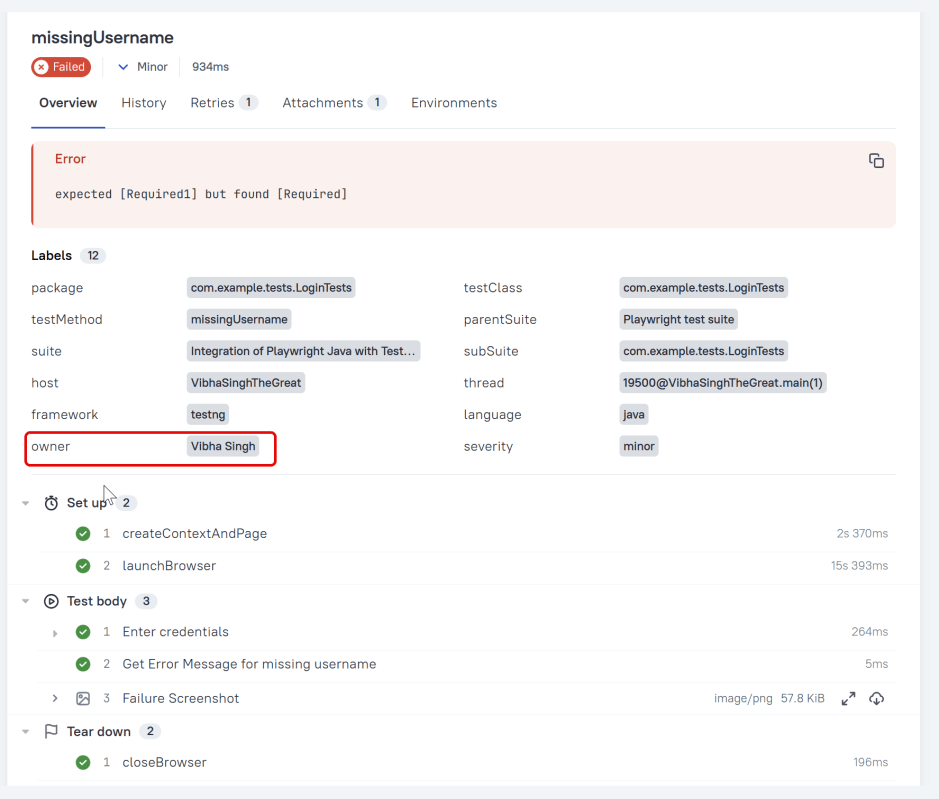
    @Owner("Vibha Singh")
    public void unsuccessfulLogin() {
        LoginPage loginPage = new LoginPage(page);
        loginPage.login("abc","abc");
        String actualErrorMessage = loginPage.getErrorMessage();
        Assert.assertEquals(actualErrorMessage, "Invalid credentials");
   }

    @Test
    @Description("This test attempts to log into the website using a valid login and a password")
    @Severity(CRITICAL)
    @Owner("Vibha Singh")
    public void successfulLogin() {
        LoginPage loginPage = new LoginPage(page);
        loginPage.login("Admin","admin123");
        DashboardPage dashboardPage = new DashboardPage(page);
        String actualHeading = dashboardPage.getDashboardPageHeading();
        Assert.assertEquals(actualHeading, "Dashboard");
    }

    @Test
    @Description("This test attempts to log into the website using a blank login and a password that result in error")
    @Severity(MINOR)
    @Owner("Vibha Singh")
    public void missingUsername() {
        LoginPage loginPage = new LoginPage(page);
        loginPage.login("","admin123");
        String actualErrorMessage = loginPage.getMissingUsernameErrorMessage();
        Assert.assertEquals(actualErrorMessage, "Required1");
    }

}

@Description("This test attempts to log into the website using a invalid login and a password that result in error")

6. Create testng.xml for the project

<?xml version="1.0" encoding="UTF-8"?>
<!DOCTYPE suite SYSTEM "http://testng.org/testng-1.0.dtd">
<suite name="Playwright test suite">

    <listeners>
        <listener class-name="com.example.utils.TestListener"/>
    </listeners>

    <test name="Integration of Playwright Java with TestNG">
    <classes>
        <class name="com.example.tests.LoginTests">

        </class>
    </classes>
    </test>
</suite>

#allure.properties
allure.results.directory=target/allure-results

8. Run the Tests and Generate Allure Report

To run the tests, use the below command

mvn clean test

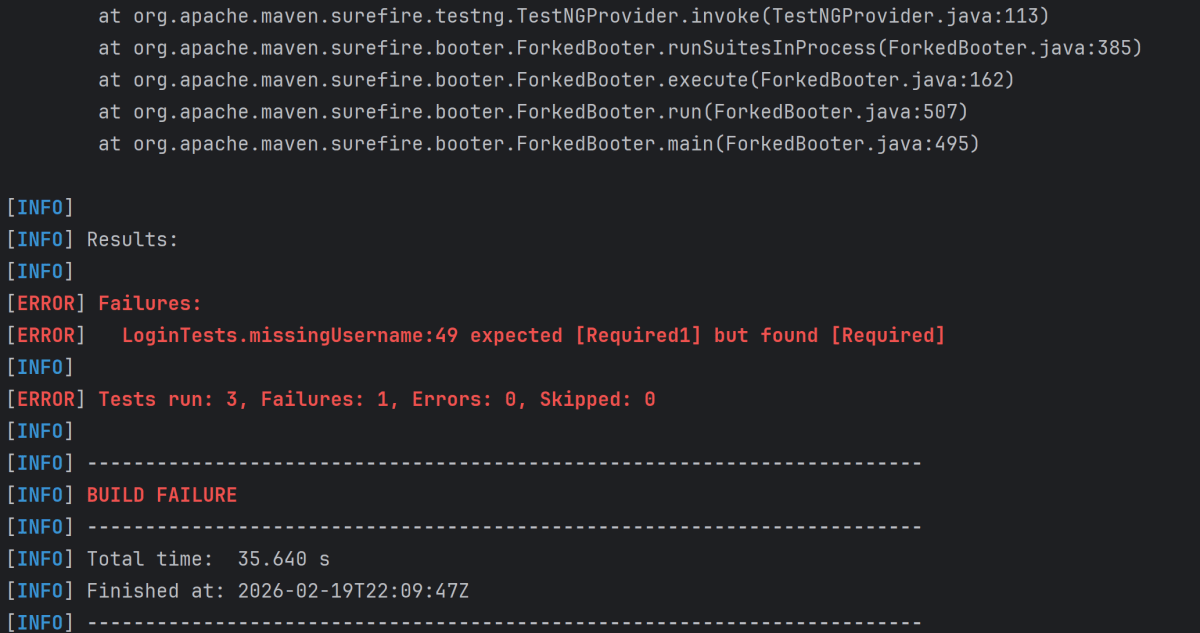
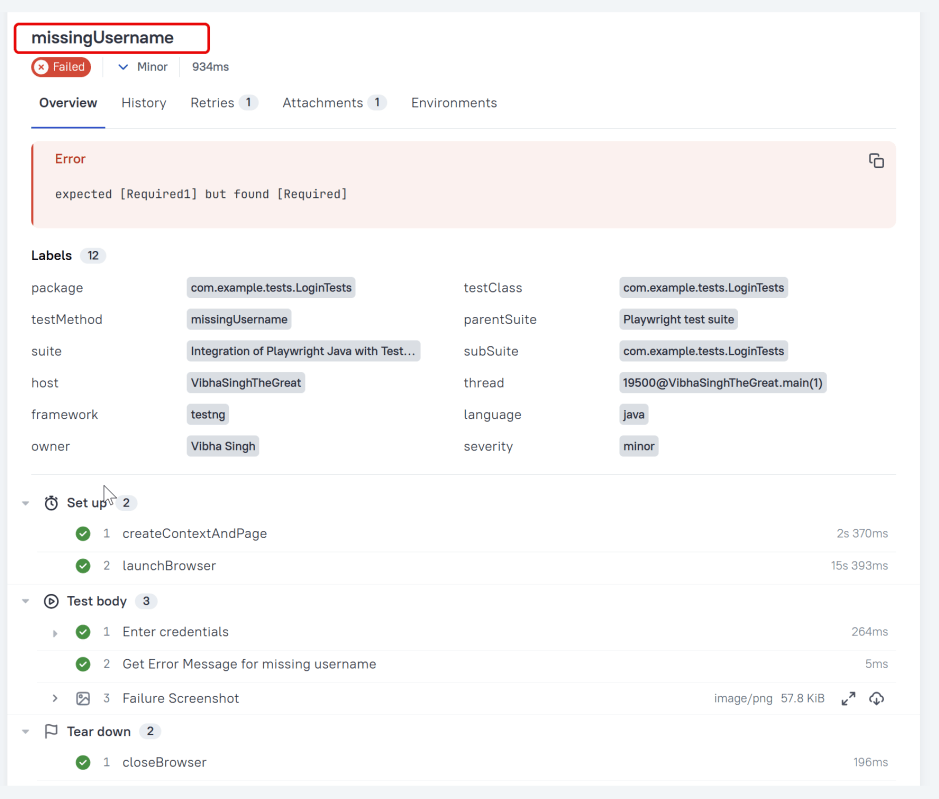
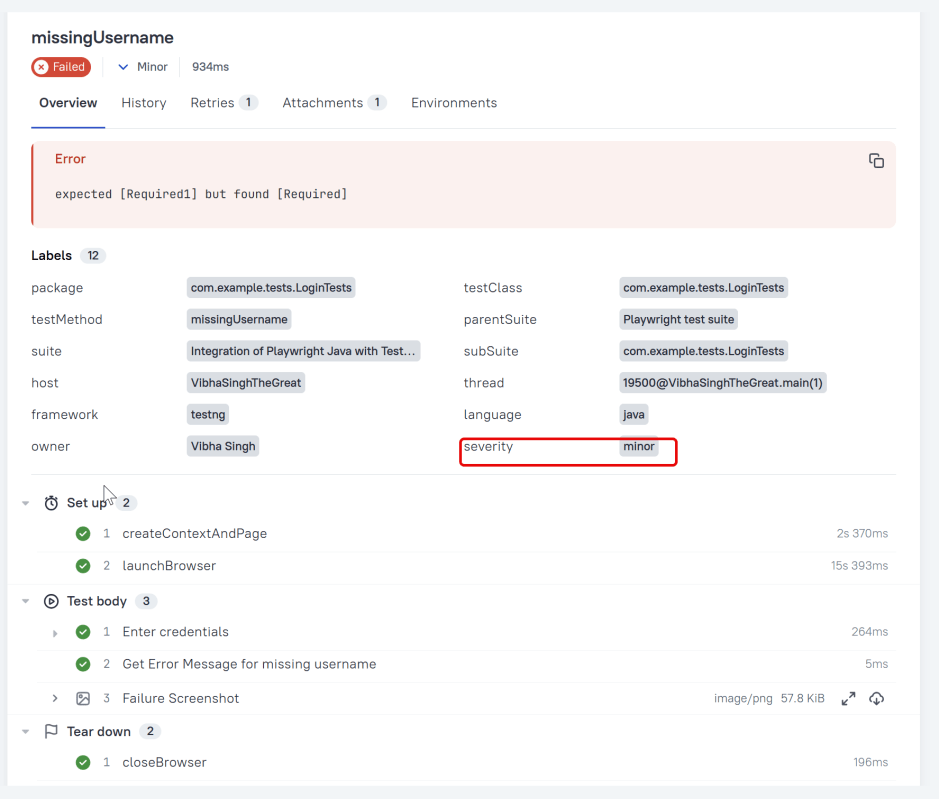
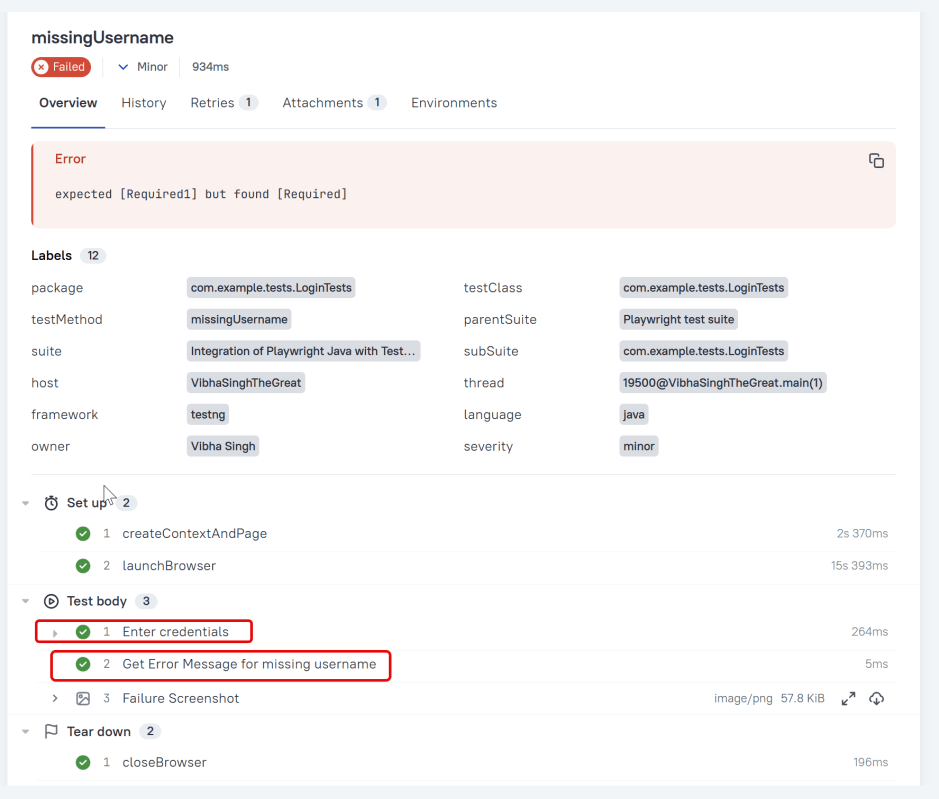
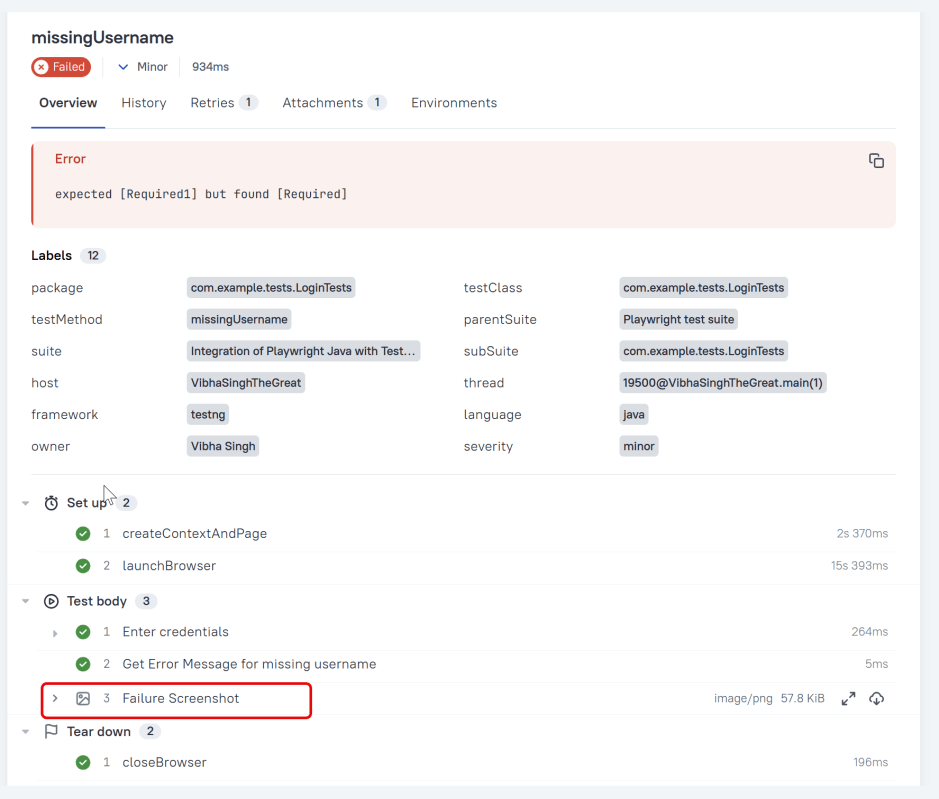
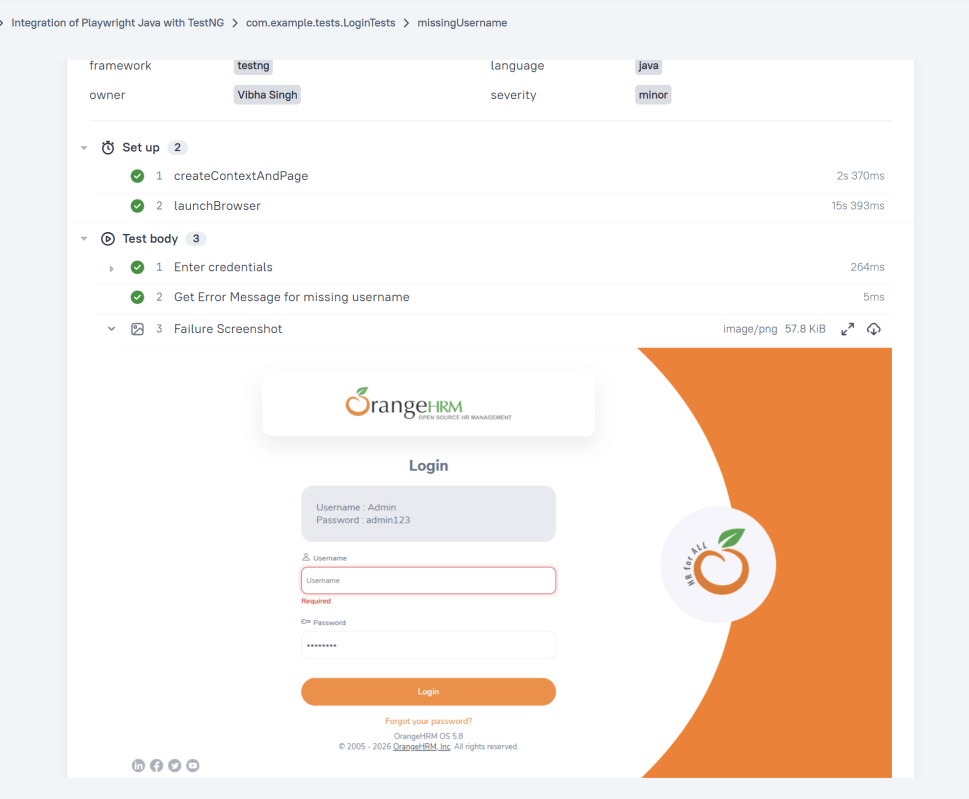
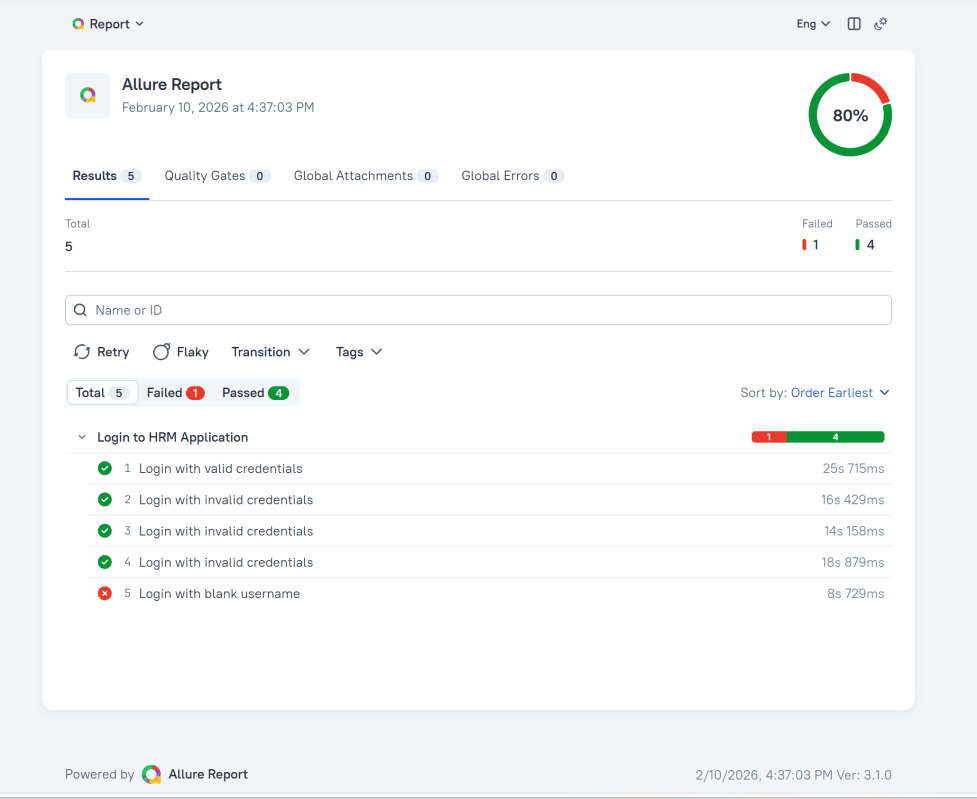
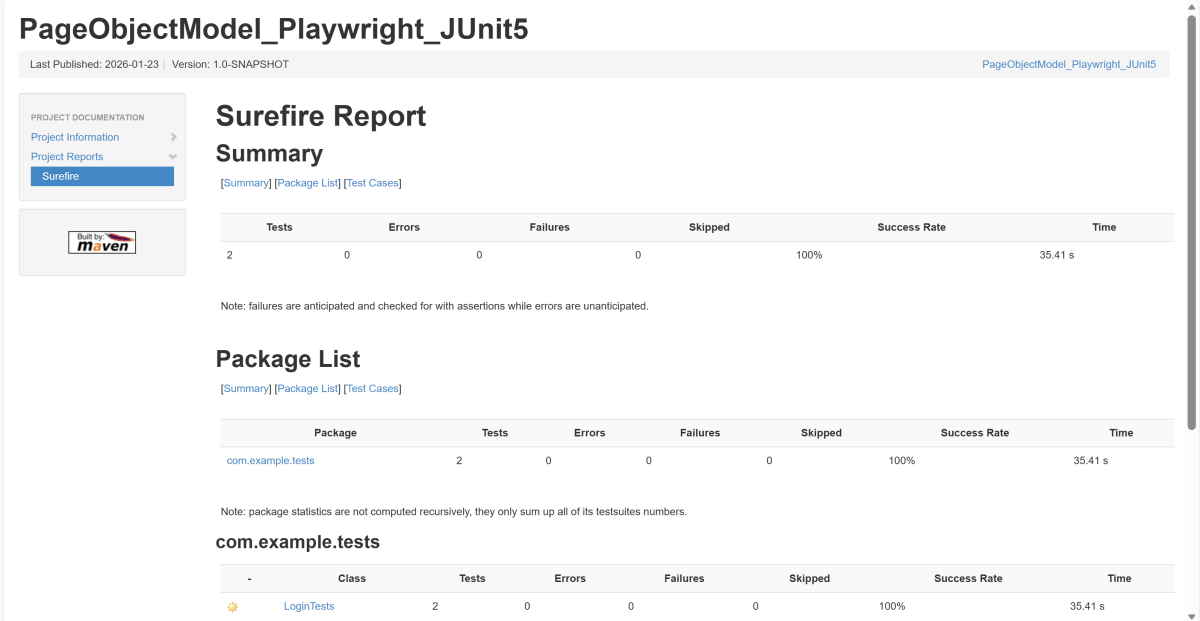
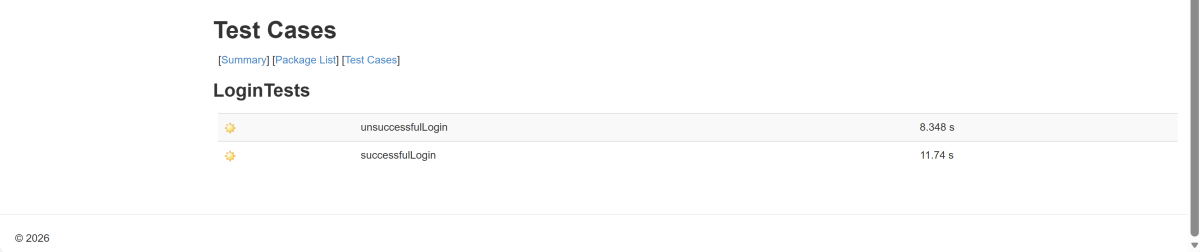
In the image below, we can see that one test failed and four passed out of three tests.

This will create the allure-results folder with all the test reports within build folder. These files will be used to generate Allure Report.

9. How to Generate an Allure Report

Use the command below to generate the Allure Report

 allure serve build/allure-results

This will generate the beautiful Allure Test Report as shown below.

Graphs in Allure Report

Graphs allow you to see different statistics collected from the test data: status breakdown or severity and duration diagrams.

Timeline in Allure Report

The timeline tab visualizes retrospective test execution. Allure adaptors collect precise timings of tests. Here on this tab, they are arranged according to their sequential or parallel timing structure.

 allure awesome build/allure-results

Congratulations!! We have integrated an allure report with Cucumber, Selenium, and TestNG. I hope this tutorial is useful to you.

Additional Tutorials on Allure Reports

Integration of Allure Report with Selenium and JUnit4
Integration of Allure Report with Selenium and TestNG
Gradle – Allure Report for Selenium and JUnit4
Gradle – Allure Report for Cucumber, Selenium and TestNG
Integration of Allure Report with Rest Assured and JUnit4

Test Your Knowledge: 25 SQL Subquery Questions

HOME


SELECT employee_id FROM employees WHERE salary > (SELECT AVG(salary) FROM employees);


SELECT * FROM employees WHERE department_id = (SELECT department_id FROM departments WHERE name = 'Sales');


a) SELECT * FROM employees WHERE salary > (SELECT AVG(salary) FROM employees);
b) SELECT * FROM employees e WHERE salary > (SELECT AVG(salary) FROM employees WHERE department_id = e.department_id);
c) SELECT * FROM employees WHERE salary IN (SELECT salary FROM employees);
d) SELECT * FROM employees WHERE id IN (SELECT id FROM departments);


SELECT * FROM employees 
   WHERE salary BETWEEN (SELECT max(salary) FROM employees WHERE department_id = 100) AND 
  (SELECT min(salary) FROM employees WHERE department_id = 100);

SELECT department_id FROM departments WHERE department_id = (SELECT MAX(department_id) FROM departments);

a)  UPDATE employees SET salary = salary * 1.1 WHERE department_id = (SELECT department_id FROM departments);
b)	 UPDATE employees SET salary = salary * 1.1 WHERE department_id = (SELECT department_id FROM departments WHERE name = 'HR');
c)  UPDATE employees USING (SELECT department_id FROM departments WHERE name = 'HR');
d)  UPDATE employees SET salary = 1.1 * (SELECT salary FROM employees);

DELETE FROM employees WHERE manager_id IN (SELECT employee_id FROM employees WHERE department_id = 3);

SELECT first_name, last_name, salary FROM employees WHERE salary ANY 
(SELECT salary FROM employees);


a) SELECT * FROM (SELECT column1 FROM table1) AS subquery;
b) SELECT * FROM table1 WHERE column1 = (SELECT column2 FROM table2);
c) SELECT * FROM table1 INNER JOIN (SELECT column2 FROM table2) AS subquery;
d) SELECT column1 FROM table1 WHERE column2 = (SELECT column2 FROM table2) AND column3 = (SELECT column3 FROM table3);

SELECT first_name, last_name FROM employees WHERE emp_id  NOT IN 
(SELECT manager_id, hire_date FROM employees WHERE manager_id IS NOT NULL);


Integration of Playwright with Java, Cucumber and JUnit5

HOME

Benefits of Using Cucumber with Playwright

<properties>
        <project.build.sourceEncoding>UTF-8</project.build.sourceEncoding>
        <java.version>17</java.version>
        <cucumber.version>7.33.0</cucumber.version>
        <playwright.version>1.57.0</playwright.version>
        <lombok.version>1.18.30</lombok.version>
        <junit.jupiter.engine.version>6.1.0-M1</junit.jupiter.engine.version>
        <junit.jupiter.version>6.1.0-M1</junit.jupiter.version>
        <maven.compiler.plugin.version>3.14.1</maven.compiler.plugin.version>
        <maven.compiler.source.version>17</maven.compiler.source.version>
        <maven.compiler.target.version>17</maven.compiler.target.version>
        <maven.surefire.plugin.version>3.5.4</maven.surefire.plugin.version>
        <maven.compiler.source>17</maven.compiler.source>
        <maven.compiler.target>17</maven.compiler.target>
        <maven.site.plugin.version>4.0.0-M16</maven.site.plugin.version>
        <maven.surefire.report.plugin.version>3.5.4</maven.surefire.report.plugin.version>
        <cucumber.junit.platform.engine>7.14.0</cucumber.junit.platform.engine>
    </properties>

    <dependencies>
        <dependency>
            <groupId>com.microsoft.playwright</groupId>
            <artifactId>playwright</artifactId>
            <version>${playwright.version}</version>
        </dependency>

        <dependency>
            <groupId>org.junit.jupiter</groupId>
            <artifactId>junit-jupiter-engine</artifactId>
            <version>${junit.jupiter.engine.version}</version>
            <scope>test</scope>
        </dependency>

        <dependency>
            <groupId>org.junit.jupiter</groupId>
            <artifactId>junit-jupiter-api</artifactId>
            <version>${junit.jupiter.version}</version>
            <scope>test</scope>
        </dependency>

        <dependency>
            <groupId>org.junit.jupiter</groupId>
            <artifactId>junit-jupiter-params</artifactId>
            <version>${junit.jupiter.version}</version>
            <scope>test</scope>
        </dependency>

        <!-- Cucumber with Java -->
        <dependency>
            <groupId>io.cucumber</groupId>
            <artifactId>cucumber-java</artifactId>
            <version>${cucumber.version}</version>
            <scope>test</scope>
        </dependency>

        <!-- Cucumber with Junit5 -->
        <dependency>
            <groupId>io.cucumber</groupId>
            <artifactId>cucumber-junit-platform-engine</artifactId>
            <version>${cucumber.junit.platform.engine}</version>
        </dependency>

        <!-- JUnit Platform -->
        <dependency>
            <groupId>org.junit.platform</groupId>
            <artifactId>junit-platform-suite</artifactId>
            <version>${junit.jupiter.version}</version>
            <scope>test</scope>
        </dependency>

    </dependencies>

 <build>
        <plugins>
            <plugin>
                <groupId>org.apache.maven.plugins</groupId>
                <artifactId>maven-compiler-plugin</artifactId>
                <version>${maven.compiler.plugin.version}</version>
                <configuration>
                    <source>${maven.compiler.source.version}</source>
                    <target>${maven.compiler.target.version}</target>
                </configuration>
            </plugin>

            <plugin>
                <groupId>org.apache.maven.plugins</groupId>
                <artifactId>maven-surefire-plugin</artifactId>
                <version>${maven.surefire.plugin.version}</version>
                <configuration>
                    <testFailureIgnore>true</testFailureIgnore>
                </configuration>
            </plugin>

        </plugins>
    </build>
<plugin>
        <groupId>org.apache.maven.plugins</groupId>
        <artifactId>maven-site-plugin</artifactId>
        <version>${maven.site.plugin.version}</version>
</plugin>

<reporting>
        <plugins>
            <plugin>
                <groupId>org.apache.maven.plugins</groupId>
                <artifactId>maven-surefire-report-plugin</artifactId>
                <version>${maven.surefire.report.plugin.version}</version>
                <configuration>
                    <outputName>JUnit5 Report</outputName>
                </configuration>
            </plugin>
        </plugins>
    </reporting>

<project xmlns="http://maven.apache.org/POM/4.0.0" xmlns:xsi="http://www.w3.org/2001/XMLSchema-instance"
         xsi:schemaLocation="http://maven.apache.org/POM/4.0.0 http://maven.apache.org/xsd/maven-4.0.0.xsd">
    <modelVersion>4.0.0</modelVersion>

    <groupId>com.example</groupId>
    <artifactId>Cucumber_Playwright_JUnit5</artifactId>
    <version>1.0-SNAPSHOT</version>
    <packaging>jar</packaging>

    <name>Cucumber_Playwright_JUnit5</name>
    <url>http://maven.apache.org</url>

    <properties>
        <project.build.sourceEncoding>UTF-8</project.build.sourceEncoding>
        <java.version>17</java.version>
        <cucumber.version>7.33.0</cucumber.version>
        <playwright.version>1.57.0</playwright.version>
        <lombok.version>1.18.30</lombok.version>
        <junit.jupiter.engine.version>6.1.0-M1</junit.jupiter.engine.version>
        <junit.jupiter.version>6.1.0-M1</junit.jupiter.version>
        <maven.compiler.plugin.version>3.14.1</maven.compiler.plugin.version>
        <maven.compiler.source.version>17</maven.compiler.source.version>
        <maven.compiler.target.version>17</maven.compiler.target.version>
        <maven.surefire.plugin.version>3.5.4</maven.surefire.plugin.version>
        <maven.compiler.source>17</maven.compiler.source>
        <maven.compiler.target>17</maven.compiler.target>
        <maven.site.plugin.version>4.0.0-M16</maven.site.plugin.version>
        <maven.surefire.report.plugin.version>3.5.4</maven.surefire.report.plugin.version>
        <cucumber.junit.platform.engine>7.14.0</cucumber.junit.platform.engine>
    </properties>

    <dependencies>
        <dependency>
            <groupId>com.microsoft.playwright</groupId>
            <artifactId>playwright</artifactId>
            <version>${playwright.version}</version>
        </dependency>

        <dependency>
            <groupId>org.junit.jupiter</groupId>
            <artifactId>junit-jupiter-engine</artifactId>
            <version>${junit.jupiter.engine.version}</version>
            <scope>test</scope>
        </dependency>

        <dependency>
            <groupId>org.junit.jupiter</groupId>
            <artifactId>junit-jupiter-api</artifactId>
            <version>${junit.jupiter.version}</version>
            <scope>test</scope>
        </dependency>

        <dependency>
            <groupId>org.junit.jupiter</groupId>
            <artifactId>junit-jupiter-params</artifactId>
            <version>${junit.jupiter.version}</version>
            <scope>test</scope>
        </dependency>

        <!-- Cucumber with Java -->
        <dependency>
            <groupId>io.cucumber</groupId>
            <artifactId>cucumber-java</artifactId>
            <version>${cucumber.version}</version>
            <scope>test</scope>
        </dependency>

        <!-- Cucumber with Junit5 -->
        <dependency>
            <groupId>io.cucumber</groupId>
            <artifactId>cucumber-junit-platform-engine</artifactId>
            <version>${cucumber.junit.platform.engine}</version>
        </dependency>

        <!-- JUnit Platform -->
        <dependency>
            <groupId>org.junit.platform</groupId>
            <artifactId>junit-platform-suite</artifactId>
            <version>${junit.jupiter.version}</version>
            <scope>test</scope>
        </dependency>

    </dependencies>

    <build>
        <plugins>
            <plugin>
                <groupId>org.apache.maven.plugins</groupId>
                <artifactId>maven-compiler-plugin</artifactId>
                <version>${maven.compiler.plugin.version}</version>
                <configuration>
                    <source>${maven.compiler.source.version}</source>
                    <target>${maven.compiler.target.version}</target>
                </configuration>
            </plugin>

            <plugin>
                <groupId>org.apache.maven.plugins</groupId>
                <artifactId>maven-surefire-plugin</artifactId>
                <version>${maven.surefire.plugin.version}</version>
                <configuration>
                    <testFailureIgnore>true</testFailureIgnore>
                </configuration>
            </plugin>

            <plugin>
                <groupId>org.apache.maven.plugins</groupId>
                <artifactId>maven-site-plugin</artifactId>
                <version>${maven.site.plugin.version}</version>
            </plugin>
        </plugins>
    </build>

    <reporting>
        <plugins>
            <plugin>
                <groupId>org.apache.maven.plugins</groupId>
                <artifactId>maven-surefire-report-plugin</artifactId>
                <version>${maven.surefire.report.plugin.version}</version>
                <configuration>
                    <outputName>JUnit5 Report</outputName>
                </configuration>
            </plugin>
        </plugins>
    </reporting>
</project>

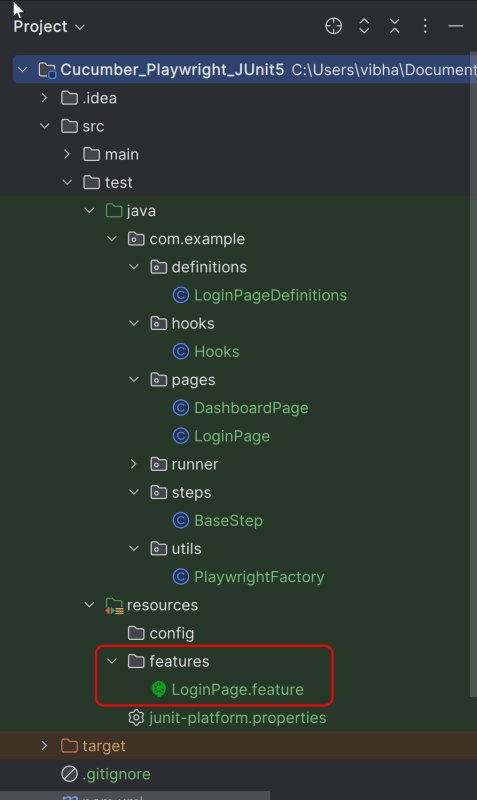
Feature: Login to HRM Application

  Background:
    Given User is on HRMLogin page "https://opensource-demo.orangehrmlive.com/"

  @ValidCredentials
  Scenario: Login with valid credentials

    When User enters username as "Admin" and password as "admin123"
    Then User should be able to login successfully and new page opens with heading "Dashboard"

  @InvalidCredentials
  Scenario Outline: Login with invalid credentials

    When User enters username as "<username>" and password as "<password>"
    Then User should be able to see error message "<errorMessage>"

    Examples:
      | username   | password  | errorMessage           |
      | Admin      | admin12$$ | Invalid credentials    |
      | admin$$    | admin123  | Invalid credentials    |
      | abc123     | xyz$$     | Invalid credentials    |

  @MissingUsername 
  Scenario: Login with blank username

    When User enters username as " " and password as "admin123"
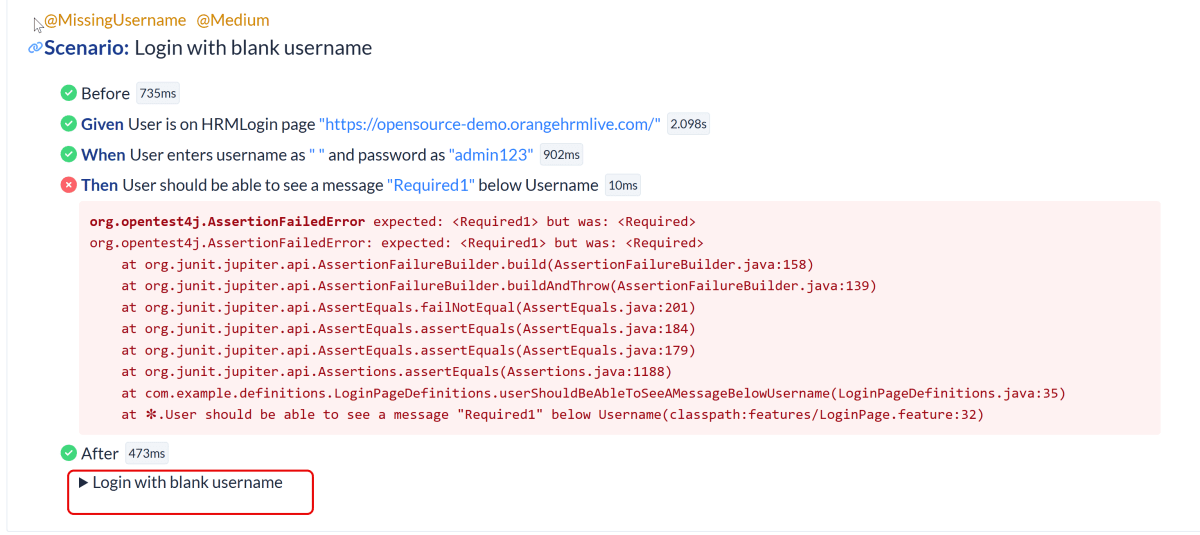
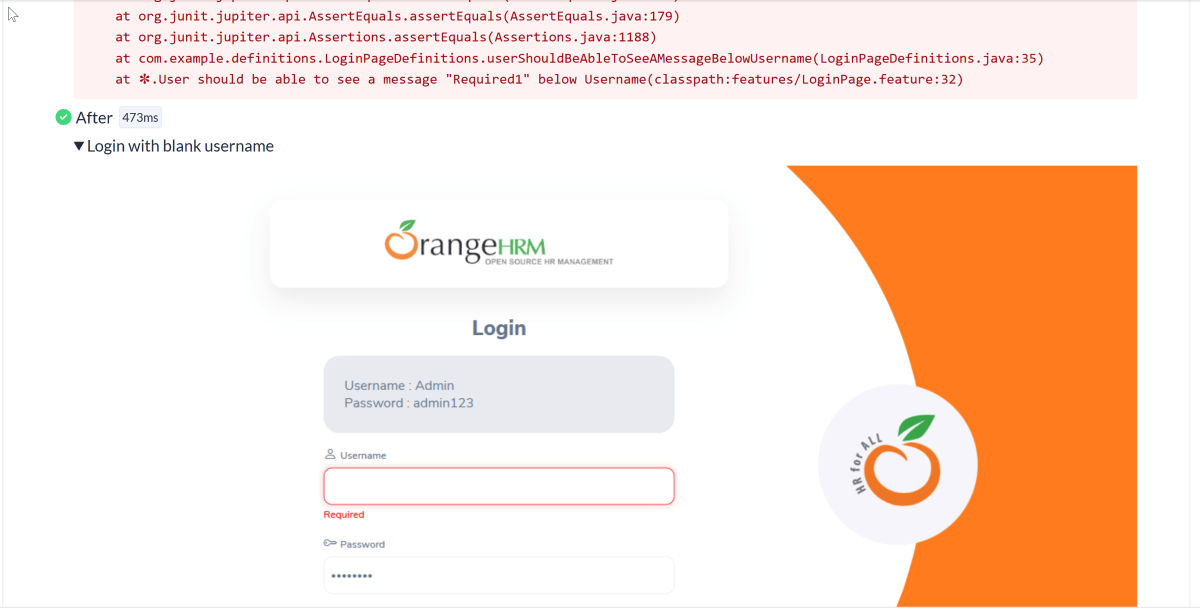
    Then User should be able to see a message "Required" below Username

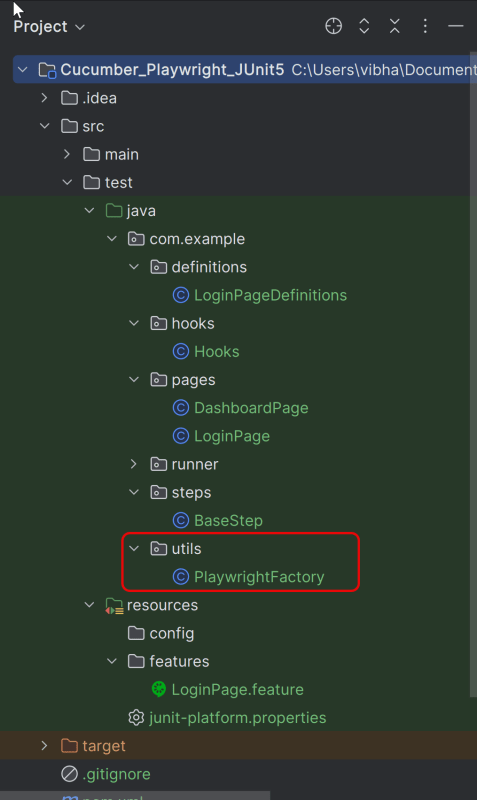
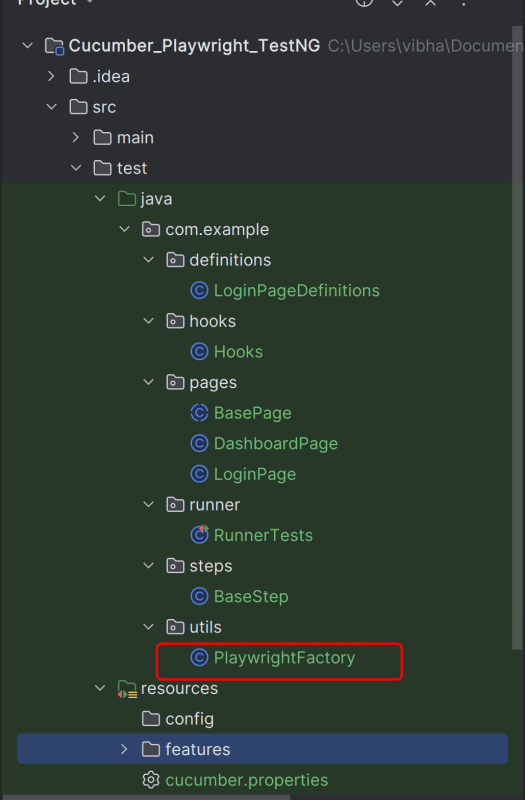
package com.example.utils;

import com.microsoft.playwright.*;

public class PlaywrightFactory {

    private static Playwright playwright;
    private static Browser browser;
    private static BrowserContext context;
    private static Page page;

    public static void initBrowser() {

        playwright = Playwright.create();
        browser = playwright.chromium().launch(new BrowserType.LaunchOptions().setHeadless(false));
        context = browser.newContext();
        page = context.newPage();
    }

    public static Page getPage() {
        return page;
    }

    public static void closeBrowser() {
        if (page != null) page.close();
        if (context != null) context.close();
        if (browser != null) browser.close();
        if (playwright != null) playwright.close();
    }
}

package com.example.hooks;

import com.example.utils.PlaywrightFactory;
import com.microsoft.playwright.*;
import io.cucumber.java.After;
import io.cucumber.java.Before;
import io.cucumber.java.Scenario;

public class Hooks {

    @Before
    public void beforeScenario(Scenario scenario) {
        System.out.println("Starting scenario: " + scenario.getName());
        PlaywrightFactory.initBrowser();
    }

    @After
    public void afterScenario(Scenario scenario) {
        Page page = PlaywrightFactory.getPage();
        if (page != null && scenario.isFailed()) {
            scenario.attach(page.screenshot(), "image/png", scenario.getName());
        }
        PlaywrightFactory.closeBrowser();  
        System.out.println("Finished scenario: " + scenario.getName());
    }
}


package com.example.pages;

import com.microsoft.playwright.*;

public class LoginPage {

    private Page page;

    // Locators
    private final Locator usernameLocator;
    private final Locator passwordLocator;
    private final Locator submitLocator;
    private final Locator invalidCredentialsLocator;
    private final Locator missingUsernameLocator;

    public LoginPage(Page page) {
        this.page = page;
        this.usernameLocator = page.locator("input[name='username']");
        this.passwordLocator = page.locator("input[name='password']");
        this.submitLocator = page.locator("button[type='submit']");
        this.invalidCredentialsLocator = page.locator("//p[contains(@class, "oxd-text oxd-text--p oxd-alert-content-text")]");
        this.missingUsernameLocator = page.locator("//span[contains(@class, 'oxd-text oxd-text--span oxd-input-field-error-message oxd-input-group__message')]");
    }

    public void login(String user, String pass){
        usernameLocator.fill(user);
        passwordLocator.fill(pass);
        submitLocator.click();
    }

    public void getUrl(String url){
        page.navigate(url);
    }

    public String getMissingUsernameErrorMessage() {
        return missingUsernameLocator.textContent();
    }

    public String getErrorMessage () {
        return invalidCredentialsLocator.textContent();
    }
}

package com.example.pages;

import com.microsoft.playwright.Locator;
import com.microsoft.playwright.Page;

public class DashboardPage {

    private Page page;

    private final Locator headingLocator;

    public DashboardPage(Page page){
        this.page = page;
        this.headingLocator = page.locator("//h6[contains(@class, "oxd-topbar-header-breadcrumb-module")]");
    }

    public String getDashboardPageHeading() {
        return headingLocator.textContent();
    }

}

package com.example.steps;

import com.example.utils.PlaywrightFactory;
import com.microsoft.playwright.Page;

public class BaseStep {

    protected Page getPage() {
        Page page = PlaywrightFactory.getPage();
        if (page == null) {
            throw new RuntimeException(
                    "Page is NULL. Ensure @Before hook ran and glue includes hooks package."
            );
        }
        return page;
    }
}

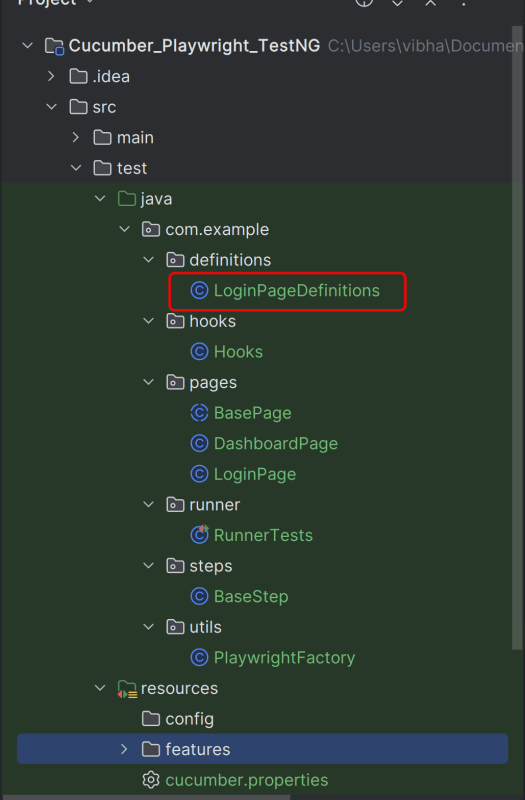
package com.example.definitions;

import com.example.pages.DashboardPage;
import com.example.pages.LoginPage;
import com.example.steps.BaseStep;
import io.cucumber.java.en.Given;
import io.cucumber.java.en.Then;
import io.cucumber.java.en.When;
import org.junit.jupiter.api.Assertions;


public class LoginPageDefinitions extends BaseStep {

    private LoginPage loginPage;
    private DashboardPage dashboardPage;

    @Given("User is on HRMLogin page {string}")
    public void userIsOnHRMLoginPage(String baseUrl) {
        loginPage = new LoginPage(getPage());
        loginPage.getUrl(baseUrl);
    }

    @When("User enters username as {string} and password as {string}")
    public void userEntersUsernameAsAndPasswordAs(String username, String password) {
        loginPage.login(username, password);
    }

    @Then("User should be able to see error message {string}")
    public void userShouldBeAbleToSeeErrorMessage(String expectedErrorMessage) {
        Assertions.assertEquals(expectedErrorMessage, loginPage.getErrorMessage());
    }

    @Then("User should be able to see a message {string} below Username")
    public void userShouldBeAbleToSeeAMessageBelowUsername(String expectedErrorMessage) {
        Assertions.assertEquals(expectedErrorMessage, loginPage.getMissingUsernameErrorMessage());
    }

    @Then("User should be able to login successfully and new page opens with heading {string}")
    public void userShouldBeAbleToLoginSuccessfullyAndNewPageOpen(String expectedHeading) {
        dashboardPage = new DashboardPage(getPage());
        Assertions.assertEquals(expectedHeading, dashboardPage.getDashboardPageHeading());

    }

}

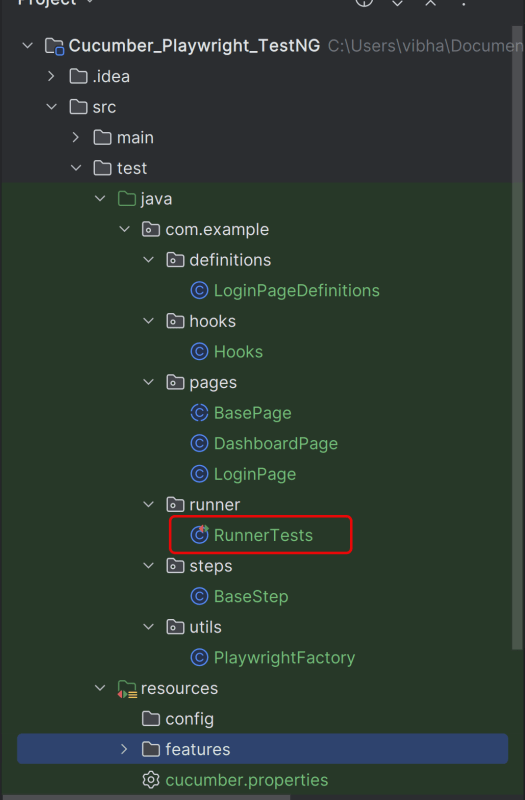
package com.example.runner;

import static io.cucumber.junit.platform.engine.Constants.GLUE_PROPERTY_NAME;
import org.junit.platform.suite.api.ConfigurationParameter;
import org.junit.platform.suite.api.IncludeEngines;
import org.junit.platform.suite.api.SelectClasspathResource;
import org.junit.platform.suite.api.Suite;

@Suite
@IncludeEngines("cucumber")
@SelectClasspathResource("features")
@ConfigurationParameter(
        key = GLUE_PROPERTY_NAME, value = "com.example"
)

public class RunnerTests {
}

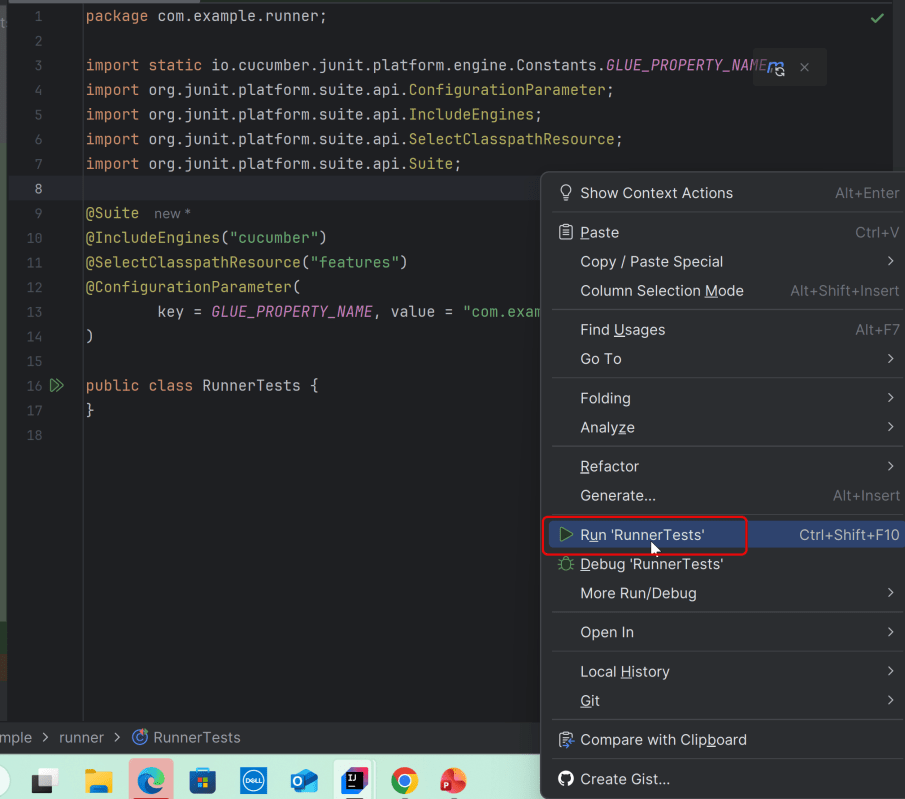
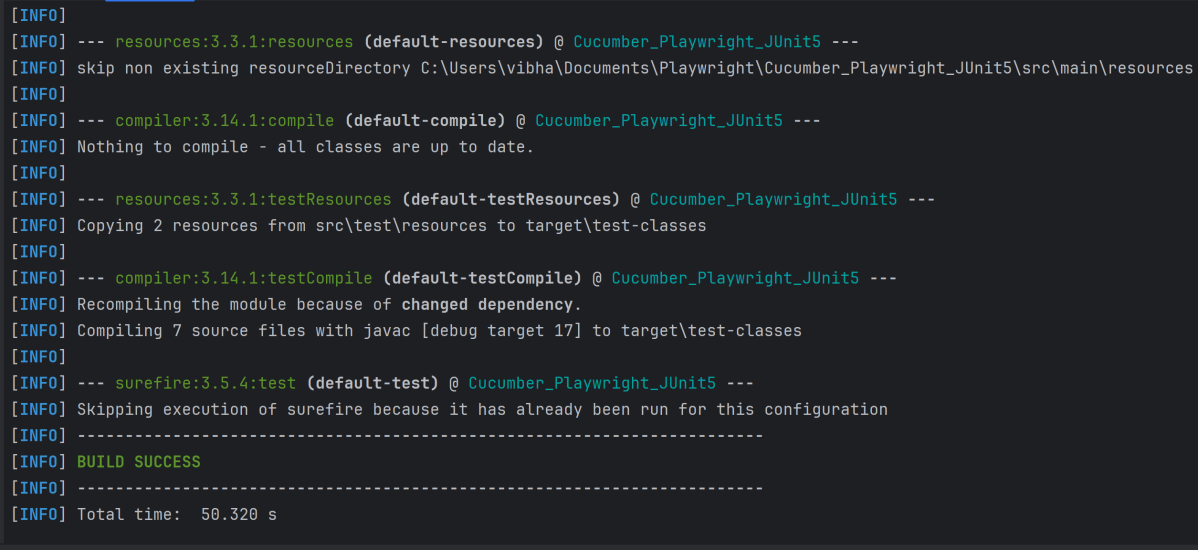
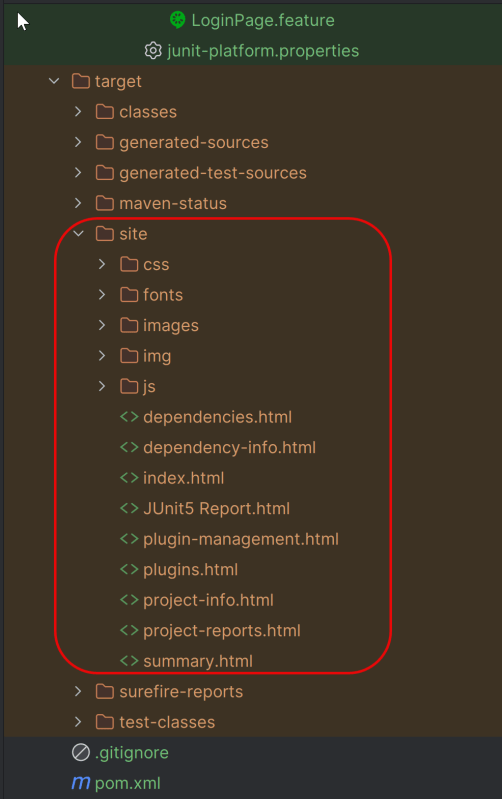
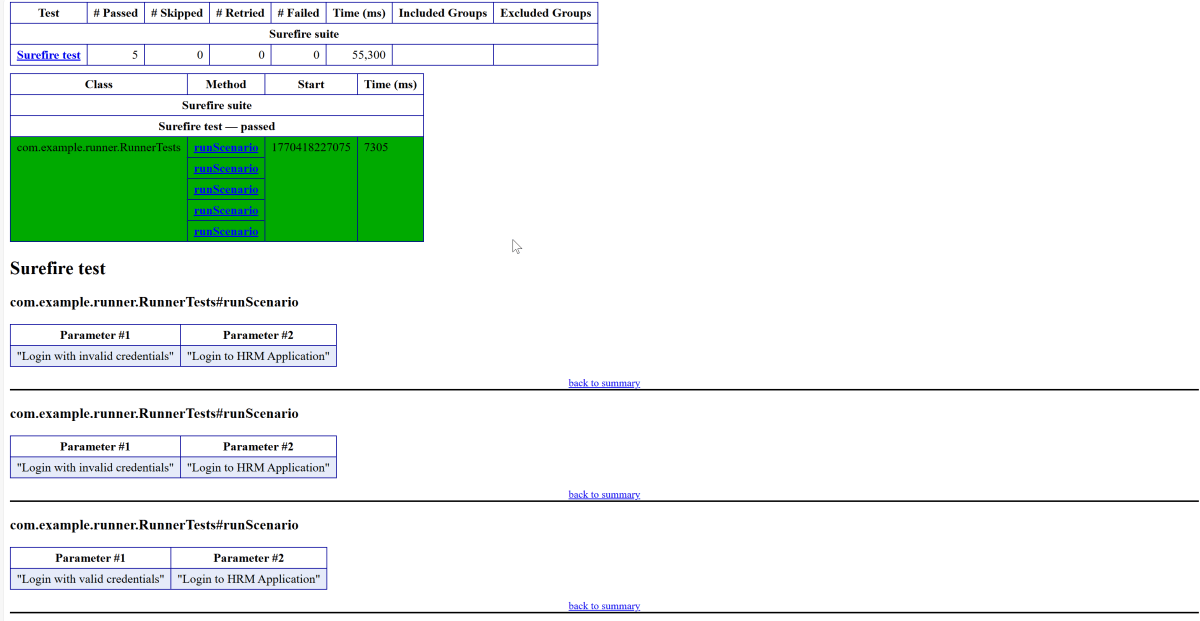
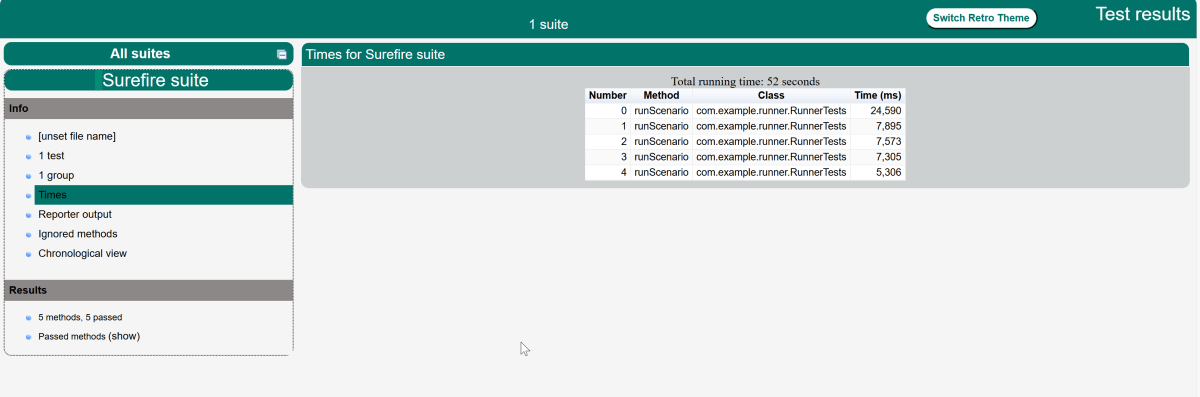
mvn clean site test

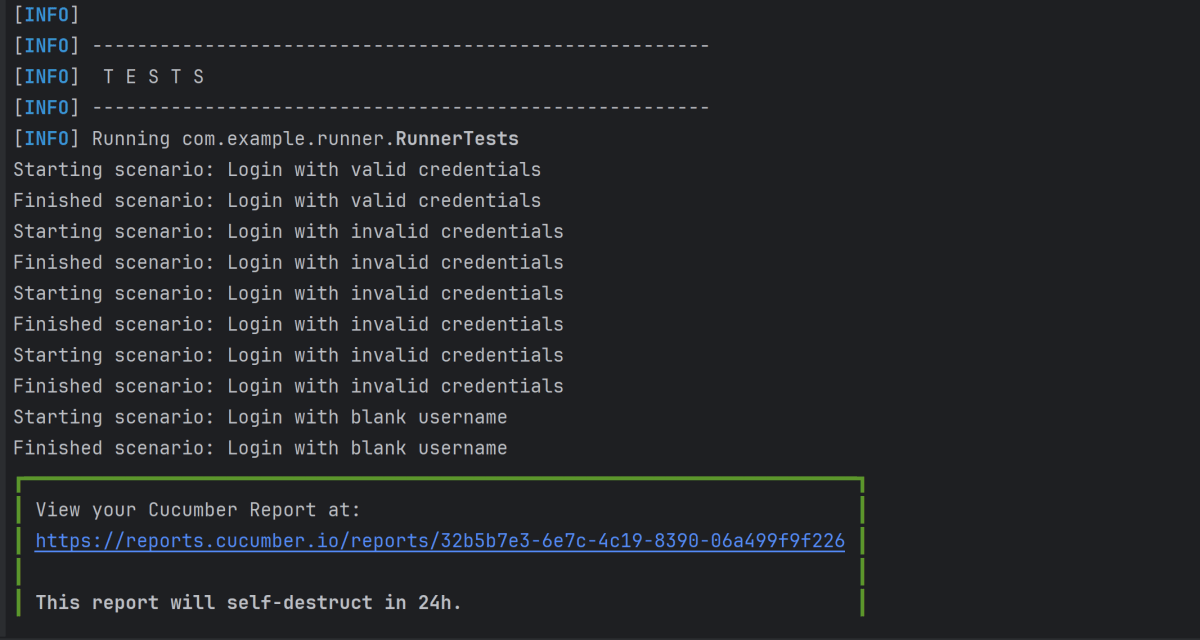
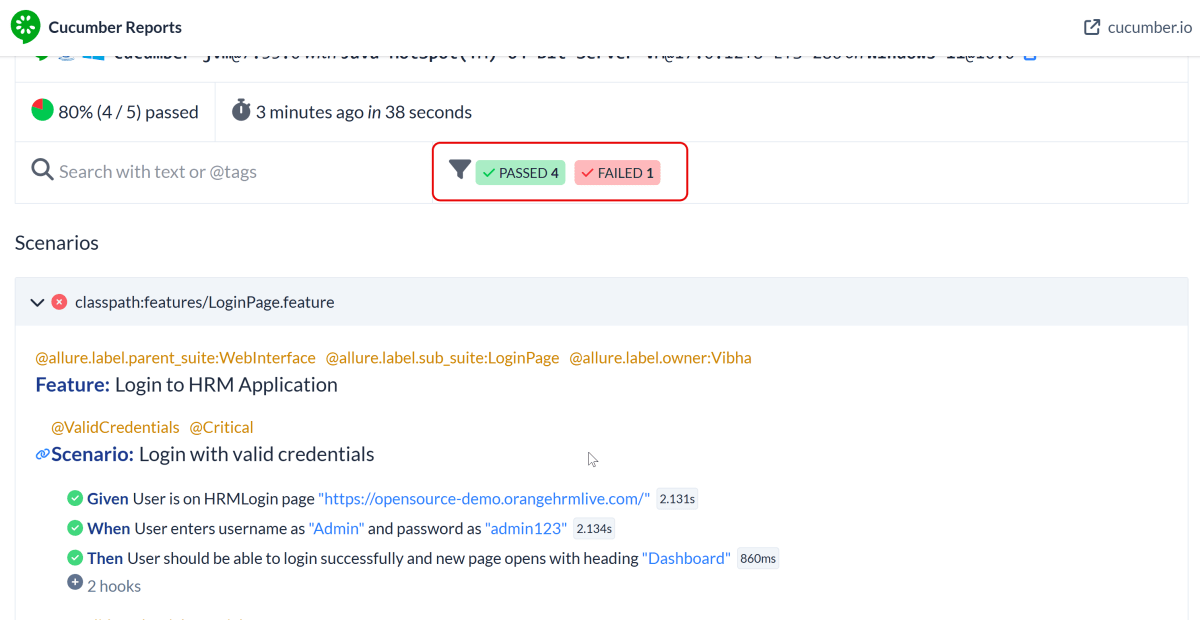
cucumber.publish.enabled=true

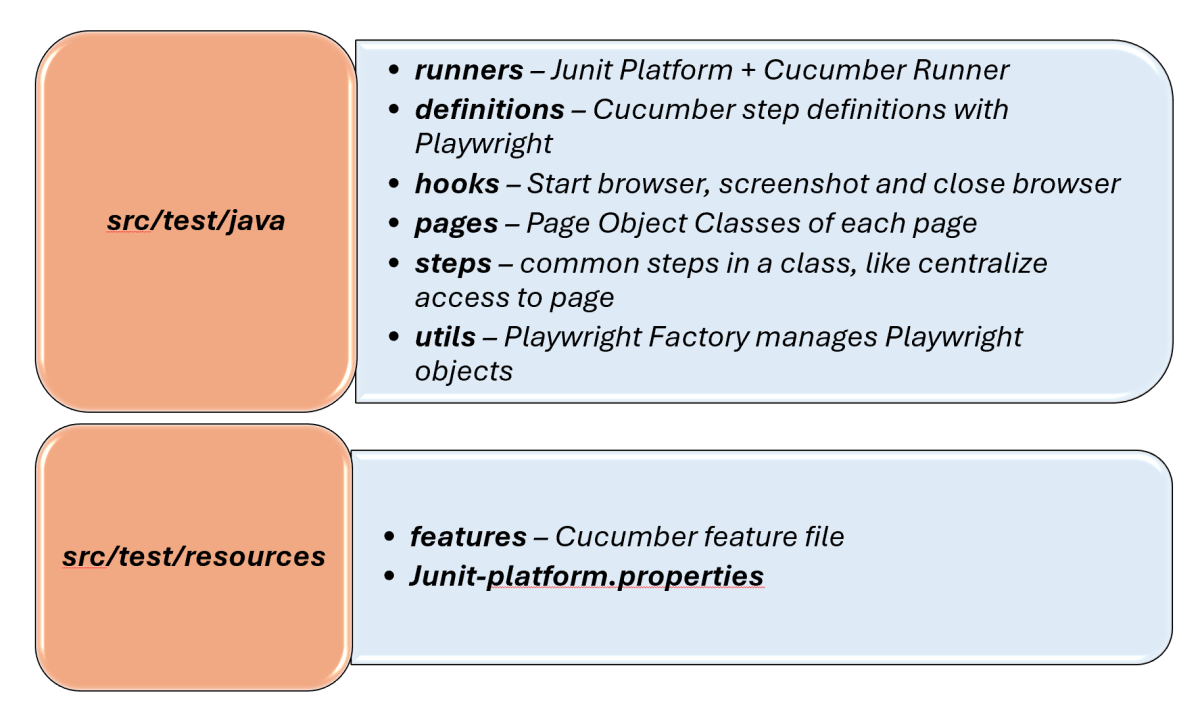
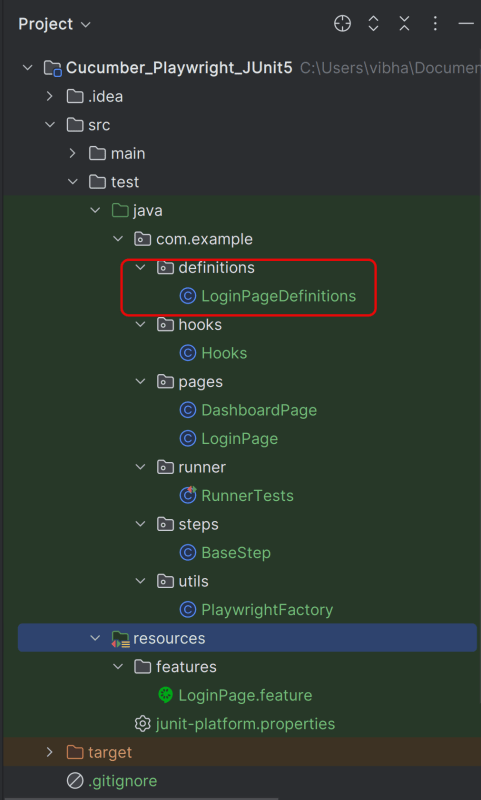
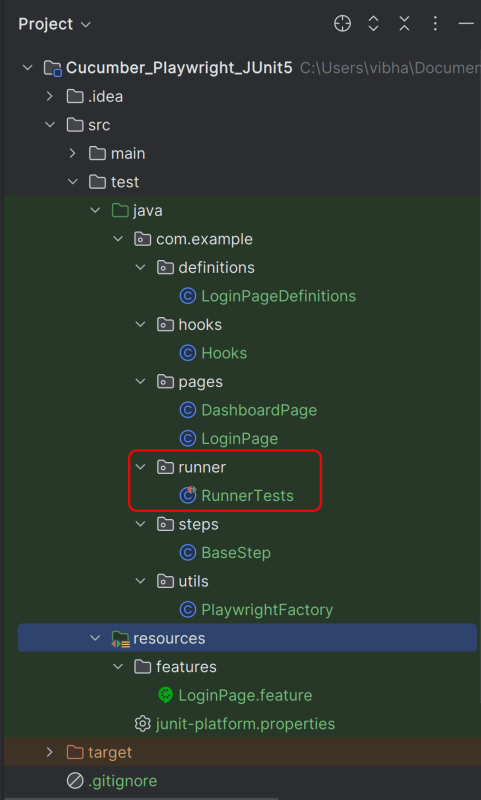
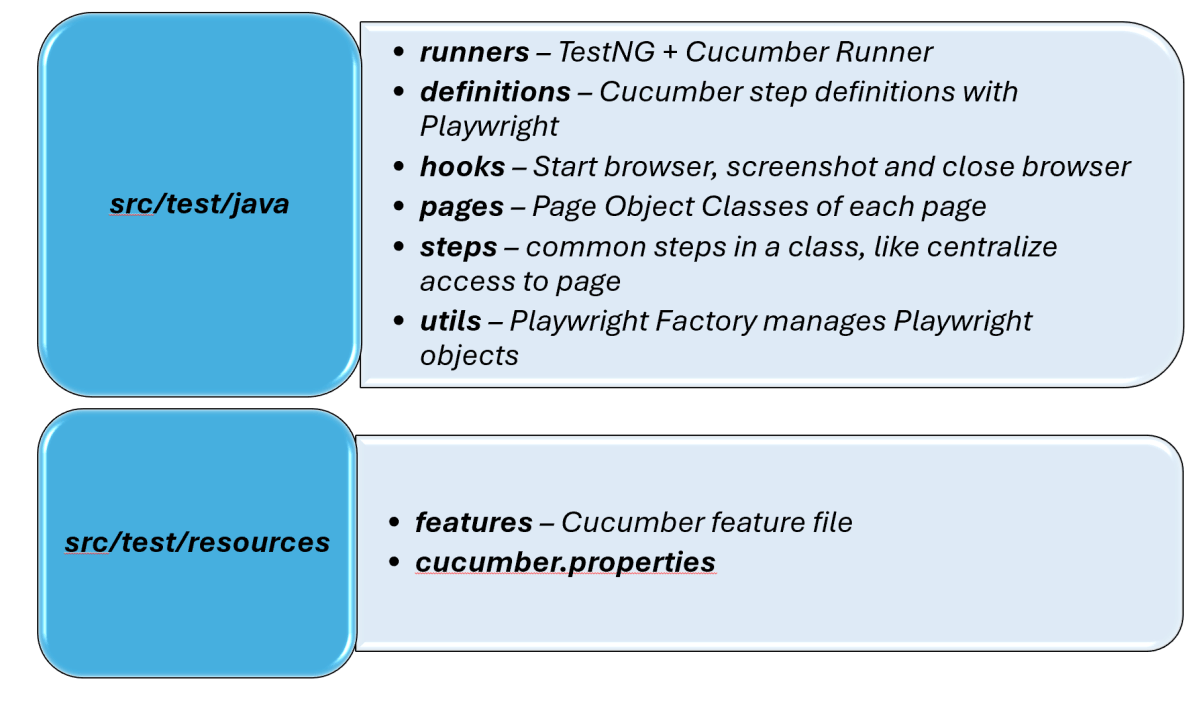
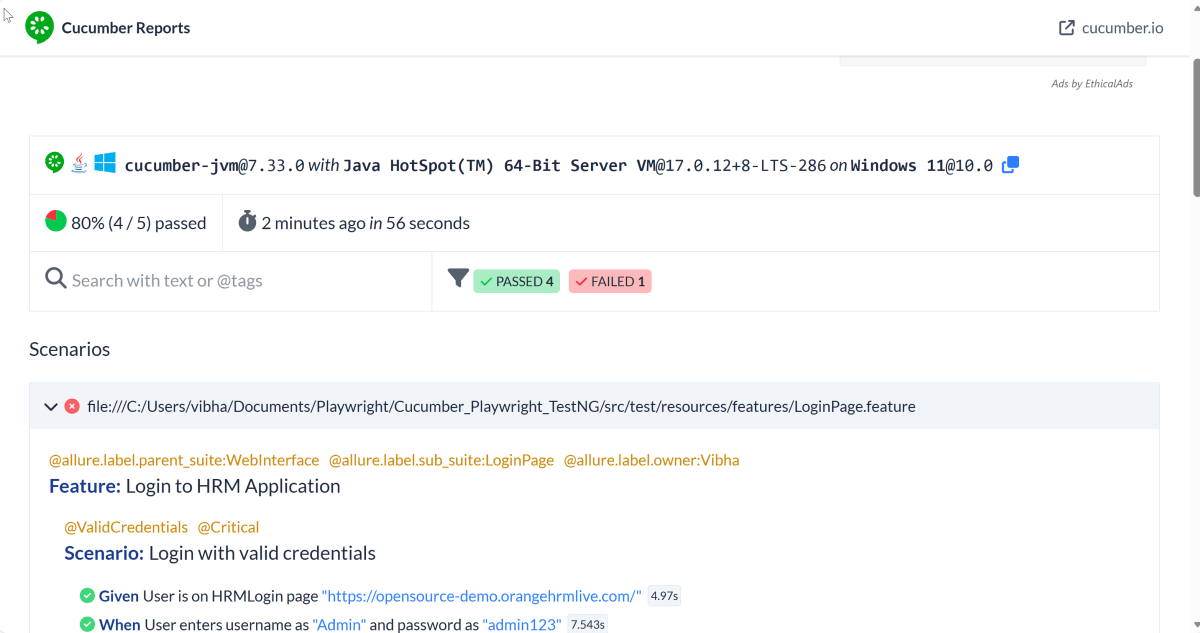
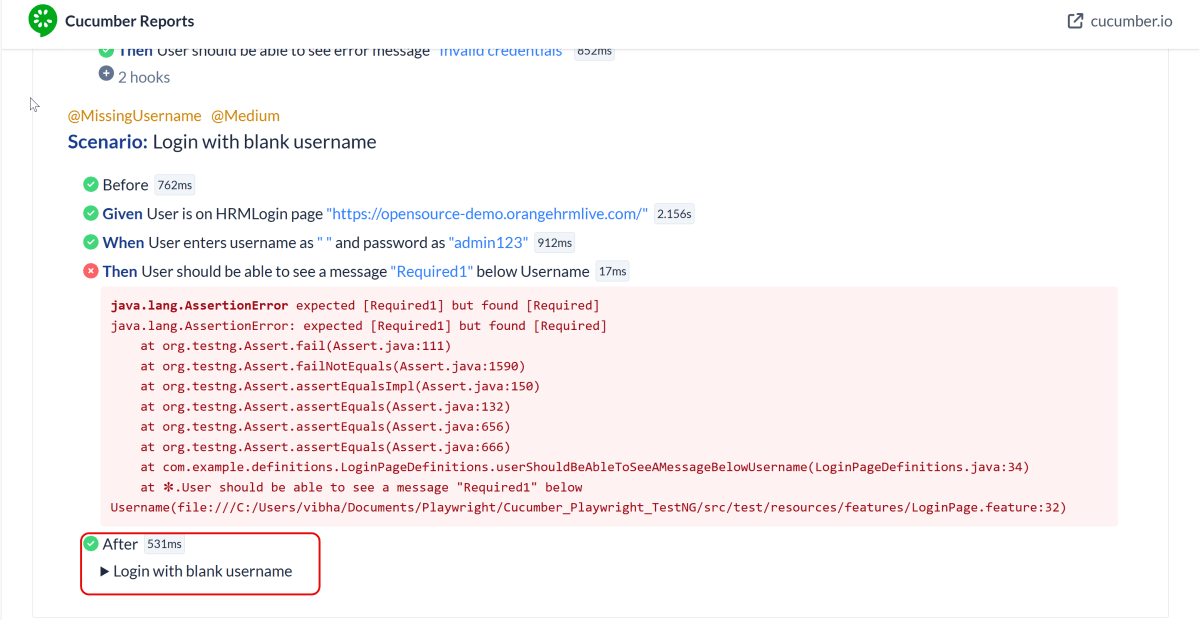
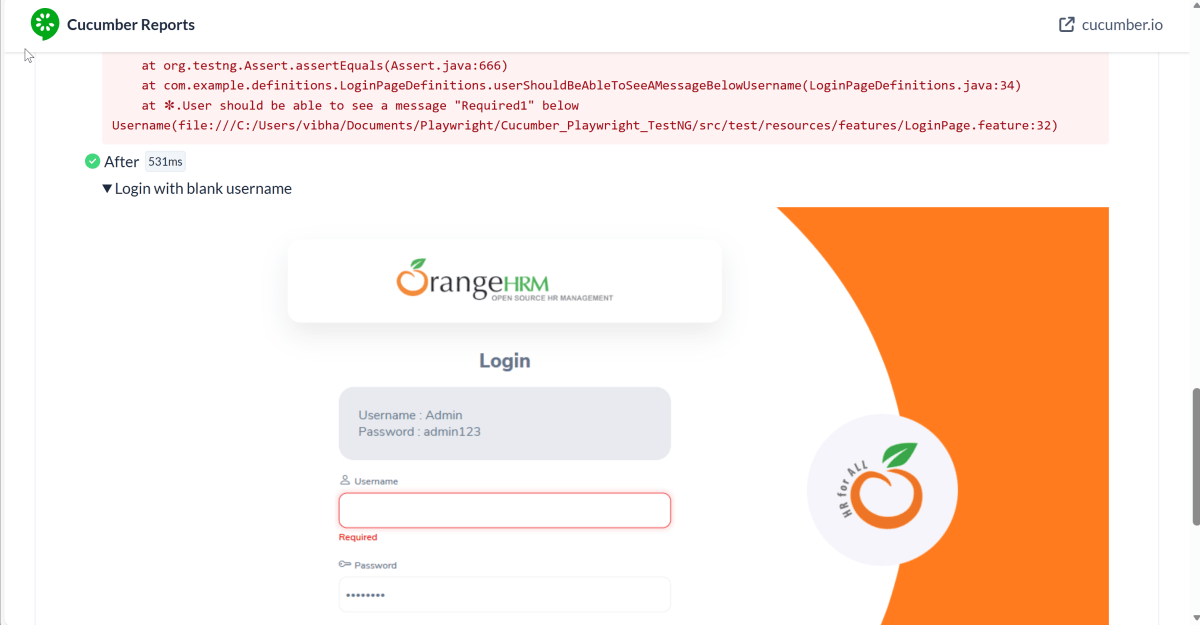
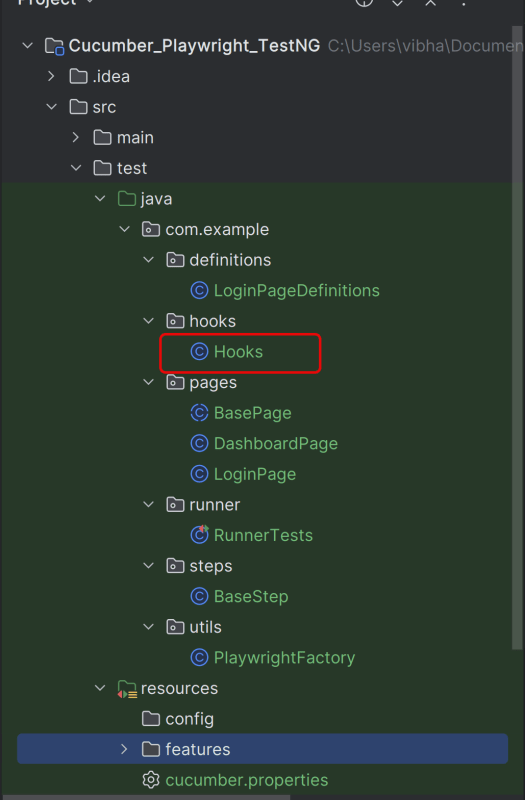
  • Hooks: Hooks manage browser setup, teardown, and failure handling

SQL Multiple Choice Questions & Answers – JOINS

HOME


SELECT products.product_name, orders.order_date
FROM products
INNER JOIN orders ON products.product_id = orders.product_id;


SELECT students.student_name, grades.grade
FROM students
__________ JOIN grades ON students.student_id = grades.student_id;


SELECT a.name, b.address
FROM customers a
FULL OUTER JOIN orders b ON a.customer_id = b.customer_id;


SELECT e.employee_id, e.name, d.department_name
FROM employees e
CROSS JOIN departments d;


What will be the result of inner join between these tables?


a) Select * FROM Table1 T1 CROSS JOIN Table1 T2;
b) Select * FROM Table1 T1 ALL CROSS JOIN Table1 T2;
c) Select * FROM Table1 T1,Table1 T2;
d) Select * FROM Table1 T1 CROSS Table1 T2;


SELECT * FROM students NATURAL JOIN enrollments;

Integration of Playwright with Java, Cucumber and TestNG

HOME

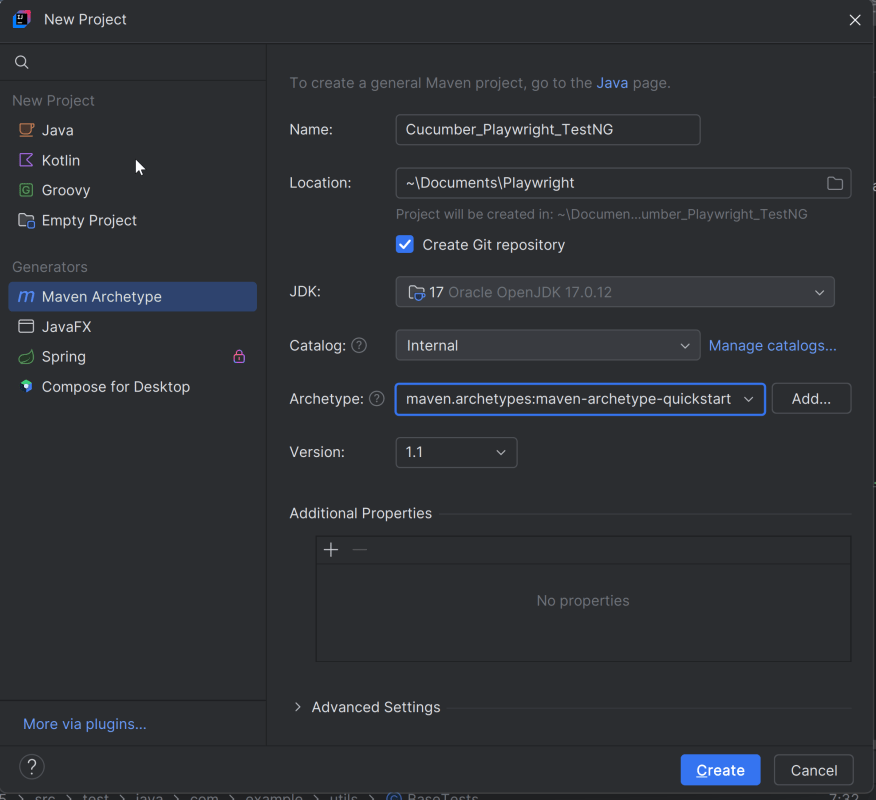
Benefits of Using Cucumber with Playwright

<properties>
    <java.version>17</java.version>
    <project.build.sourceEncoding>UTF-8</project.build.sourceEncoding>
    <cucumber.version>7.33.0</cucumber.version>
    <testng.version>7.12.0</testng.version>
    <playwright.version>1.57.0</playwright.version>
    <maven.compiler.version>3.14.1</maven.compiler.version>
    <maven.surefire.version>3.5.4</maven.surefire.version>
    <maven.failsafe.version>3.5.4</maven.failsafe.version>
    <lombok.version>1.18.30</lombok.version>
    <maven.compiler.source>17</maven.compiler.source>
    <maven.compiler.target>17</maven.compiler.target>
</properties>

<dependencies>

    <!-- Cucumber with Java -->
    <dependency>
      <groupId>io.cucumber</groupId>
      <artifactId>cucumber-java</artifactId>
      <version>${cucumber.version}</version>
      <scope>test</scope>
    </dependency>

    <!-- Cucumber with TestNG -->
    <dependency>
      <groupId>io.cucumber</groupId>
      <artifactId>cucumber-testng</artifactId>
      <version>${cucumber.version}</version>
      <scope>test</scope>
    </dependency>

    <!-- TestNG -->
    <dependency>
      <groupId>org.testng</groupId>
      <artifactId>testng</artifactId>
      <version>${testng.version}</version>
      <scope>test</scope>
    </dependency>

    <!-- Playwright -->
    <dependency>
      <groupId>com.microsoft.playwright</groupId>
      <artifactId>playwright</artifactId>
      <version>${playwright.version}</version>
    </dependency>

</dependencies>

 <build>
    <plugins>
      <plugin>
        <groupId>org.apache.maven.plugins</groupId>
        <artifactId>maven-compiler-plugin</artifactId>
        <version>${maven.compiler.version}</version>
        <configuration>
          <source>${maven.compiler.source}</source>
          <target>${maven.compiler.target}</target>
        </configuration>
      </plugin>

      <plugin>
        <groupId>org.apache.maven.plugins</groupId>
        <artifactId>maven-surefire-plugin</artifactId>
        <version>${maven.surefire.version}</version>
        <configuration>
          <testFailureIgnore>true</testFailureIgnore>
          <includes>
            <include>**/*RunnerTests.java</include>
          </includes>
        </configuration>
      </plugin>
      
    </plugins>
  </build>
<project xmlns="http://maven.apache.org/POM/4.0.0" xmlns:xsi="http://www.w3.org/2001/XMLSchema-instance"
  xsi:schemaLocation="http://maven.apache.org/POM/4.0.0 http://maven.apache.org/xsd/maven-4.0.0.xsd">
  <modelVersion>4.0.0</modelVersion>

  <groupId>com.example</groupId>
  <artifactId>Cucumber_Playwright_TestNG</artifactId>
  <version>1.0-SNAPSHOT</version>
  <packaging>jar</packaging>

  <name>Cucumber_Playwright_TestNG</name>
  <url>http://maven.apache.org</url>

  <properties>
    <java.version>17</java.version>
    <project.build.sourceEncoding>UTF-8</project.build.sourceEncoding>
    <cucumber.version>7.33.0</cucumber.version>
    <testng.version>7.12.0</testng.version>
    <playwright.version>1.57.0</playwright.version>
    <maven.compiler.version>3.14.1</maven.compiler.version>
    <maven.surefire.version>3.5.4</maven.surefire.version>
    <maven.failsafe.version>3.5.4</maven.failsafe.version>
    <lombok.version>1.18.30</lombok.version>
    <maven.compiler.source>17</maven.compiler.source>
    <maven.compiler.target>17</maven.compiler.target>
  </properties>

  <dependencies>

    <!-- Cucumber with Java -->
    <dependency>
      <groupId>io.cucumber</groupId>
      <artifactId>cucumber-java</artifactId>
      <version>${cucumber.version}</version>
      <scope>test</scope>
    </dependency>

    <!-- Cucumber with TestNG -->
    <dependency>
      <groupId>io.cucumber</groupId>
      <artifactId>cucumber-testng</artifactId>
      <version>${cucumber.version}</version>
      <scope>test</scope>
    </dependency>

    <!-- TestNG -->
    <dependency>
      <groupId>org.testng</groupId>
      <artifactId>testng</artifactId>
      <version>${testng.version}</version>
      <scope>test</scope>
    </dependency>

    <!-- Playwright -->
    <dependency>
      <groupId>com.microsoft.playwright</groupId>
      <artifactId>playwright</artifactId>
      <version>${playwright.version}</version>
    </dependency>

  </dependencies>
 
 <build>
    <plugins>
      <plugin>
        <groupId>org.apache.maven.plugins</groupId>
        <artifactId>maven-compiler-plugin</artifactId>
        <version>${maven.compiler.version}</version>
        <configuration>
          <source>${maven.compiler.source}</source>
          <target>${maven.compiler.target}</target>
        </configuration>
      </plugin>

      <plugin>
        <groupId>org.apache.maven.plugins</groupId>
        <artifactId>maven-surefire-plugin</artifactId>
        <version>${maven.surefire.version}</version>
        <configuration>
          <testFailureIgnore>true</testFailureIgnore>
          <includes>
            <include>**/*RunnerTests.java</include>
          </includes>
        </configuration>
      </plugin>
      
    </plugins>
  </build>
</project>

Feature: Login to HRM Application

  Background:
    Given User is on HRMLogin page "https://opensource-demo.orangehrmlive.com/"

  @ValidCredentials
  Scenario: Login with valid credentials

    When User enters username as "Admin" and password as "admin123"
    Then User should be able to login successfully and new page opens with heading "Dashboard"

  @InvalidCredentials
  Scenario Outline: Login with invalid credentials

    When User enters username as "<username>" and password as "<password>"
    Then User should be able to see error message "<errorMessage>"

    Examples:
      | username   | password  | errorMessage           |
      | Admin      | admin12$$ | Invalid credentials    |
      | admin$$    | admin123  | Invalid credentials    |
      | abc123     | xyz$$     | Invalid credentials    |

  @MissingUsername 
  Scenario: Login with blank username

    When User enters username as " " and password as "admin123"
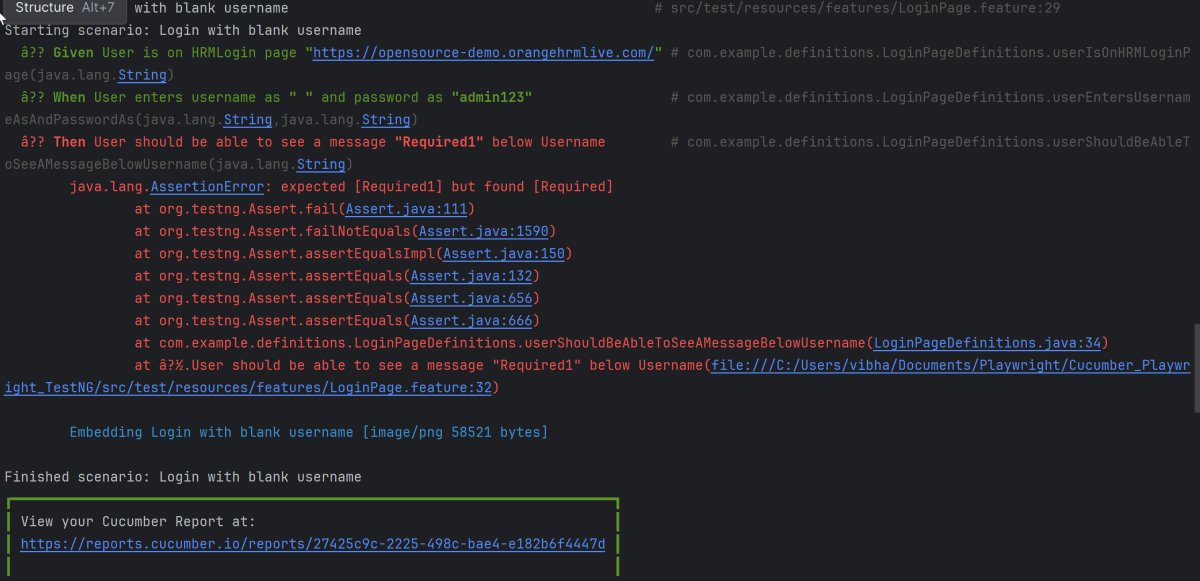
    Then User should be able to see a message "Required1" below Username

package com.example.utils;

import com.microsoft.playwright.*;

public class PlaywrightFactory {

    private static Playwright playwright;
    private static Browser browser;
    private static BrowserContext context;
    private static Page page;

    public static void initBrowser() {

        playwright = Playwright.create();
        browser = playwright.chromium().launch(new BrowserType.LaunchOptions().setHeadless(false));
        context = browser.newContext();
        page = context.newPage();
    }

    public static Page getPage() {
        return page;
    }

    public static void closeBrowser() {
        if (page != null) page.close();
        if (context != null) context.close();
        if (browser != null) browser.close();
        if (playwright != null) playwright.close();
    }
}

package com.example.hooks;

import com.example.utils.PlaywrightFactory;
import com.microsoft.playwright.*;
import io.cucumber.java.After;
import io.cucumber.java.Before;
import io.cucumber.java.Scenario;

public class Hooks {

    @Before
    public void beforeScenario(Scenario scenario) {
        System.out.println("Starting scenario: " + scenario.getName());
        PlaywrightFactory.initBrowser();
    }

    @After
    public void afterScenario(Scenario scenario) {
        Page page = PlaywrightFactory.getPage();
        if (page != null && scenario.isFailed()) {
            scenario.attach(page.screenshot(), "image/png", scenario.getName());
        }
        PlaywrightFactory.closeBrowser();  
        System.out.println("Finished scenario: " + scenario.getName());
    }
}


package com.example.pages;

import com.microsoft.playwright.*;

public class LoginPage {

    private Page page;

    // Locators
    private final Locator usernameLocator;
    private final Locator passwordLocator;
    private final Locator submitLocator;
    private final Locator invalidCredentialsLocator;
    private final Locator missingUsernameLocator;

    public LoginPage(Page page) {
        this.page = page;
        this.usernameLocator = page.locator("input[name='username']");
        this.passwordLocator = page.locator("input[name='password']");
        this.submitLocator = page.locator("button[type='submit']");
        this.invalidCredentialsLocator = page.locator("//p[contains(@class, \"oxd-text oxd-text--p oxd-alert-content-text\")]");
        this.missingUsernameLocator = page.locator("//span[contains(@class, 'oxd-text oxd-text--span oxd-input-field-error-message oxd-input-group__message')]");
    }

    public void login(String user, String pass){
        usernameLocator.fill(user);
        passwordLocator.fill(pass);
        submitLocator.click();
    }

    public void getUrl(String url){
        page.navigate(url);
    }

    public String getMissingUsernameErrorMessage() {
        return missingUsernameLocator.textContent();
    }

    public String getErrorMessage () {
        return invalidCredentialsLocator.textContent();
    }
}

package com.example.pages;

import com.microsoft.playwright.Locator;
import com.microsoft.playwright.Page;

public class DashboardPage {

    private Page page;

    private final Locator headingLocator;

    public DashboardPage(Page page){
        this.page = page;
        this.headingLocator = page.locator("//h6[contains(@class, \"oxd-topbar-header-breadcrumb-module\")]");
    }

    public String getDashboardPageHeading() {
        return headingLocator.textContent();
    }

}

package com.example.steps;

import com.example.utils.PlaywrightFactory;
import com.microsoft.playwright.Page;

public class BaseStep {

    protected Page getPage() {
        Page page = PlaywrightFactory.getPage();
        if (page == null) {
            throw new RuntimeException(
                    "Page is NULL. Ensure @Before hook ran and glue includes hooks package."
            );
        }
        return page;
    }
}

package com.example.definitions;

import com.example.steps.BaseStep;
import com.example.pages.DashboardPage;
import com.example.pages.LoginPage;
import io.cucumber.java.en.Given;
import io.cucumber.java.en.Then;
import io.cucumber.java.en.When;
import org.testng.Assert;

public class LoginPageDefinitions extends BaseStep {
    
    private LoginPage loginPage;
    private DashboardPage dashboardPage;

    @Given("User is on HRMLogin page {string}")
    public void userIsOnHRMLoginPage(String baseUrl) {
        loginPage = new LoginPage(getPage());
        loginPage.getUrl(baseUrl);
    }

    @When("User enters username as {string} and password as {string}")
    public void userEntersUsernameAsAndPasswordAs(String username, String password) {
        loginPage.login(username, password);
    }

    @Then("User should be able to see error message {string}")
    public void userShouldBeAbleToSeeErrorMessage(String expectedErrorMessage) {
        Assert.assertEquals(loginPage.getErrorMessage(), expectedErrorMessage);
    }

    @Then("User should be able to see a message {string} below Username")
    public void userShouldBeAbleToSeeAMessageBelowUsername(String expectedErrorMessage) {
        Assert.assertEquals(loginPage.getMissingUsernameErrorMessage(), expectedErrorMessage);
    }

    @Then("User should be able to login successfully and new page opens with heading {string}")
    public void userShouldBeAbleToLoginSuccessfullyAndNewPageOpen(String expectedHeading) {
        dashboardPage = new DashboardPage(getPage());
        Assert.assertEquals(dashboardPage.getDashboardPageHeading(), expectedHeading);

    }

}

package com.example.runner;

import io.cucumber.testng.AbstractTestNGCucumberTests;
import io.cucumber.testng.CucumberOptions;

@CucumberOptions(features = "src/test/resources/features/LoginPage.feature",
        glue = {"com.example.hooks","com.example.definitions"},
        plugin = {
                "pretty",
        }
)

public class RunnerTests extends AbstractTestNGCucumberTests {

}

<?xml version="1.0" encoding="UTF-8"?>
<!DOCTYPE suite SYSTEM "http://testng.org/testng-1.0.dtd">
<suite name="Playwright test suite" thread-count="3">
    <test name="Chromium Tests">
        <classes>
            <class name="com.example.runner.RunnerTests"/>
        </classes>
    </test>
</suite>

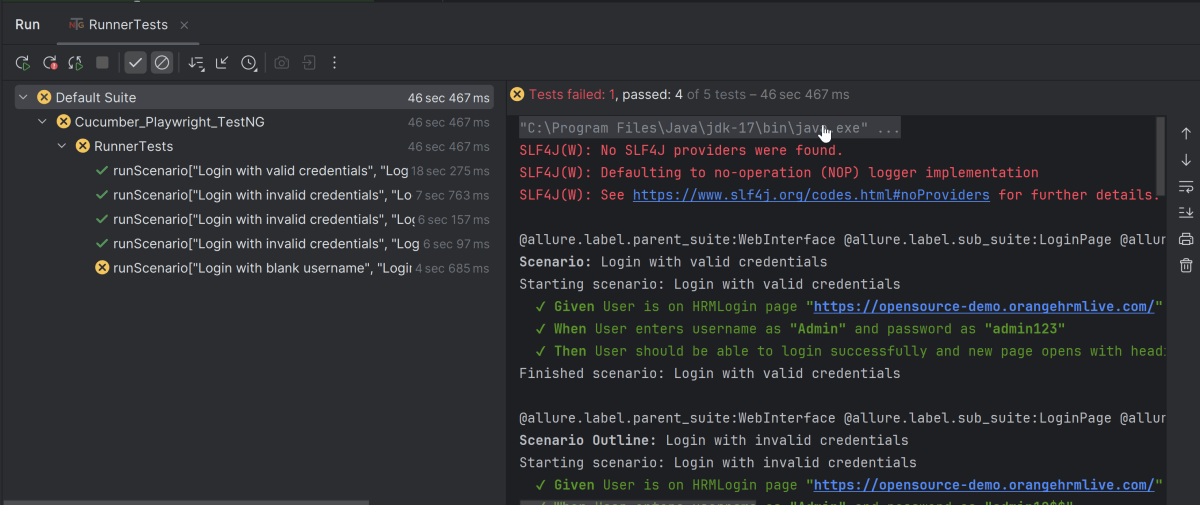
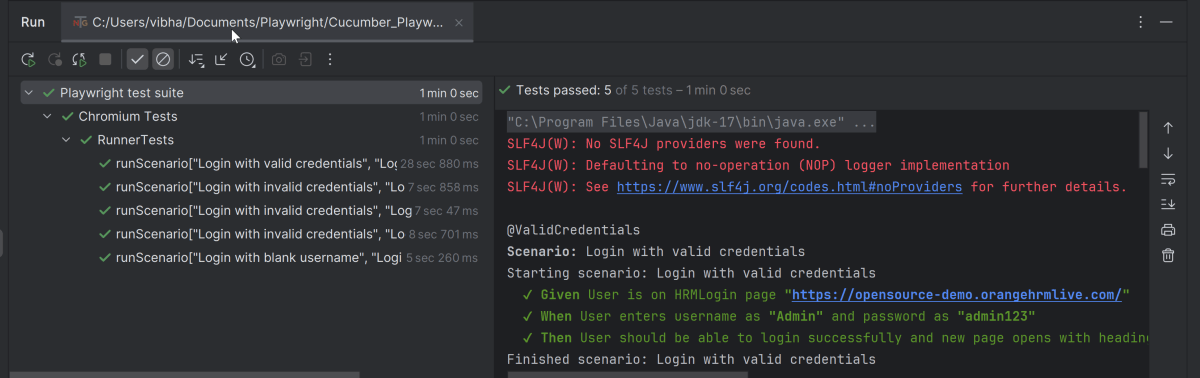
mvn clean test

cucumber.publish.enabled=true

  • Hooks: Hooks manage browser setup, teardown, and failure handling

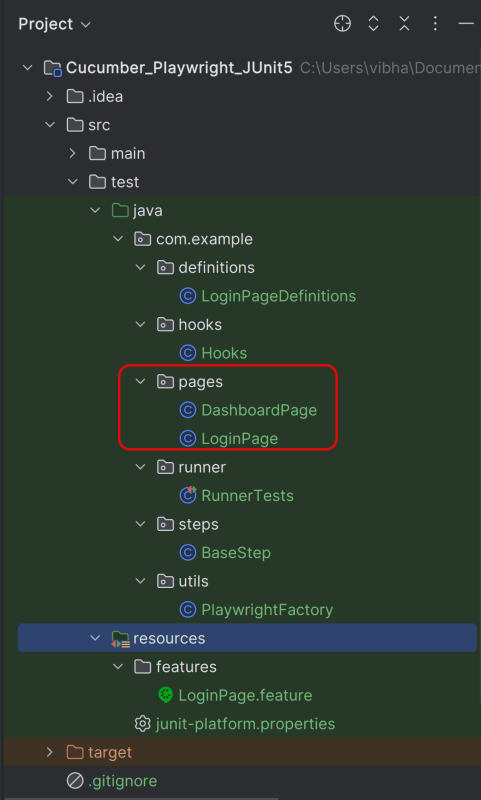
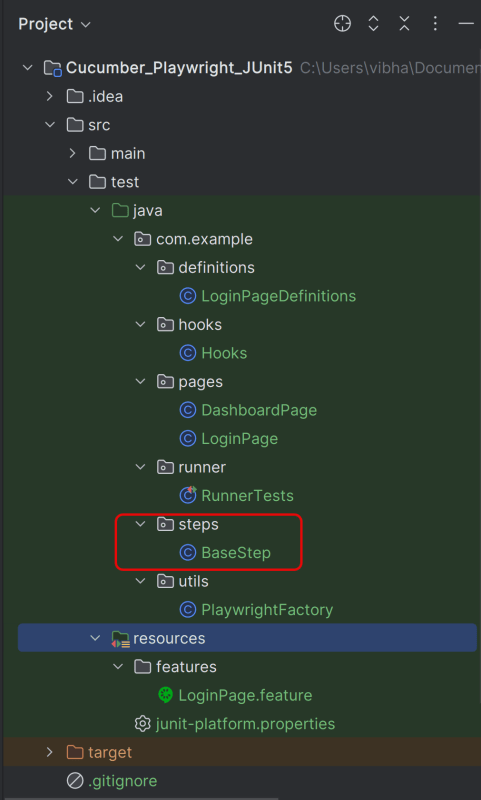
Setting Up Page Object Model with Playwright and JUnit5

HOME

<project xmlns="http://maven.apache.org/POM/4.0.0" xmlns:xsi="http://www.w3.org/2001/XMLSchema-instance"
  xsi:schemaLocation="http://maven.apache.org/POM/4.0.0 http://maven.apache.org/xsd/maven-4.0.0.xsd">
  <modelVersion>4.0.0</modelVersion>

  <groupId>com.example</groupId>
  <artifactId>PageObjectModel_Playwright_JUnit5</artifactId>
  <version>1.0-SNAPSHOT</version>
  <packaging>jar</packaging>

  <name>PageObjectModel_Playwright_JUnit5</name>
  <url>http://maven.apache.org</url>

  <properties>
    <project.build.sourceEncoding>UTF-8</project.build.sourceEncoding>
    <playwright.version>1.57.0</playwright.version>
    <junit.jupiter.engine.version>6.1.0-M1</junit.jupiter.engine.version>
    <junit.jupiter.api.version>6.1.0-M1</junit.jupiter.api.version>
    <junit.jupiter.params.version>6.1.0-M1</junit.jupiter.params.version>
    <maven.compiler.plugin.version>3.14.1</maven.compiler.plugin.version>
    <maven.compiler.source.version>17</maven.compiler.source.version>
    <maven.compiler.target.version>17</maven.compiler.target.version>
    <maven.surefire.plugin.version>3.5.4</maven.surefire.plugin.version>
    <maven.compiler.source>17</maven.compiler.source>
    <maven.compiler.target>17</maven.compiler.target>
    <maven.site.plugin.version>4.0.0-M16</maven.site.plugin.version>
    <maven.surefire.report.plugin.version>3.5.4</maven.surefire.report.plugin.version>
  </properties>

  <dependencies>

    <dependency>
      <groupId>com.microsoft.playwright</groupId>
      <artifactId>playwright</artifactId>
      <version>${playwright.version}</version>
    </dependency>

    <dependency>
      <groupId>org.junit.jupiter</groupId>
      <artifactId>junit-jupiter-engine</artifactId>
      <version>${junit.jupiter.engine.version}</version>
      <scope>test</scope>
    </dependency>

    <dependency>
      <groupId>org.junit.jupiter</groupId>
      <artifactId>junit-jupiter-api</artifactId>
      <version>${junit.jupiter.api.version}</version>
      <scope>test</scope>
    </dependency>

    <dependency>
      <groupId>org.junit.jupiter</groupId>
      <artifactId>junit-jupiter-params</artifactId>
      <version>${junit.jupiter.params.version}</version>
      <scope>test</scope>
    </dependency>

  </dependencies>

  <build>
    <plugins>
      <plugin>
        <groupId>org.apache.maven.plugins</groupId>
        <artifactId>maven-compiler-plugin</artifactId>
        <version>${maven.compiler.plugin.version}</version>
        <configuration>
          <source>${maven.compiler.source.version}</source>
          <target>${maven.compiler.target.version}</target>
        </configuration>
      </plugin>

      <plugin>
        <groupId>org.apache.maven.plugins</groupId>
        <artifactId>maven-surefire-plugin</artifactId>
        <version>${maven.surefire.plugin.version}</version>
        <configuration>
          <testFailureIgnore>true</testFailureIgnore>
        </configuration>
      </plugin>

      <plugin>
        <groupId>org.apache.maven.plugins</groupId>
        <artifactId>maven-site-plugin</artifactId>
        <version>${maven.site.plugin.version}</version>
      </plugin>
    </plugins>
  </build>

  <reporting>
    <plugins>
      <plugin>
        <groupId>org.apache.maven.plugins</groupId>
        <artifactId>maven-surefire-report-plugin</artifactId>
        <version>${maven.surefire.report.plugin.version}</version>
        <configuration>
          <outputName>JUnit5 Report</outputName>
        </configuration>
      </plugin>
    </plugins>
  </reporting>

</project>

import com.microsoft.playwright.Page;

public class LoginPage {

    private Page page;

    //Locators
    private final String usernameLocator = "input[name='username']";
    private final String passwordLocator = "input[name='password']";
    private final String submitButton = "button[type='submit']";
    private final String errorMessage = "//p[contains(@class, 'oxd-text oxd-text--p oxd-alert-content-text')]";

    //Constructor
    public LoginPage(Page page){
        this.page = page;
    }

    public void login(String username, String password) {
        page.fill(usernameLocator,username);
        page.fill(passwordLocator,password);
        page.click(submitButton);
    }

    public String getErrorMessage(){
        return page.textContent(errorMessage);
    }
}

package org.example.pages;

import com.microsoft.playwright.Page;

public class DashboardPage {

    private Page page;

    //Locators
    private final String dashboardHeading = "//h6[contains(@class, 'oxd-topbar-header-breadcrumb-module')]";

    //Constructor
    public DashboardPage(Page page) {
        this.page = page;
    }

    // Methods
    public String getHeading() {
        return page.textContent(dashboardHeading);
    }
}

package org.example.utils;
package com.example.utils;

import com.microsoft.playwright.*;
import org.junit.jupiter.api.*;

// Subclasses will inherit PER_CLASS behavior.
@TestInstance(TestInstance.Lifecycle.PER_CLASS)
public class BaseTests {

    // Shared between all tests in the class.
    static Playwright playwright;
    static Browser browser;

    // New instance for each test method.
    BrowserContext context;
    protected Page page;

    @BeforeAll
    public static void launchBrowser() {
        playwright = Playwright.create();
        browser = playwright.chromium().launch(new BrowserType.LaunchOptions().setHeadless(false));

    }

    @AfterAll
    public static void closeBrowser() {
        playwright.close();
    }


    @BeforeEach
    public void createContextAndPage() {
        context = browser.newContext();
        page = context.newPage();
        page.navigate("https://opensource-demo.orangehrmlive.com/web/index.php/auth/login");
    }

    @AfterEach
    public void closeContext() {
        context.close();
    }
}
Playwright playwright;
Browser browser = null;
BrowserContext context;
Page page;
  @BeforeAll
    public void launchBrowser() {
        playwright = Playwright.create();
        browser = playwright.chromium().launch(new BrowserType.LaunchOptions().setHeadless(false));
    }

@BeforeMethod
void createContextAndPage() {
      context = browser.newContext();
      page = context.newPage();
      page.navigate("https://opensource-demo.orangehrmlive.com/web/index.php/auth/login");
}
@AfterAll
 public static void closeBrowser() {
        playwright.close();
 }
@AfterEach
   public void closeContext() {
        context.close();
}

package com.example.tests;

import com.example.pages.DashboardPage;
import com.example.pages.LoginPage;
import com.example.utils.BaseTests;
import org.junit.jupiter.api.Assertions;
import org.junit.jupiter.api.Test;

public class LoginTests extends BaseTests {

    @Test
    public void unsuccessfulLogin() {

        LoginPage loginPage = new LoginPage(page);
        loginPage.login("abc","abc");
        String actualErrorMessage = loginPage.getErrorMessage();
        Assertions.assertEquals("Invalid credentials", actualErrorMessage, "");

   }

    @Test
    public void successfulLogin() {

        LoginPage loginPage = new LoginPage(page);
        loginPage.login("Admin","admin123");
        DashboardPage dashboardPage = new DashboardPage(page);
        String actualHeading = dashboardPage.getDashboardPageHeading();
        Assertions.assertEquals("Dashboard",actualHeading, "Unable to login to the application");

    }

}

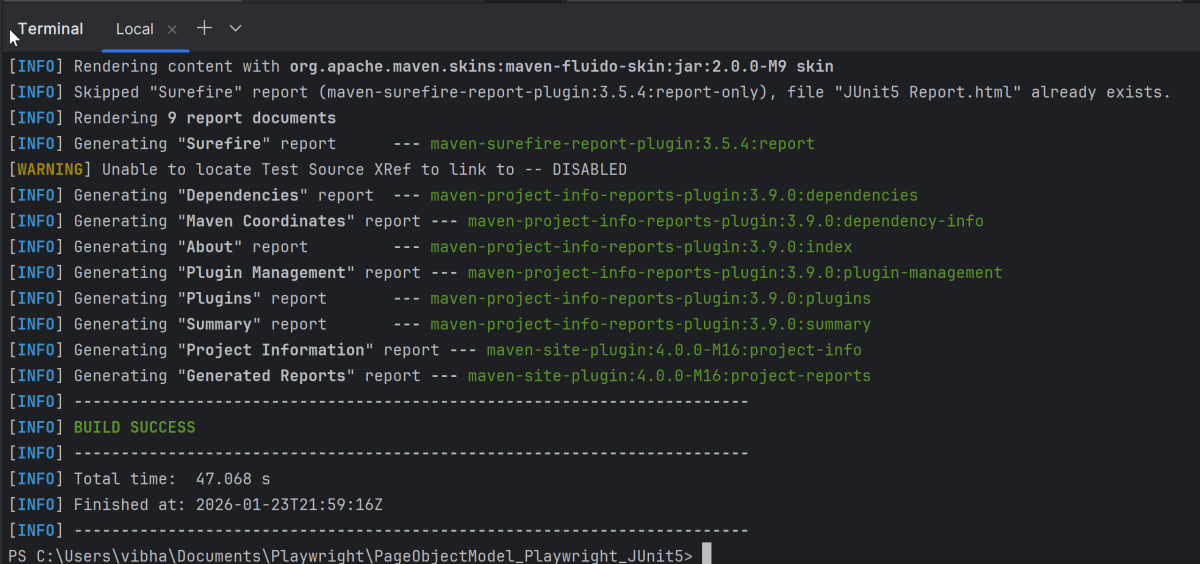
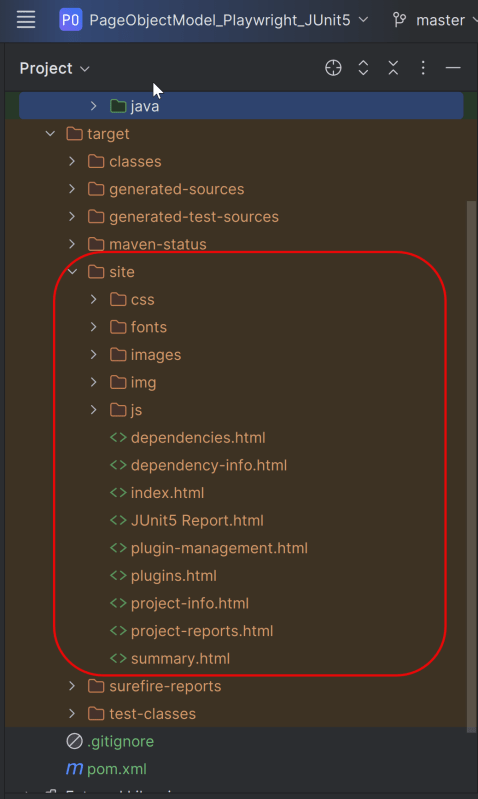
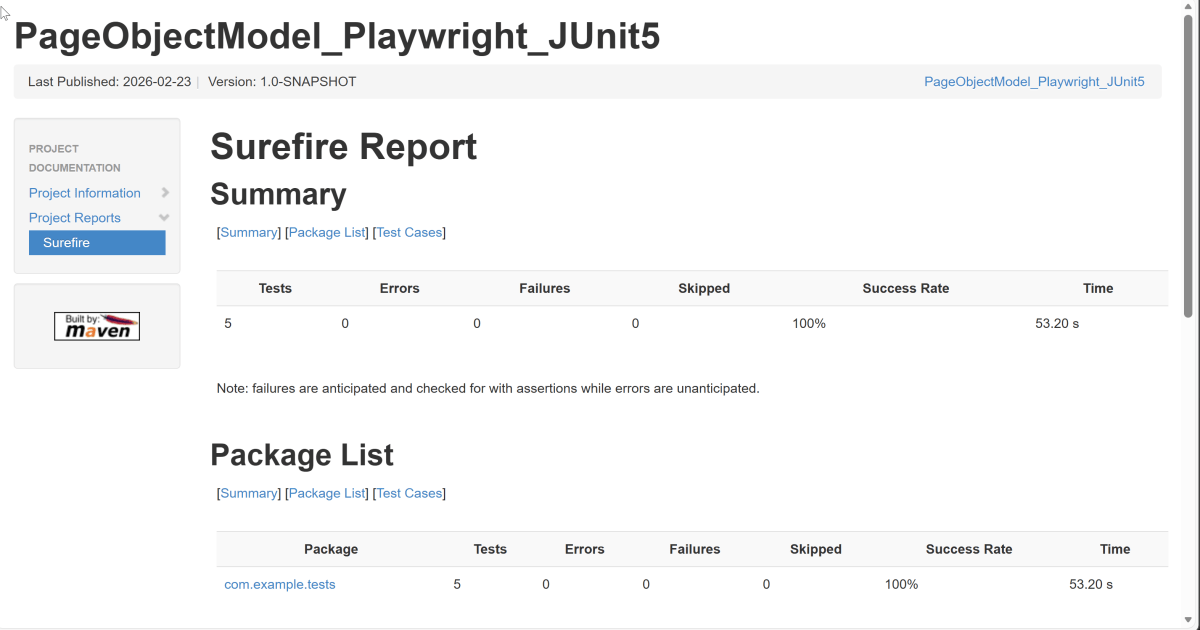
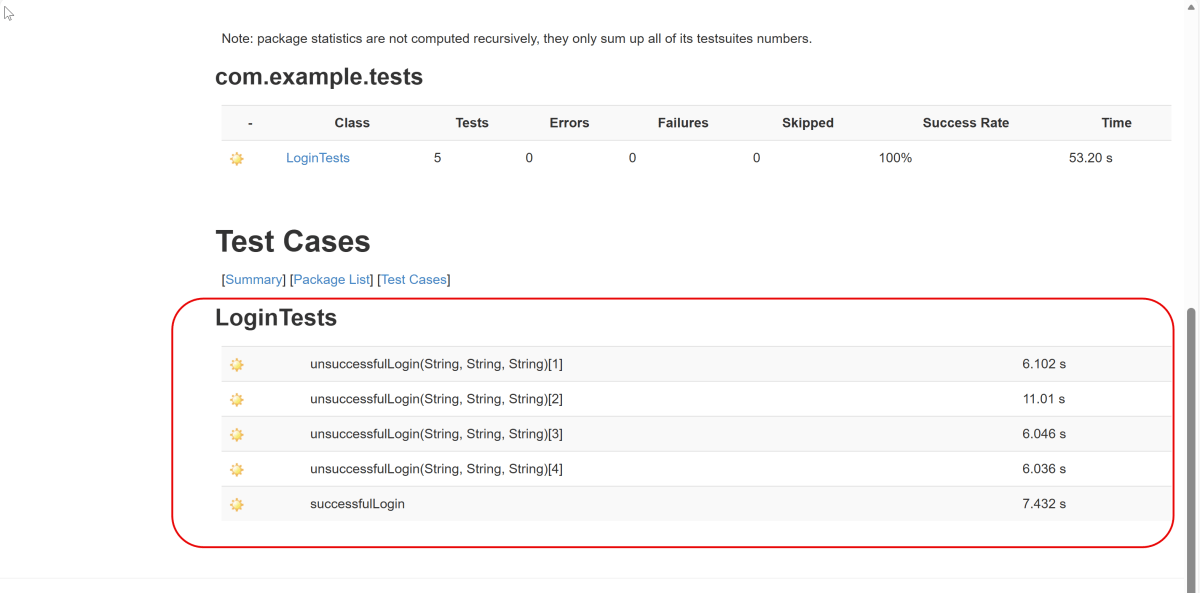
mvn clean test site

SpringBoot – Multiple Choice Questions and Answers – MCQ2

HOME


@ConfigurationProperties(prefix = "app")
public class AppConfig {
      private String name;
      private String version;
     // Getters and setters
}


@Service
public class ArticleService {
    @Autowired
    private ArticleRepository articleRepository;
}


@RestController
public class MyController {

    @GetMapping("/hello")
    public String hello() {
        return "Hello, World!";
    }
}
@Controller
@RequestMapping("/api")
public class MyController {

    @GetMapping("/hello")
    public String hello() {
        return "Hello, World!";
    }
}
@RestController
@RequestMapping("/api")
public class MyController {

    @RequestMapping("/hello")
    public String hello() {
        return "Hello, World!";
    }
}
@Controller
public class MyController {

    @RequestMapping(value = "/hello", method = RequestMethod.GET)
    @ResponseBody
    public String hello() {
        return "Hello, World!";
    }
}

@Configuration
public class MyApp {
    public static void main(String[] args) {
        SpringApplication.run(MyApp.class, args);
    }
}
@SpringBootApplication
public class MyApp {
    public static void main(String[] args) {
        SpringApplication.run(MyApp.class, args);
    }
}
@RestController
public class MyApp {
    public static void main(String[] args) {
        SpringApplication.run(MyApp.class, args);
    }
}
@Component
public class MyApp {
    public static void main(String[] args) {
        SpringApplication.run(MyApp.class, args);
    }
}

@Cacheable("articles")
public Article getArticleById(Long id) {
    return articleRepository.findById(id).orElse(null);
}


@PostMapping("/articles")
public ResponseEntity<Article> createArticle(@RequestBody Article article) {
    // Save article logic
    return ResponseEntity.status(HttpStatus.CREATED).body(savedArticle);
}


@Configuration
@EnableWebSecurity
public class SecurityConfig extends WebSecurityConfigurerAdapter {

    @Override
    protected void configure(HttpSecurity http) throws Exception {
        http
            .csrf().disable()
            .authorizeRequests()
                .antMatchers("/api/**").hasRole("ADMIN")
                .anyRequest().permitAll()
                .and()
            .httpBasic();
    }
}
@SpringBootApplication
@EnableWebSecurity
public class SecurityConfig extends WebSecurityConfigurerAdapter {

    @Override
    protected void configure(HttpSecurity http) throws Exception {
        http
            .authorizeRequests()
                .antMatchers("/api/**").authenticated()
                .anyRequest().permitAll()
                .and()
            .httpBasic();
    }
}
@Configuration
@EnableWebSecurity
public class SecurityConfig extends WebSecurityConfigurerAdapter {

    @Override
    protected void configure(HttpSecurity http) throws Exception {
        http
            .authorizeRequests()
                .antMatchers("/api/**").authenticated()
                .anyRequest().permitAll()
                .and()
            .httpBasic()
                .and()
            .csrf().disable();
  
@Configuration
@EnableWebSecurity
public class SecurityConfig extends WebSecurityConfigurerAdapter {

    @Override
    protected void configure(HttpSecurity http) throws Exception {
        http
            .authorizeRequests()
                .antMatchers("/api/**").permitAll()
                .anyRequest().authenticated()
                .and()
            .httpBasic();
    }
}

@Bean
@ConditionalOnProperty(name = "app.feature.enabled", havingValue = "true")
public MyFeature myFeature() {
    return new MyFeature();
}


@Scheduled(fixedRate = 2000)
public void reportCurrentTime() {
    System.out.println("Current time: " + new Date());
}


Mastering Page Object Model for Playwright with Java and TestNG

HOME

<project xmlns="http://maven.apache.org/POM/4.0.0" xmlns:xsi="http://www.w3.org/2001/XMLSchema-instance"
  xsi:schemaLocation="http://maven.apache.org/POM/4.0.0 http://maven.apache.org/xsd/maven-4.0.0.xsd">
  <modelVersion>4.0.0</modelVersion>

  <groupId>com.example</groupId>
  <artifactId>Playwright_TestNG_Demo</artifactId>
  <version>1.0-SNAPSHOT</version>
  <packaging>jar</packaging>

  <name>Playwright_TestNG_Demo</name>
  <url>http://maven.apache.org</url>

  <properties>
    <project.build.sourceEncoding>UTF-8</project.build.sourceEncoding>
    <playwright.version>1.57.0</playwright.version>
    <testng.version>7.11.0</testng.version>
    <maven.compiler.plugin.version>3.13.0</maven.compiler.plugin.version>
    <maven.compiler.source.version>17</maven.compiler.source.version>
    <maven.compiler.target.version>17</maven.compiler.target.version>
    <maven.surefire.plugin.version>3.5.4</maven.surefire.plugin.version>
  </properties>

  <dependencies>

    <dependency>
      <groupId>com.microsoft.playwright</groupId>
      <artifactId>playwright</artifactId>
      <version>${playwright.version}</version>
    </dependency>

    <dependency>
      <groupId>org.testng</groupId>
      <artifactId>testng</artifactId>
      <version>${testng.version}</version>
      <scope>test</scope>
    </dependency>
  </dependencies>

  <build>
    <plugins>
      <plugin>
        <groupId>org.apache.maven.plugins</groupId>
        <artifactId>maven-compiler-plugin</artifactId>
        <version>${maven.compiler.plugin.version}</version>
        <configuration>
          <source>${maven.compiler.source.version}</source>
          <target>${maven.compiler.target.version}</target>
        </configuration>
      </plugin>
      <plugin>
        <groupId>org.apache.maven.plugins</groupId>
        <artifactId>maven-surefire-plugin</artifactId>
        <version>${maven.surefire.plugin.version}</version>
        <configuration>
          <suiteXmlFiles>
            <suiteXmlFile>testng.xml</suiteXmlFile>
          </suiteXmlFiles>
        </configuration>
      </plugin>
    </plugins>
  </build>
</project>

import com.microsoft.playwright.Page;

public class LoginPage {

    private Page page;

    //Locators
    private final String usernameLocator = "input[name='username']";
    private final String passwordLocator = "input[name='password']";
    private final String submitButton = "button[type='submit']";
    private final String errorMessage = "//p[contains(@class, 'oxd-text oxd-text--p oxd-alert-content-text')]";

    //Constructor
    public LoginPage(Page page){
        this.page = page;
    }

    public void login(String username, String password) {
        page.fill(usernameLocator,username);
        page.fill(passwordLocator,password);
        page.click(submitButton);
    }

    public String getErrorMessage(){
        return page.textContent(errorMessage);
    }
}

package org.example.pages;

import com.microsoft.playwright.Page;

public class DashboardPage {

    private Page page;

    //Locators
    private final String dashboardHeading = "//h6[contains(@class, 'oxd-topbar-header-breadcrumb-module')]";

    //Constructor
    public DashboardPage(Page page) {
        this.page = page;
    }

    // Methods
    public String getHeading() {
        return page.textContent(dashboardHeading);
    }
}

package org.example.utils;

import com.microsoft.playwright.*;
import org.testng.annotations.AfterClass;
import org.testng.annotations.AfterMethod;
import org.testng.annotations.BeforeClass;
import org.testng.annotations.BeforeMethod;

public class BaseTests {

    // Shared between all tests in this class.
    protected Playwright playwright;
    protected Browser browser;

    // New instance for each test method.
    protected BrowserContext context;
    protected Page page;

    @BeforeClass
    public void launchBrowser() {
        playwright = Playwright.create();
        browser = playwright.chromium().launch(new BrowserType.LaunchOptions().setHeadless(false));
    }

    @BeforeMethod
    public void createContextAndPage() {
        context = browser.newContext();
        page = context.newPage();
        page.navigate("https://opensource-demo.orangehrmlive.com/web/index.php/auth/login");
    }

    @AfterMethod
    public void closeContext() {
        context.close();
    }

    @AfterClass
    public void closeBrowser() {
        playwright.close();
    }
}
Playwright playwright;
Browser browser = null;
BrowserContext context;
Page page;
@BeforeClass
public void launchBrowser() {
        playwright = Playwright.create();
        browser = playwright.chromium().launch(new BrowserType.LaunchOptions().setHeadless(false));
}

@BeforeMethod
void createContextAndPage() {
      context = browser.newContext();
      page = context.newPage();
      page.navigate("https://opensource-demo.orangehrmlive.com/web/index.php/auth/login");
}
@AfterMethod
void closeContext() {
       context.close();
}
@AfterClass
void closeBrowser() {
      playwright.close();
}

package org.example.tests;

import org.example.pages.DashboardPage;
import org.example.pages.LoginPage;
import org.example.utils.BaseTests;
import org.testng.Assert;
import org.testng.annotations.Test;

public class LoginTests extends BaseTests {

    @Test
    public void loginToApplication(){
        LoginPage loginPage = new LoginPage(page);
        loginPage.login("Admin","admin123");
        DashboardPage dashboardPage = new DashboardPage(page);
        String actualHeading = dashboardPage.getHeading();
        Assert.assertEquals(actualHeading,"Dashboard", "Unable to login to the application");
    }

    @Test
    public void invalidCredentials() {
        LoginPage loginPage = new LoginPage(page);
        loginPage.login("Playwright","test");
        Assert.assertEquals(loginPage.getErrorMessage(), "Invalid credentials" ,"Incorrect Error Message is displayed");

    }
}

<?xml version="1.0" encoding="UTF-8"?>
<!DOCTYPE suite SYSTEM "http://testng.org/testng-1.0.dtd">
<suite name="Page Object Model Playwright test suite">
    <test name="Chrome Test">
        <parameter name="browser" value="chromium" />
        <classes>
            <class name="org.example.tests.LoginTests"/>
        </classes>
    </test>
</suite>    

Cross Browser Testing with Playwright and Java

HOME

<project xmlns="http://maven.apache.org/POM/4.0.0" xmlns:xsi="http://www.w3.org/2001/XMLSchema-instance"
  xsi:schemaLocation="http://maven.apache.org/POM/4.0.0 http://maven.apache.org/xsd/maven-4.0.0.xsd">
  <modelVersion>4.0.0</modelVersion>

  <groupId>com.example</groupId>
  <artifactId>Playwright_TestNG_Demo</artifactId>
  <version>1.0-SNAPSHOT</version>
  <packaging>jar</packaging>

  <name>Playwright_TestNG_Demo</name>
  <url>http://maven.apache.org</url>

  <properties>
    <project.build.sourceEncoding>UTF-8</project.build.sourceEncoding>
    <playwright.version>1.57.0</playwright.version>
    <testng.version>7.11.0</testng.version>
    <maven.compiler.plugin.version>3.13.0</maven.compiler.plugin.version>
    <maven.compiler.source.version>17</maven.compiler.source.version>
    <maven.compiler.target.version>17</maven.compiler.target.version>
    <maven.surefire.plugin.version>3.5.4</maven.surefire.plugin.version>
  </properties>

  <dependencies>

    <dependency>
      <groupId>com.microsoft.playwright</groupId>
      <artifactId>playwright</artifactId>
      <version>${playwright.version}</version>
    </dependency>

    <dependency>
      <groupId>org.testng</groupId>
      <artifactId>testng</artifactId>
      <version>${testng.version}</version>
      <scope>test</scope>
    </dependency>
  </dependencies>

  <build>
    <plugins>
      <plugin>
        <groupId>org.apache.maven.plugins</groupId>
        <artifactId>maven-compiler-plugin</artifactId>
        <version>${maven.compiler.plugin.version}</version>
        <configuration>
          <source>${maven.compiler.source.version}</source>
          <target>${maven.compiler.target.version}</target>
        </configuration>
      </plugin>
      <plugin>
        <groupId>org.apache.maven.plugins</groupId>
        <artifactId>maven-surefire-plugin</artifactId>
        <version>${maven.surefire.plugin.version}</version>
        <configuration>
          <suiteXmlFiles>
            <suiteXmlFile>testng.xml</suiteXmlFile>
          </suiteXmlFiles>
        </configuration>
      </plugin>
    </plugins>
  </build>
</project>

package com.example;

import com.microsoft.playwright.*;
import org.testng.annotations.*;

public class BaseClass {

    // Shared between all tests in this class.
    Playwright playwright;
    Browser browser = null;

    // New instance for each test method.
    BrowserContext context;
    Page page;

    @BeforeClass
    @Parameters("browser")
    void launchBrowser(String browserName) {

        playwright = Playwright.create();
        BrowserType browserType = null;

        if (browserName.equals("chromium")) {
            browserType = playwright.chromium();
        } else if (browserName.equals("firefox")) {
            browserType = playwright.firefox();
        } else if (browserName.equals("webkit")) {
            browserType = playwright.webkit();
        }

        browser = browserType.launch(new BrowserType.LaunchOptions().setHeadless(false));
    }

    @BeforeMethod
    void createContextAndPage() {
        context = browser.newContext();
        page = context.newPage();
        page.navigate("https://opensource-demo.orangehrmlive.com/web/index.php/auth/login");
    }

    @AfterMethod
    void closeContext() {
        context.close();
    }

    @AfterClass
    void closeBrowser() {
        playwright.close();
    }
}

Playwright playwright;
Browser browser = null;
BrowserContext context;
Page page;
@BeforeClass
    @Parameters("browser")
    void launchBrowser(String browserName) {

        playwright = Playwright.create();
        BrowserType browserType = null;

        if (browserName.equals("chromium")) {
            browserType = playwright.chromium();
        } else if (browserName.equals("firefox")) {
            browserType = playwright.firefox();
        } else if (browserName.equals("webkit")) {
            browserType = playwright.webkit();
        }

        browser = browserType.launch(new BrowserType.LaunchOptions().setHeadless(false));
    }

@BeforeMethod
void createContextAndPage() {
      context = browser.newContext();
      page = context.newPage();
      page.navigate("https://opensource-demo.orangehrmlive.com/web/index.php/auth/login");
}
@AfterMethod
   void closeContext() {
       context.close();
}
@AfterClass
void closeBrowser() {
      playwright.close();
}

package com.example;

import org.testng.annotations.*;

import static org.testng.Assert.assertEquals;

public class CrossBrowserTests extends BaseClass{

    @Test
    void verifyPageTitle() {
        System.out.println("Page Title :" + page.title());
        assertEquals("OrangeHRM", page.title());
    }

    @Test
    void verifyInvalidCredentials() {
        page.locator("input[name='username']").fill("Playwright");
        page.locator("input[name='password']").fill("admin123");
        page.locator("button[type='submit']").click();
        String expectedValue = page.locator("//p[contains(@class, \"oxd-text oxd-text--p oxd-alert-content-text\")]").textContent();
        assertEquals(expectedValue,"Invalid credentials");
    }
    
}
<?xml version="1.0" encoding="UTF-8"?>
<!DOCTYPE suite SYSTEM "http://testng.org/testng-1.0.dtd">
<suite name="Playwright test suite">
    <test name="Chrome Test">
        <parameter name="browser" value="chromium" />
        <classes>
           <class name="com.example.CrossBrowserTests"/>
    </classes>
    </test>
    <test name="firefox Test">
        <parameter name="browser" value="firefox" />
        <classes>
            <class name="com.example.CrossBrowserTests"/>
        </classes>
    </test> <!-- Test -->

    <test name="WebKit Test">
        <parameter name="browser" value="webkit" />
        <classes>
            <class name="com.example.CrossBrowserTests"/>
        </classes>
    </test> <!-- Test -->
</suite>

void launchBrowser(@Optional ("chromium")  String browserName) 

This will run the tests in all 3 browsers as mentioned in the .xml file.